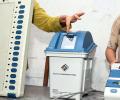
EVMs can't be used in presidential, vice-presidential, or Rajya Sabha polls because they only count simple votes, not the preference-based system needed for these elections.

Drawing lessons from security protocols of Parliament, the state is working closely with agencies like the Defence Research and Development Organisation and the Electronics Corporation of India Ltd to design a multi-layered safety mechanism.

To enhance transparency and verifiability in the poll process, the Conduct of Election Rules, 1961 were amended in 2013 to introduce the use of VVPAT machines. They were first used in the by-election to the Noksen assembly seat in Nagaland.
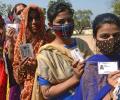
The Election Commission had pegged the cost of procuring additional Electronic Voting Machines and paper-trail machines for holding synchronised Lok Sabha and assembly polls at nearly Rs 9,300 crore.
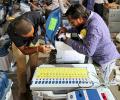
The Supreme Court on Tuesday deprecated criticism of electronic voting machines (EVMs) and calls for reverting to ballot papers, saying the electoral process in India is a "humongous task" and attempts should not be made to "bring down the system".

According to the budget document, Rs 1,891.78 crore has been allocated for purchase of EVMs by the poll panel.

The EVMs are based on a technology where they work as aggregator of votes in direct elections such as the Lok Sabha and state assemblies.

The EVMs, officials explained, are not designed to register this system of voting.

National Investigation Agency will get CCTV footage disc, related to arrest of suspected militant Liyaqat Ali Shah, analysed from Electronics Corporation of India Ltd as the discs seized by Delhi Police were found to be damaged.

Jammu and Kashmir has been without an assembly since November 2018 when the then legislative assembly was dissolved by then Governor Satya Pal Malik after the People's Democratic Party-Bharatiya Janata Party coalition government fell apart earlier that year.


Shuja had on Monday claimed at an event in London that the EVMs can be tampered with and that the 2014 Lok Sabha elections were rigged.
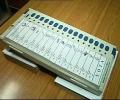
The Election Commission has placed orders estimated at more than Rs 300 crore with Electronics Corporation of India Ltd and Bharat Electronics Ltd to deliver Electronic Voting Machines for the Lok Sabha elections.
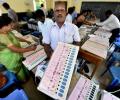
The officials said they would need around Rs 4,500 crore to buy nearly 12 lakh additional electronic voting machines and an equal number voter-verifiable paper audit trail machines.

He also lamented that EVMs are being used as a 'football' and some sections are doing a 'motivated slugfest' over their use.

Senior Congress leader Kapil Sibal on Tuesday demanded a probe into the charges made by the self-proclaimed US-based cyber expert, terming them as "very serious" as they concern the survival of democracy in India.

The Supreme Court on Friday asked the Election Commission to explore the possibility of introducing Vote Verifier Paper Audit Trail in EVMs to maintain paper record of each vote for upcoming assembly polls in five states and next general election in 2014.

The poll panel said it did not receive specific complaints or concrete material from political parties and candidates about alleged tampering of EVMs during recently held election process.
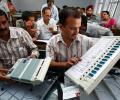
'Although the Election Commission remains convinced about the EVM's integrity, as a fair umpire of the game it was necessary to travel the last mile to convince political players that the entire process was not only fair but transparently so.' A fascinating excerpt from former Chief Election Commissioner Navin Chawla's new book, Excerpted from Every Vote Counts: The Story Of India's Elections.
 © 2026 Rediff.com - Investor Information - Advertise with us - Disclaimer - Privacy Policy - Sitemap - Feedback - About us - Terms of use - Grievances