
'There are no additional benefits for banks and market participants to use CBDC...'

'The Digital Rupee will be equal to the Indian rupee in value and backed by the full faith and credit of the RBI/Indian government.'
'The government will carefully regulate and monitor the Digital Rupee, and because the currency is supposed to be tied to INR or supported by reserves, we should expect little fluctuation in pricing.'
The Reserve Bank on Friday said it will soon commence the pilot launch of e-rupee for specific use cases with a view to bolstering India's digital economy, making payment systems more efficient, and checking money laundering. In a concept note on Central Bank Digital Currency, the RBI said CBDC is aimed to complement, rather than replace, current forms of money and is envisaged to provide an additional payment avenue to users, not to replace the existing payment systems. "Supported by state-of-the-art payment systems of India that are affordable, accessible, convenient, efficient, safe and secure, the Digital Rupee (e?) system will further bolster India's digital economy, make the monetary and payment systems more efficient and contribute to furthering financial inclusion," the paper said.
India's first digital rupee pilot project will commence on Tuesday with nine banks, including SBI, HDFC Bank and ICICI Bank, issuing the virtual currency for transactions in government securities. "...the first pilot in the digital rupee - Wholesale segment shall commence on November 1, 2022," the RBI said in a statement on 'Operationalisation of Central Bank Digital Currency-Wholesale (e?-W) Pilot'. It also announced that the first pilot in digital rupee - Retail segment is planned for launch within a month in select locations in closed user groups comprising customers and merchants.
The Reserve Bank will launch the first pilot for retail digital rupee in Mumbai, New Delhi, Bengaluru and Bhubaneswar on December 1, and later expand it to nine more cities in the initial phase. This follows a month after the RBI had started a pilot in the digital rupee - wholesale segment on November 1. The Reserve Bank announces the launch of the first pilot for retail digital rupee (e?-R) on December 1, 2022, the central bank said in a statement on Tuesday.
The Reserve Bank is planning to extend wholesale Central Bank Digital Currency (CBDC) for transactions for interbank borrowing or call money market, sources said on Tuesday. The pilot in the wholesale segment, known as the Digital Rupee -Wholesale (e-W), was launched on November 1, 2022, with the use case being limited to the settlement of secondary market transactions in government securities. "RBI is now planning to go into the interbank borrowing market.

The pilot project for central bank digital currency (CBDC) in the retail segment went live on Thursday with the Reserve Bank of India (RBI) issuing Rs 1.71 crore to four participating banks based on their indents. The central bank has identified four banks for the first phase of the pilot - State Bank of India, ICICI Bank, Yes Bank and IDFC First Bank - in four cities, Mumbai, New Delhi, Bengaluru and Bhubaneswar. The highest indent was received from one private sector bank.
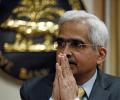
RBI Governor Shaktikanta Das on Friday said the government and the central bank are in discussion with South Asian countries to have cross-border trade in rupee. He also said the central bank digital currency (CBDC) is in trial phase and the RBI is moving very carefully and cautiously on digital rupee launch. After the successful launch of the wholesale pilot, the Reserve Bank of India (RBI) on December 1, last year, began its retail CBDC pilot project.

One reason why volumes have not increased in the retail segment is that users are not aware of merchants who accept digital currency.

Finance Minister Nirmala Sitharaman on Tuesday nudged the fintech industry to break the distance barrier and have more engagements with the government and its agencies to enhance trust. Sitharaman was replying to a question by Kris Gopalakrishnan, chairman, Global Fintech Fest (GFF) 2022 advisory board, who wanted to know how to ensure trust among industry, regulators, and the government. "I don't want to sound cliche, but distance brings distrust. "So, cut the distance down, have greater engagement with the government," the minister said.

So how do you rate the Modi government's 10th budget which comes ahead of the crucial five-state election?

Union Finance Minister Nirmala Sitharaman on Tuesday announced that income from digital asset transfers will be taxed at a rate of 30 per cent. This move is seen as 'crypto tax'.

While the tax treatment does legitimise past crypto transactions, there is a possibility that any, or all, private cryptocurrencies will be banned in future.

The proposed Central Bank Digital Currency (CBDC) to be issued by the Reserve Bank will play a critical role in improving the speed of transactions and reducing the cost of cash, a Deloitte report said on Wednesday. The Reserve Bank of India is planning to come out with a central bank-backed digital currency, using blockchain technology in 2022-23. As a financial services innovation, CBDCs are likely to play a pivotal role in shaping the 'future of value transfer', the report said, adding that most central banks worldwide are now in various stages of their evaluation of launching their national digital currencies.

In the midst of third wave of COVID-19, Finance Minister Nirmala Sitharaman has come up with an impactful Budget which is balanced, fiscally prudent and growth-oriented, the USA India Chamber of Commerce has said. President of the Boston-based USA India Chamber of Commerce (USAIC) Karun Rishi, however, said it is a matter of concern that the budget lacks tangible measures to increase revenue generation. "Opting to keep the fiscal deficit at 6.9 per cent and increase capital expenditure by 35 per cent is a masterstroke. "The annual budget estimates the effective capital expenditure of Rs 10.68 lakh crore in 2022-23, making up about 4.1 per cent of the GDP," he said. "A phenomenal increase in the government's capital expenditure is likely to facilitate the expenditures on infrastructure and create jobs.

The focus of the Union Budget is on providing basic amenities to the poor, middle class and youth, Prime Minister Narendra Modi said on Wednesday, and asserted that it is imperative that India becomes self-reliant.

At the customary post-Budget media interactions, Finance Minister Nirmala Sitharaman and her topmost bureaucrats touched upon a number of issues. The minister said the government taxing income from digital virtual assets did not give them legitimacy and that issue was being dealt separately in the planned cryptocurrency Bill. She also expressed confidence that the Budget targets were achievable.

Finance Minister Nirmala Sitharaman on Tuesday unveiled a Rs 39.45 lakh crore Budget with a view to fire up the key engines of the economy to sustain a world-beating recovery from the pandemic. This was Sitharaman's fourth Budget. While the taxpayers were left in the lurch, once again, was she able to cheer Corporate India?

Finance Minister Nirmala Sitharaman presents her fourth Budget in Lok Sabha on Tuesday.
 © 2026 Rediff.com - Investor Information - Advertise with us - Disclaimer - Privacy Policy - Sitemap - Feedback - About us - Terms of use - Grievances