
Corporate India handed over an average increment of 8 per cent in 2021, and early estimates reveal that average increment for 2022 is expected to increase to 8.6 per cent in line with a healing economy and improving confidence, according to a Deloitte survey. As per the second phase of Deloitte's Workforce and Increment Trends survey 2021, 92 per cent companies gave an increment in 2021 at an average of 8 per cent, compared with only 4.4 per cent in 2020, where just 60 per cent companies had extended a pay hike. For 2022, average increment is expected to increase to 8.6 per cent, at par with the pre-pandemic levels of 2019, the survey said, adding that about 25 per cent companies surveyed have projected a double-digit increment for 2022.

A vast majority of the business leaders believe that the Production Linked Incentive (PLI) schemes have been beneficial and expect an extension to other sectors in the coming years, a Deloitte Survey said on Friday. An overwhelming number of survey respondents hope the budget will fuel growth across industries by building strong domestic demand and focussing on capital expenditure and believe that it would define the 'Amrit Kaal'. "Critical to this growth will be the pace of capital expenditure, infrastructure development, and the need to boost infrastructure financing through private partnership. 60 per cent of respondents suggested raising funds through Indian Government Bonds," the survey said.

Deloitte Touche Tohmatsu India LLP (DTTILLP) has announced its list of 50 fastest growing technology companies in the country with fintech emerging as the fastest growing segment. Conducted by DTTILLP, the programme ranks the fastest growing technology companies in India based on their percentage revenue growth over the past three financial years. The aggregate revenue of the top 10 companies has gone up from about Rs 21 crore to just under Rs 400 crore, representing a growth of close to 20x in the 2018 to 2020 period, a Deloitte statement said. Fintech emerged as a key sector in this year's rankings represented by four of the top six winners, it added.
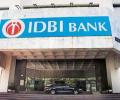
As many as seven firms, including JM Financial, Ernst and Young and Deloitte, have bid for managing the strategic sale of IDBI Bank. These firms would make a virtual presentation before the Department of Investment and Public Asset Management, which is handling the sale process, on August 10, according to a notice by DIPAM. The firms that have bid for acting as transaction advisor are Deloitte Touche Tohmatsu India LLP, Ernst and Young LLP, ICICI Securities, JM Financial Ltd, KPMG, RBSA Capital Advisors LLP and SBI Capital Markets.

Indian companies are expected to dole out an average increment of 9.1 per cent in 2022, higher than the pre-COVID-19 increment in 2019, as companies are focusing on retention of talent through rewards. According to the 2022 Workforce and Increments Trends Survey by Deloitte Touche Tohmatsu India LLP, the average India 2022 increment is expected to go up to 9.1 per cent from eight per cent in 2021. Moreover, the 2022 projected increment is higher than the pre-COVID-19 increment in 2019 by 50 basis points (bps).

More people using the internet for financial and e-commerce transactions has led to job creation in a niche segment. Specialists who can help deal with rising technology (tech) frauds are in high demand amid the surge in electronic transactions during the pandemic. Demand for tech fraud experts has risen upwards of 35 per cent, reveals employment and human resource services company TeamLease Services.
Companies in India are expected to dole out an average increment of 7.3 per cent to employees this year amid faster-than-expected economic recovery and revival in business and consumer confidence, according to a survey. The first phase of the 2021 Workforce and Increment Trends Survey by Deloitte Touche Tohmatsu India LLP (DTTILLP) also said the average increment this year will be higher than 4.4 per cent seen in 2020 but lower than 8.6 per cent given by companies in 2019. As many as 92 per cent companies that participated in the survey plan to give an increment in 2021 compared to only 60 per cent last year.

While the Union Cabinet had in November last year approved the sale of the government's entire 52.98 per cent stake in BPCL, offers seeking expression of interest (EoI), or bids showing interest in buying its stake, were invited only on March 7. The EoI submission deadline was May 2, but on March 31 it was extended up to June 13. On Wednesday, the government said this deadline is further being extended up to July 31.

Franklin Templeton Mutual Fund, which has closed six debt schemes, has said the winding-up process will be delayed in the absence of authorisation from investors and further steps will be possible only after seeking fresh approval from them. It further said that investors who do not have an e-mail ID or mobile number registered with the fund house will not be able to participate in the voting process. The date on which the voting would start has not been disclosed yet.

The government is keen to close the sale before March 31, 2021, to help meet a record Rs 2.1 lakh crore target which Finance Minister Nirmala Sitharaman has set from divestment proceeds in the Budget for 2020-21.

Diverse marquee investors are becoming long-term shareholders of Jio Platforms because of a unique set of technologies and platforms under one entity.

Investment by US PE firm KKR will add fire to Ambani's battle for dominance in the retail market that is also being eyed by Jeff Bezos' Amazon and Walmart's Flipkart.

"The Corporation has decided to offer a voluntary retirement scheme, with a view to enable employees who are not in a position to continue in service of the Corporation due to various personal reasons, to request for grant of voluntary retirement from the services of the Corporation," Bharat Petroleum Corp Ltd (BPCL) said in an internal notice to its employees.

With its new hybrid annuity model, the government is confident of getting more funds from India Inc.

Documents such as PAN card, Aadhaar card, I-T return papers, which are used for KYC, can get leaked from a number of sources. Other prominent sources are the direct sales agents and photocopy shops, say Sanjay Kumar Singh.

Mumbai Monorail was to be built in two phases - Phase I of 8.93 km and Phase II of 11.20 km. The first phase ran operations for around three years before services were abruptly halted, owing to a fire incident last year. The second phase now stands completed, but is lying closed.
 © 2026 Rediff.com - Investor Information - Advertise with us - Disclaimer - Privacy Policy - Sitemap - Feedback - About us - Terms of use - Grievances