
After a 25 basis point rate cut in December, the RBI on Friday decided to pause on the policy rate front amid geopolitical uncertainties.

India's main inflation measure, the Consumer Price Index (CPI), is set for another major update, even though it has been in its current form for only about 15 years.

Gold prices fell by Rs 400 to Rs 1.6 lakh per 10 grams in the national capital on Thursday amid weak global trends and receding expectations of an interest rate cut by the US Federal Reserve.

Retail inflation stood at 2.75 per cent in January under the new series of All India Consumer Price Index (CPI), with 2024 as the base year, released on Thursday.
India's retail inflation, which has stayed below the Reserve Bank of India's (RBI's) 4 per cent target in recent times, is likely to remain benign in the coming months, RBI Deputy Governor Poonam Gupta said in a speech, on Friday, which was uploaded on the central bank's website on Tuesday. Headline inflation dipped to multi-year lows of around 1.5-2.8 per cent in late 2025.

The IMF on Monday raised India's growth projection to 7.3 per cent for fiscal 2025-26, up 0.7 percentage point from its October forecast, on the back of better-than-expected performance of the economy. The Washington-headquartered multilateral lending agency has also revised India's Gross Domestic Product (GDP) growth forecast to 6.4 per cent for fiscal year 2026-27 beginning April 1, 2026, from its earlier estimate of 6.2 per cent.

Shrugging off concerns over the depreciation of rupee, the RBI has cut interest rate by 25 basis points to 5.25 per cent in a bid to further bolster economic growth, which rose to a six-quarter high of 8.2 per cent in the second quarter of the current financial year.

Shrugging off concerns over the depreciation of rupee, the RBI has cut interest rate by 25 basis points to 5.25 per cent in a bid to further bolster economic growth, which rose to a six-quarter high of 8.2 per cent in the second quarter of the current financial year.
Retail inflation rose to a three-month high of 1.33 per cent in December 2025 mainly due to higher prices of kitchen essentials, including vegetables and protein-rich items.

Retail inflation inched up to 0.71 per cent in November on rising prices of vegetables, protein-rich items, and fuel, government data showed on Friday. The consumer price index (CPI)-based retail inflation had fallen to a record low of 0.25 per cent in October, mainly due to lower prices helped by GST rate cuts and a favourable base.

Retail inflation slipped to a multi-year low of 0.25 per cent in October, driven by the impact of the GST rate cut and subdued prices of vegetables and fruits, government data showed on Wednesday.
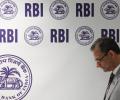
The core dilemma remains: Why provide further stimulus to an economy that is already booming at an 8 per cent growth rate? asks Rajeswari Sengupta.

Inflation data, quarterly earnings and global trends will be the major driving factors for stock markets this week, analysts said. Moreover, the trading activity of foreign investors would also influence the equity market trends.

President Donald Trump on Friday signed an executive order retroactively lowering tariffs on a range of agricultural imports, including beef, tomatoes, coffee and bananas, with the change taking effect from November 20, CNN reported.

Notwithstanding global headwinds, the Indian economy saw further momentum in October on the back of goods and services tax (GST) rate rationalisation and festival spending, as indicated by high-frequency indicators, the Reserve Bank of India's (RBI's) monthly State of the Economy report said.

Wholesale price inflation (WPI) fell to (-) 1 .21 per cent in October, driven by a decline in prices of food articles like pulses and vegetables, as well as lower fuel and manufactured items' prices, government data showed on Friday.

The consumer price index (CPI)-based inflation hitting an all-time low in October would encourage the six-member monetary policy committee (MPC) of the Reserve Bank of India (RBI) to cut the policy repo rate in its upcoming December 3-5 meeting. However, the July-September GDP growth, expected to be above 7 per cent, may act as a deterrent.

The best way for India to prepare is by preserving and strengthening the RBI's hard-won credibility, point out Rajeswari Sengupta and Vaishali Garga.

The Reserve Bank of India (RBI) on Wednesday kept its policy interest rate unchanged at 5.5 per cent for the second consecutive time, citing concerns over tariff uncertainties.

The Reserve Bank on Wednesday revised upward its growth estimates for the current fiscal year to 6.8 per cent and lowered its inflation projection to 2.6 per cent based on an above-normal monsoon and the rationalisation of GST rates.
Retail inflation slipped to an eight-year low of 1.55 per cent in July mainly due to subdued prices of food items, including vegetables and cereals, according to government data released on Tuesday.
Retail inflation slipped to 1.54 per cent in September from 2.07 per cent in the preceding month mainly due to subdued prices of food items, including vegetables and pulses, according to government data released on Monday. The consumer price index (CPI) based inflation was 5.49 per cent in September 2024.

Retail inflation in August rose slightly to 2.07 per cent from 1.61 per cent in the preceding month, mainly due to increase in prices of vegetables, meat and fish, according to a government data released on Friday.

While the economy will wait for a rate cut in December, the banking industry should be happy with the wave of liberalisation -- a big push for growth in bank credit, points out Tamal Bandyopadhyay.

Since items in the 12% category account for only about 5% of total GST, the additional boost to consumption may not be significant, points out M Govinda Rao.

The proposed reforms in goods and services tax (GST) announced by the government last week, coupled with the eighth pay commission dole-out, is likely to push consumption-driven stocks - such as air conditioners (ACs), select automobiles, fast-moving consumer goods (FMCG), retail, and counters of quick-service restaurants (QSRs) - into higher orbit over the next few months, believe analysts.

The Indian services sector growth touched an 11 month high in July, supported by a pickup in new exports orders and sharp rise in overall sales, a monthly survey said on Tuesday. The seasonally adjusted HSBC India Services PMI Business Activity Index was at 60.5 in July, little-changed from 60.4 in June, and the rate of expansion was the best seen since August 2024.

'The US reciprocal tariff has added another element of uncertainty and the central bank may prefer to wait and get further clarity.'

For the time being, the RBI is done with the cuts. A cut in October, which many are still predicting, is not certain. Of course, if growth nosedives, the script will be different, expects Tamal Bandyopadhyay.

Mixed views were expressed by top economists on the Reserve Bank of India's (RBI) Monetary Policy Committee's (MPC) decision to hold the repo rate at 5.5% and maintain a neutral stance. While some say the decision was as expected and one more rate reduction is expected this fiscal, there is also a view that rate cut by MPC was warranted given the evolving global situation.

Stock markets snapped the four-day falling streak on Tuesday with the benchmark Sensex rebounding by 317 points on buying in auto and pharma shares amid a decline in retail inflation to a more than six-year low, nearing the RBI's comfort zone. The 30-share BSE Sensex climbed 317.45 points or 0.39 per cent to settle at 82,570.91. During the day, it jumped 490.16 points or 0.59 per cent to 82,743.62. The 50-share NSE Nifty edged higher by 113.50 points or 0.45 per cent to 25,195.80.
India's consumer price index (CPI)-based retail inflation rate is likely to have cooled further in June, thus remaining below the 4 per cent target of the Reserve Bank of India (RBI) for a fifth consecutive month, giving the central bank wiggle room to focus on growth. Economists reckon that the decline is on account of easing prices in various categories of goods, especially food items, and a favourable base effect.

In February, CPI overall had stood at 105, while the indices for rural and urban were reported at 107 and 104.

Retail inflation declined to over six-year low of 2.1 per cent in June, nearing the RBI's comfort zone, on account of subdued prices of food items, including vegetables, driven by widespread monsoon.
Retail inflation dipped to an over six-year low of 2.82 per cent in May due to subdued food prices, remaining below the RBI's median target of 4 per cent for the fourth consecutive month, according to government data released on Thursday. Consumer Price Index (CPI)-based retail inflation was 3.16 per cent in April and 4.8 per cent in May 2024.

From the Sensex firms, Tata Steel, Eternal, Tech Mahindra, Maruti, Mahindra & Mahindra, Infosys, IndusInd Bank, HCL Tech, Tata Consultancy Services and Bharti Airtel were the major gainers. Telecom operator Bharti Airtel climbed nearly 1 per cent after it posted about a five-fold jump in consolidated net profit to Rs 11,022 crore in the March 2025 quarter, mainly due to the tariff hike impact and one-time gain on tax benefits. However, Asian Paints, Tata Motors, Kotak Mahindra Bank, NTPC and Power Grid were among the laggards.

The domestic stock market this week would monitor the geopolitical developments after India and Pakistan reached an understanding to stop military actions, analysts said. Moreover, macroeconomic data announcements, Q4 earnings, trading activity of foreign investors and global market trends are also likely to influence sentiments, traders said.
The weakening of inflation, prospects of economic growth, geopolitical uncertainty and comfortable system liquidity may result in the Reserve Bank of India's (RBI) Monetary Policy Committee (MPC) to cut the repo rate by another 25 basis points, opine top economists. They also said the external economic pressures like trade policies and others would require continued RBI's accommodative stance and policy support for the Indian industry to sustain the growth.
Gold prices tumbled by Rs 1,550 to Rs 91,450 per 10 grams in the national capital on Monday amid heavy selling by jewellers and stockists as well as weak global trend, according to the All India Sarafa Association. On Friday, the precious metal of 99.9 per cent purity had finished at Rs 93,000 per 10 grams.
Retail inflation slowed to 5.48 per cent in November compared to 6.21 per cent in October, mainly due to easing food prices, especially vegetables, according to government data released on Thursday. According to Consumer Price Index (CPI) data released by the National Statistics Office (NSO), the inflation in the food basked reduced to 9.04 per cent in November. It was 10.87 per cent in October and 8.70 per cent in November 2023.
 © 2026 Rediff.com - Investor Information - Advertise with us - Disclaimer - Privacy Policy - Sitemap - Feedback - About us - Terms of use - Grievances