
Container Corporation of India (Concor) has been the worst performer among major logistics & port stocks registering returns of about 4 per cent over the past three months as compared to 10-12 per cent for peers Gateway Distriparks and Adani Ports and SEZ. Uncertain outlook on the export-import (EXIM) trade front, market share loss, lack of progress on divestment, and weak June quarter results weighed on the stock. Volume and margin movement will be key triggers for the stock going ahead. As was the case in the previous quarter, margin performance was muted even in the June quarter. Operating profit in the quarter was down 17 per cent at Rs 391 crore missing estimates by over 15 per cent. Operating profit margins at 20.4 per cent, too, were down sharply by 350 basis points over the year-ago quarter.

rediffGURU Komal Jethmalani, a dietician and nutritionist with over 27 years of experience, tells you how to choose your meals and plan your diet for optimum health benefits.


At the same time, the Cabinet approved reducing government's stake in select PSUs such as IOC to below 51 per cent while continuing to retain management control.
An official said the government is preparing the financial statements and getting the data room ready for the sales, suggesting that such aspects take time.

Concerned over the fallout of the Red Sea crisis and severe shortage of containers against the backdrop of a steep decline in merchandise exports in August, the Union government is pulling out all the stops to find a solution. To begin with, the government has devised a strategy aimed at boosting container supply and supporting exporters.

With general elections on the horizon, the government's privatisation bandwagon has almost but stalled as a government wary of being accused of selling family silver opts for minority stake sales on stock exchanges over outright privatisation. The result -- the divestment target for current fiscal year is again likely to be missed. Big ticket privatisation plans such as that of Bharat Petroleum Corporation Ltd (BPCL), Shipping Corporation of India (SCI) and CONCOR are already on the backburner and analysts feel meaningful privatisation can happen only after April/May general elections.
Ahead of the Budget, the government has achieved almost half the divestment target of Rs 65,000 crore. FY23 divestment receipts are unlikely to be anywhere close to the budgeted target.

'Inter-ministerial coordination, information on the proposed PSUs, and due diligence are taking longer than expected to conclude the process.'
The Centre could further moderate its divestment target for 2024-25 (FY25), as it does not expect large receipts from asset sales - except some ongoing strategic ones, including IDBI Bank, which could spill over into next financial year. Also, it may drastically reduce its FY24 divestment target of Rs 51,000 crore. "We are still evaluating the Budget estimates for FY25. "New big-ticket asset sales are unlikely.

It was touted as a game changer but big-ticket privatisation has been a mixed bag as the government faces unanticipated challenges of lukewarm investor response, employee union agitation and legal hurdles. Prime Minister Narendra Modi's often-repeated statement 'the government has no business to be in business' guided the drawing up of an ambitious privatisation pipeline. While Air India sale succeeded, Bharat Petroleum Corporation Ltd (BPCL) divestment failed.
The department of investment and public asset management is racing against time to launch the LIC IPO, which could become the largest-ever listing on the Indian bourses. This would lead to some delay in the strategic divestment of IDBI Bank.

Logistic players have seen a sharp correction at the bourses over the past six months as intense competition from new-age-tech startups, higher freight rates, and weak macros dented listed players' growth outlook. Analysts warn that the emergence of tech-based startups could weigh on organised players' profit-pool, and can potentially erode their market share. Thus, a stock-specific strategy would be prudent at this juncture with focus on companies that are rapidly innovating and investing in technology.

Divestment in BPCL, SCI, Concor, NEEPCO, and THDC would help the Centre keep its fiscal deficit in check in the wake of subdued tax revenues and a Rs 1.45-trillion hit for the exchequer from corporation rate cuts.

The last year has seen public sector undertakings (PSUs) outperforming the Nifty50, albeit by a small degree. But PSU valuations are still, on average, less than half of private sector peers at price-to-equity or PE 8.7x for the Nifty PSU Index versus 20.9x for the Nifty50. There are several reasons for lower valuation.

Aided by the $57.8-billion merger of HDFC Bank and HDFC, India Inc reported its highest ever mergers and acquisitions in calendar 2022 at $171 billion as against deals worth $145 billion announced last year. The acquisition by the Adani group across cement, media and ports dominated the headlines with the conglomerate making its foray into the cement sector by buying Swiss materials firm Holcim's stake in Ambuja Cements for $6.5 billion. The Adani family's additional $4-billion open offer for Ambuja did not get a response because shareholders preferred to stay invested with the new owner.

The divestment process, however, will not be an easy affair as there are multiple stakeholders, including the employee unions, whose concerns will have to be addressed.

Ajit Mishra, vice president, research, Religare Broking, answers your queries.

Air India sale will give a boost to India's privatisation drive, the Economic Survey said on Monday, as it suggested redefining the public sector role in business enterprises to encourage private participation in all sectors. The government earlier this month handed over ownership rights in national carrier Air India to Tata Group for Rs 18,000 crore. The amount includes the takeover of the debt burden of Rs 15,300 crore and another Rs 2,700 crore in cash.
Look out for Automotive Check out Axles, Concor, Gujarat Ambuja, Anant Raj Industries
The share of public sector undertakings (PSUs) in the total market capitalisation of listed companies--at an all-time low of 10 per cent currently --- may get a leg-up from the government's divestment push. Recently the government announced the successful sale of national carrier Air India to Tata Sons, India's first privatisation of a PSU since 2002-03. The transaction is expected to be completed by December.
Stocks of government probables for divestment or stake sale such as Steel Authority of India (SAIL), Mahanagar Telephone Nigam (MTNL), National Aluminium Company (Nalco) and Container Corporation (Concor) have outperformed the markets in the past one year.
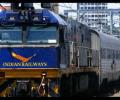
In 2019-20, the capital expenditure of Indian Railways (IR) increased 60 per cent over 2016-17. The draft National Railways plan envisages a further increase in IR's capital expenditure, but an analysis by Business Standard shows that IR has come to depend more on borrowings and budgetary support. In 2016-17, while 11 per cent of its capital expenditure (capex) was funded by internal sources, in 2019-20 the ratio dropped to less than 1 per cent. A 2015 Committee on Restructuring Railways had flagged that over-reliance on borrowings could exacerbate the financial situation of Railways.

The government has been pressing citizens to pay taxes and be compliant, but they have very little to show regarding improved efficiencies in the companies they themselves own, the fund managers said.

With the disruption caused by the second wave of Covid-19 pandemic, the 'fear of unknown' is looming over the government's privatisation drive. Although there is a lot of uncertainty and unpredictability on how things will unfold, the government is hopeful of completing the transactions listed in the Budget with a delay of one to two months, said a top government official. However, "there are many unknown factors now, and we do not know whether there could be a third wave. But we are trying to carry on with our work", the official said." Since there is a lot of uncertainty, the estimates will have to be revised as rating agencies are revising their outlook for growth.

Revenue from divestment has fetched Rs 40,000-50,000 crore against target of Rs 2.10 trillion.

The brokerage said it expected corporate earnings to turn around.

The airline's 100 per cent shareholding in profit-making budget carrier Air India Express as well as 50 per cent shareholding in equal joint venture Air India SATS Airport Services would also be sold.

"This is a big scam. The country is being looted. Please allow us to speak," Congress leader in Lok Sabha Adhir Ranjan Chowdhury said.

In the year to date, 61 PSUs have lost an average of 22 per cent, with five companies losing more than half their share value. The BSE PSU index is down 10.6 per cent.

In a bid to resurrect Air India privatisation, the government is planning to give flexibility to potential investors to decide on the humongous debt with the national carrier, a top official has said. The flexibility to potential investors on the quantum of the Rs 60,074 crore debt that they want to absorb will replace the current condition of the buyer taking over more than a third of the debt and transferring the rest to a special purpose vehicle, Department of Investment and Public Asset Management (DIPAM) secretary Tuhin Kanta Pandey said.
The government Thursday took the wraps off a policy that will allow private companies in container transportation by rail bringing to an end Container Corporation of India's long-held monopoly in the business.
 © 2026 Rediff.com - Investor Information - Advertise with us - Disclaimer - Privacy Policy - Sitemap - Feedback - About us - Terms of use - Grievances