
The IMF and World Bank have stopped loans, and the FATF warned its 39 member nations to block Taliban assets.

Violation of the provisions entails a punishment of a jail term up to five years or with fine up to Rs 1 crore or with both, the ordinance released by the Ministry of Law and Justice on Thursday said.

India's merchandise exports jumped 27.16 per cent to $30.04 billion in November on the back of good performance by sectors like petroleum products, engineering goods and electronic items, official data showed on Tuesday. The exports stood at $23.62 billion in November 2020. Imports in November were at $52.94 billion, showing an increase of 56.58 per cent over inbound shipments of $33.81 billion in the year-ago month.

The wholesale price-based inflation in February rose to 13.11 per cent on hardening of prices of crude oil and non-food items, even though food articles softened. After two months of mild easing, WPI inflation accelerated in February and remained in double digits for the 11th consecutive month, beginning April 2021. WPI inflation last month was 12.96 per cent, while in February last year, it was 4.83 per cent. The rise in crude oil and natural gas prices after the Russian invasion of Ukraine, beginning February 24, has put pressure on the wholesale price index, even though food articles saw softening across categories of vegetables to pulses to protein-rich items.

'You can choose who you would like as your showstopper.' 'You have the freedom to create your own background -- sun, moon and the stars, which may sometimes not be possible in a physical show.'

Goyal said, there is no proposal under consideration on withdrawal of MFN status to China.

According to the commerce and industry ministry data, during April-February 2018-19, the eight sectors recorded a flat growth rate of 4.3 per cent over the same period previous fiscal.

The annual rate of inflation based on monthly wholesale price index (WPI) was 1.22 per cent in December as compared to 1.55 per cent in the previous month. It was 2.76 per cent in December 2019. The decline last month was mainly due to lower increase in food prices, data released by the Ministry of Commerce and Industry showed on Thursday. The food inflation for December dropped to 0.92 per cent as compared to 4.27 per cent in the previous month.

This will boost availability of these items as well as make them cheaper, it said, adding that Modi also directed the revenue department to ensure seamless and quick custom clearance of such equipment.

Foreign direct investments into the country is on the rise, jumping to $12.1 billion in May this year, Commerce and Industry Minister Piyush Goyal said on Monday. He also said the government is working on a mission mode to achieve exports target of $400 billion in 2021-22. "India has received the highest ever FDI inflow in 2020-21. "It surged by 10 per cent to $81.72 billion and FDI during May 2021 is $12.1 billion, i.e. 203 per cent higher than May 2020," he said while addressing a meeting of different industry associations on promoting exports.

The output of eight core sectors jumped by 56.1 per cent in April mainly due to a low base effect and uptick in production of natural gas, refinery products, steel, cement and electricity, official data released on Monday showed. The eight infrastructure sectors of coal, crude oil, natural gas, refinery products, fertilisers, steel, cement and electricity had contracted by 37.9 per cent in April 2020 due to lockdown restrictions imposed to control the spread of coronavirus infection. In March this year, the eight sectors had recorded a growth rate of 11.4 per cent.

With the Sharif family set to return to power in Pakistan amid the fast-deteriorating economic situations and political instability, it is to be seen if Shehbaz Sharif infuses fresh energy into the system, or the much-tainted family continues to resort to its old ways.

The output of eight core sectors declined by 4.6 per cent in February, the steepest contraction in the last six months which experts said could drag the overall industrial production in the month into the negative territory. All the key segments, including coal, crude oil, natural gas, and refinery products, witnessed a decline in production, according to the official data released on Wednesday. The growth rate of the eight infrastructure sectors -- coal, crude oil, natural gas, refinery products, fertilisers, steel, cement and electricity -- stood at 6.4 per cent in February 2020. Last time in August 2020, the sectors had recorded a negative growth of 6.9 per cent.

The wholesale price-based inflation shot up to an all-time high of 10.49 per cent in April, on rising prices of crude oil and manufactured items. Also, a low base of April last year contributed to the spike in inflation in April 2021. The WPI inflation was 7.39 per cent in March 2021, and (-) 1.57 per cent in April 2020. This is the fourth straight month of uptick seen in the wholesale price index (WPI)-based inflation.

The output of eight core sectors grew 8.9 per cent in June, mainly due to a low base effect and uptick in production of natural gas, steel, coal and electricity, official data showed on Friday. The eight infrastructure sectors of coal, crude oil, natural gas, refinery products, fertilisers, steel, cement and electricity had contracted by 12.4 per cent in June 2020 due to the lockdown restrictions imposed to control the spread of coronavirus infections. In May this year, these key sectors had recorded a growth of 16.3 per cent, while it was 60.9 per cent in April.

The government, in its proposal circulated among the leaders on Wednesday, offered to amend 7-8 issues, including providing a written assurance of minimum support price.

The farmers' agitation against new agri laws will lead to economic loss of over Rs 70,000 crore in the December quarter owing to supply chain disruptions, particularly in Punjab, Haryana and border areas of Delhi, the PHD Chamber of Commerce and Industry said on Thursday. The chamber's president Sanjay Aggarwal said "the 36 days farm agitation so far will have more than Rs 70,000 crore economic loss in the Q3 FY 2020-21 due to...disruption in supply chains and day-to-day economic activities particularly in the progressive states of Punjab and Haryana and border areas of national capital Delhi."

Sources said they discussed and finalised the government's position for the Wednesday meeting.

This import duty exemption would remain in force till October 31 this year.

Air India Chairman Rajiv Bansal has been appointed as the new aviation secretary as part of a major top-level bureaucratic reshuffle effected by the Centre on Wednesday. K Rajaraman, additional secretary in the department of economic affairs, has been appointed as secretary, department of telecommunications, a personnel ministry order said.

Such a high level of WPI was last recorded in October 2012, when inflation was 7.4 per cent.

Koo, which works on similar lines as Twitter, was born with a focus on regional language, unlike Twitter and Facebook, which are very popular but primarily cater to an English-speaking audience, reports Neha Alawadhi.

After contracting for six months in a row, the country's exports grew by 5.27 per cent to $27.4 billion in September, Commerce and Industry Minister Piyush Goyal said on Thursday.
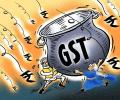
The Centre is looking to convene a meeting of the all-powerful Goods and Service Tax Council in early January. The meeting is likely to focus on rectifying the inverted duty structure for a few more items and will also serve as a platform for pre-Budget discussions between Union Finance Minister Nirmala Sitharaman and state finance ministers, Business Standard has learnt. "The current Winter Session of Parliament ends on December 23, followed by the Christmas-New Year period. "After that we would like to have a meeting of the GST Council, depending on whether there can be a quorum," a top government official said.

For manufactured products, the wholesale inflation was at (-)0.84 per cent in October 2019.

The output of eight core infrastructure sectors contracted for the third month in a row by 1.3 per cent in December 2020, dragged down by poor show by crude oil, natural gas, refinery products, fertiliser, steel and cement sectors. The core sectors had expanded by 3.1 per cent in December 2019, according to the provisional data released by the Commerce and Industry Ministry on Friday. Barring coal and electricity, all sectors recorded negative growth in December 2020. During April-December 2020-21, the sectors' output declined by 10.1 per cent against a growth rate of 0.6 per cent in the same period of the previous year.

Think you know everything about Jyotiraditya Scindia?

Commerce and Industry Minister Piyush Goyal on Monday said the existing foreign trade policy (FTP) will be extended for six months till March 31 next year. The government had earlier extended the FTP 2015-20 until September 30 this year due to the Covid-19 crisis. The FTP provides guidelines for enhancing exports to push economic growth and create jobs.

RBI in its policy review last month kept interest rates unchanged and said it sees an upside risk to inflation.

India is celebrating its 72nd Republic Day, the day its Constitution came into force in 1950.

According to a commerce and industry ministry statement, the growth rate for these eight key sectors for April 2019 has been revised upward to 6.3 per cent from 2.6 per cent reported earlier mainly due to upward revisions in production of coal, crude oil, steel, cement and electricity.

Automobile dealers' body FADA has urged the government to formulate a task force to monitor the compensation structure being worked out by Ford India for its dealer partners across the country. In a letter to Heavy Industries Minister Mahendra Nath Pandey, FADA president Vinkesh Gulati also requested the government to instruct Ford India to keep the industry body in the loop regarding the compensation structure for the dealerships. "We humbly request your Ministry's intervention... Create a task force which takes day-to-day updates from Ford India to monitor the compensation plan for automobile dealers and dealership employees," Gulati said in the letter.

The wholesale price-based inflation rose to an eight-month high of 1.48 per cent in October, as manufactured products turned costlier. The WPI inflation was 1.32 per cent in September and zero per cent in October last year. This is the highest level of wholesale price index-based (WPI) inflation since February when it was 2.26 per cent.

Commerce and Industry Minister Piyush Goyal urged start-ups to focus on three Ps - product, process, people - for building Aatmnirbhar Bharat.

Traders' body CAIT on Wednesday accused e-commerce major Amazon of indulging in serious contraventions of FDI policy and Foreign Exchange Management Act. The body also blamed the online firm for not seeking the government's approval for conducting multi-brand retail activities in India.

Contracting for the ninth consecutive month, the output of eight core infrastructure sectors dropped by 2.6 per cent in November, mainly due to decline in production of natural gas, refinery products, steel and cement. The production of eight core sectors had recorded a growth of 0.7 per cent in November 2019, data released by the commerce and industry ministry showed on Thursday. Barring coal, fertiliser and electricity, all sectors -- crude oil, natural gas, refinery products, steel and cement -- recorded negative growth in November 2020.

As per commerce and industry ministry data, food inflation fell to 4.91 per cent in March from 7.79 per cent in the previous month.

....a long-term boundary agreement is reached between the two countries.

Foreign direct investment (FDI) in India has increased by 16 per cent year-on-year to $27.1 billion during April-August this year, the Commerce and Industry Ministry said on Tuesday. During April-August last year, India had received FDI worth $23.35 billion. The ministry said that the total FDI, which includes reinvested earnings, grew by 13 per cent to $35.73 billion.

The country's exports jumped by 58.23 per cent to $34 billion in March as key sectors such as engineering, gems and jewellery and pharmaceuticals recorded healthy growth rate during the month, according to the Commerce Ministry's provisional data. Exports during April-March 2020-21, however, dipped by 7.4 per cent to $290.18 billion compared to $313.36 billion in 2019-20, the data showed. Imports during 2020-21 contracted by 18 per cent to $388.92 billion compared to $474.71 billion during 2019-20. In March 2020, the exports stood at $21.49 billion, which was a decline of about 34 per cent over March 2019 due to global slowdown induced by the Covid-19 crisis.
 © 2026 Rediff.com - Investor Information - Advertise with us - Disclaimer - Privacy Policy - Sitemap - Feedback - About us - Terms of use - Grievances