
The Nifty traded in a narrow band (41 points), the index opened flat at 6,116 and touched a high of 6,120 and a low of 6075.

By trading in index futures, an investor is buying and selling the basket of stocks comprising the index, in their respective weights.

The Nifty traded in a narrow 38 points range, touching an high of 5498 and a low of 5460.

Nifty opened in the red at 5,468 on back of lacklustre cues from Asia and swung between 5408 and 5507.

The Nifty opened at 5,851 and skidded to a low of 5,736 led by heavy losses in frontline banking and IT shares.


Analysts said that there is some amount of decoupling between India and the rest of world backed by strong growth momentum.

Markets remained muted throughout the day on back of selling pressure in IT and PSU stocks.

The managers see Sensex trading at a P/E of 16.

India's premium benchmark equity index, the S&P CNX Nifty, also the fastest growing index on SGX, will be traded for 16 hours on that exchange, compared to the six-and-a-half hours that it traded on the National Stock Exchange in India. The SGX will be traded from 6.30 am to 10.30 pm IST.

Bank Nifty has recovered nearly 300 points at 10,968 from intra-day low of 10,669 touched in early morning deals.
On the last day of Satyam's stint in India's benchmark indices - the Bombay Stock Exchange Sensex and the National Stock Exchange S&P CNX Nifty - its shares turned out to be a punter's delight.

Wipro's scrip jumped 2.97 per cent to Rs 468.50 on the NSE.
Equities registered their sharpest ever and most rapid decline in 2008, reflecting global market conditions and concerns over a slowing domestic economy.
On the contrary, the fall in the US markets was lower with the S&P 500 and Dow Jones both declining by around 9 per cent and 6 per cent respectively, while emerging markets lost around 18 per cent during the month. Pessimism in the financial markets following the filing for bankruptcy by Lehman Brothers, Merrill Lynch's sell-off, the AIG bailout and perceived uncertainty around the US bailout package added to investor fears.
The 30-share BSE Sensitive index or Sensex slipped below 13,000-mark. At 1450 hrs, Sensex was down 526 points at 12,936. a loss of almost 4 per cent compared to Thutsday's close.

Softening rural consumption and the likelihood of weak corporate earnings in the March quarter saw investors dump stocks.
This bloodbath, however, provides investors with yet another opportunity to buy quality stocks at cheap valuations. And many experts buy this argument.
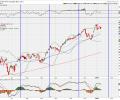
It is too early to say if we have seen the "final" bottom to these stocks in August 2013 or if another attempt to test them will be made before or just after elections, says Sonali Ranade.
Curiously, it will not be far-fetched to state the contrary, that the global stock exchanges follow the Indian markets' cue
In JMSMF's case, the flexibility to invest upto 35% in debt should stand it in good stead to counter stock market volatility.
After making its entry into the Bombay Stock Exchange's benchmark 30-share index Sensex in May
The fund can add value to informed investors who have a view on the infrastructure sector and a flair for high risk investment avenues.
The unprecedented fall in stock market had numerous reasons backing it up. As the market gets bullish again, it is wiser to be disciplined and patient with your investments.
The BSE Small-Cap Index (up 34 per cent) and the BSE Mid-Cap Index (up 28 per cent) have outperformed the Sensex (up 16 per cent) in the last two-and-a-half months, while the NSE Junior Nifty (up 25.4 per cent) and the NSE Mid-Cap Index (up 30.2 per cent) have beaten the S&P CNX Nifty (up 20.4 per cent) during the same period.
A day after a record-breaking run, stock prices continued to soar on Wednesday amid expectations of better-than-expected earnings by IT bellwether Infosys Technologies on Thursday.

With polling of votes coming to an end in Bihar, exit poll prediction by various media outlets have started pouring in.
The Sensex tumbled to its biggest fall in nearly seven weeks on concerns over deepening tensions between the Left parties and the Congress on the Indo-US civil nuclear deal.
We believe the fund is a high risk - high return investment proposition and risk-taking investors can consider investing in the same.
In our view, investors should give FIHGCF a miss for now.

Experts, however, caution that though the moves are positive for the sector as a whole, they don't expect much gain in the near-term.
The auto sector has been among the worse-hit in terms of sales in the past two years.
If you invested simply to make a quick buck, this would be a good time to book profits.
 © 2026 Rediff.com - Investor Information - Advertise with us - Disclaimer - Privacy Policy - Sitemap - Feedback - About us - Terms of use - Grievances