
The finance ministry has said that the Goods and Services Tax will not apply on room rents of 'sarais' (inns) or properties managed by religious and charitable institutions. The clarification was issued by the Central Board of Indirect Taxes and Customs (CBIC) on Thursday evening to clear the confusion with regard to the levy of GST on room rents. This clarification by the Finance Ministry came following a demand from various quarters including AAP MP Raghav Chadha that the GST on rooms rented by religious institutions be withdrawn.

CEC Sunil Arora will meet former heads of Central Board of Direct Taxes and Central Board of Indirect Taxes and Customs on Friday to discuss ways to keep a check on black money disbursements in South India, especially Tamil Nadu.

Vivek Johri, the Chairman of Central Board of Indirect Taxes and Customs (CBIC) on Friday said that the cash recovery of approximately Rs 150 crore from searches in Kanpur at several locations related to Trimurti Fragrance is the 'biggest haul ever'.
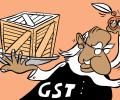
As taxpayers face technical glitch on the GST portal, the government on Tuesday said it is considering extending the April tax payment deadline and has directed Infosys for early resolution of the problem. The Central Board of Indirect Taxes and Customs (CBIC) said a technical glitch has been reported by Infosys in generation of April 2022 GSTR-2B and auto-population of GSTR-3B on portal. "Infosys has been directed by Govt for early resolution. Technical team is working to provide GSTR-2B & correct auto-populated GSTR-3B at the earliest," the CBIC tweeted.

An audit conducted by professional services firm Alvarez and Marsal confirms fintech firm's dealings with fake or non-existent vendors.

Sputnik V is the third vaccine India has given the go-ahead to after 'Covishield', developed by Oxford University and AstraZeneca and 'Covaxin', the indigenous vaccine manufactured by Bharat Biotech. Covishield is manufactured by the Serum Institute of India.

The Samajwadi Party (SP) said through a post on its official Twitter handle that the premises of its MLC Pushpraj alias Pampi Jain in Kannauj, Uttar Pradesh, have been raided.

Income tax officials on Monday conducted surveys at offices of engineering major Larsen & Toubro and media firm Zee Group for alleged GST evasion, an official of the tax department said. When contacted, L&T neither confirmed nor denied the development, while the media group has confirmed the tax survey. The tax official said surveys have been carried out at many L&T premises in the city, and in case of Zee, the surveys are underway at all its offices across the country since morning.

The government has notified a host of procedural changes in the GST rules, including levy of interest for wrongful utilisation of ITC and turnover threshold for filing annual returns for the 2021-22 fiscal. The changes were vetted by the Goods and Services Tax (GST) Council at its meeting last week. With the amendments notified by the Central Board of Indirect Taxes and Customs (CBIC), businesses have also been allowed to make tax payments on the GSTN portal by using IMPS and UPI payment modes.

The government has extended the deadline for filing GST annual return and audit report for the 2018-19 fiscal year by a month, till October 31.

With this, India joins 60 other countries that collect PNR details of international passengers.

The government has notified mandatory requirement of e-invoicing for B2B transactions for businesses with a turnover over Rs 100 crore with effect from January 1, 2021. Under Goods and Services Tax (GST) law, e-invoicing for business-to-business (B2B) transactions is mandatory for companies with turnover of over Rs 500 crore from October 1. In a notification, the Central Board of Indirect Taxes and Customs (CBIC) said e-invoicing will be extended to businesses with a turnover over Rs 100 crore from January 1.

The CBIC has come out with guidelines on blocking of tax credit by GST field officers, saying that such blocking should be on the basis of 'material evidence' and not just out of 'suspicion'. The guidelines laid down five specific circumstances in which such credit could be blocked by a senior tax officer. These include availment of credit without any invoice or any valid document, or availing of credit by purchasers on invoices on which GST has not been paid by sellers.

"Had corona (COVID-19) not been there, the prime minister would have dedicated NATGRID to the country. I am hopeful that the prime minister will dedicate NATGRID to the country in some time," Union home minister Amit Shah said during the 51st Foundation Day event of the Bureau of Police Research and Development (BPRD) here on September 4.

'There are unscrupulous traders who create fake invoices by showing bogus e-way bills, movement of goods.' 'Since the entities registered across different states, and kept on changing their numbers, tracing them was difficult.'

Deciding the goods and services tax rate on fryums papad could be a messy affair with the Appellate Authority for Advance Rulings (AAAR) of Gujarat now ruling that the ready-to-eat product would draw 18 per cent rate. In that connection, it slightly modified the ruling of the state-based Authority for Advance Rulings (AAR). The AAR had also ordered that these products would draw 18 per cent GST but under a different classification.

The government has reduced the tariff value for import of edible oil, including palm oil, by up to $112 per tonne, a move which experts said can lead to lower domestic prices. The Central Board of Indirect Taxes and Customs (CBIC), through a notification, has cut the tariff import value of crude palm oil by $86 per tonne, and of RBD and crude palmolein by $112 per tonne each. It also reduced the base import price of crude soyabean oil by $37 per tonne. The changes in tariff value of edible oil are effective from Thursday (June 17).

Supplying food to schools under mid-day meal scheme, pre-schools and anganwadis is exempt from GST, the Central Board of Indirect Taxes and Customs (CBIC) has said. Issuing a set of clarification on certain decisions taken by the GST Council in its 43rd meeting on May 28, the CBIC said it had received representations regarding applicability of GST on the issues as to whether serving of food in schools under mid-day meals scheme would be exempt if such supplies are funded by government grants and/or corporate donations. Under the goods and services tax (GST), any catering service, including mid-day meals, provided to an educational institution is exempt from the levy.

The agency had called him a hostile witness after he made the allegations.

The government has allowed import and export of COVID-19 vaccines without any value limitation, in order to ensure speedy clearance and distribution. The Central Board of Indirect Taxes and Customs (CBIC) has amended the regulations to facilitate the import/export of COVID-19 vaccines through courier, at locations where the Express Cargo Clearance System (ECCS) is operational. "Imports and exports of vaccines in relation to COVID-19 has been allowed without any value limitation," said the amended Courier Imports and Exports (Electronic Declaration and Processing) Amendment Regulations, 2020.

The Centre received 5.59 lakh public grievances against various government departments in the first half of this year, with the Department of Financial Services (DFS) getting most of such complaints, according to an official report.

Recently, the finance ministry waived off basic customs duty and health cess on imported oxygen and related equipment for three years.

Certain technical problems are being faced by the taxpayers as a result annual return for the period July 1, 2017 to March 31, 2018 could not be furnished.

The government has sacked these officers ranging from the ranks of principal commissioner to assistant commissioner, some of whom were already under suspension.
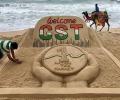
Businesses with monthly turnover of over Rs 50 lakh will have to mandatorily pay at least 1 per cent of their GST liability in cash, the finance ministry said as it moved to curb evasion by fake invoicing. The Central Board of Indirect Taxes and Customs (CBIC) has introduced Rule 86B in Goods and Services Tax (GST) rules which restricts use of input tax credit (ITC) for discharging GST liability to 99 per cent. "... The registered person shall not use the amount available in electronic credit ledger to discharge his liability towards output tax in excess of 99 per cent of tax liability, in cases where the value of taxable supply ... in a month exceeds Rs 50 lakh," the CBIC said.

Since January this year, Indian exporters have begun to dread the shipping news. That's because most of it would be about another lot of shipping companies deciding to avoid Indian ports on account of delays.

Conformity assessment procedures will be put in place to verify that goods and services sold on e-commerce platforms meet required standards and technical regulations, according to the draft e-commerce policy. The policy, which is under discussion, also stated that actions and things which cannot be done by the online platform entities "can also not be done" by any of its associates and related parties. Government may, from time to time, notify parties which fall in the definition of associates and related parties, it said.
However, where the directors' remuneration is in the nature of professional fees and not salary, GST will be levied on a reverse charge basis.

The income tax department will share PAN and bank account details of any entity with 10 investigative and intelligence agencies, including the CBI and NIA, under the integrated counter-terrorism platform NATGRID, according to an official order.

Finance Minister Nirmala Sitharaman on Thursday said taxpayer base has almost doubled to 1.28 crore in four years of rollout of the historic tax reform and the enhanced GST mop up in the recent months should now be the "new normal". In a written message to tax officers on the fourth anniversary of GST rollout, she said implementing any reform of this scale in a large and diverse country like India can be highly challenging, but GST has brought about ease in taxpayer compliance and reduced common man's tax burden.

The net indirect tax collection in 2020-21 grew 12.3 per cent annually to Rs 10.71 lakh crore, thereby exceeding the target set in revised estimates, the Finance Ministry said on Tuesday. The mop-up through indirect taxes, which include GST, Customs and excise duties, was Rs 9.54 lakh crore in 2019-20. In the Revised Estimates (RE) for 2020-21, the target was set at Rs 9.89 lakh crore. Net collections from Goods and Services Tax (GST) stood at Rs 5.48 lakh crore during 2020-21, an eight per cent drop compared to Rs 5.99 lakh crore in the previous fiscal year.
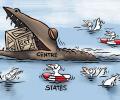
This provision is a very smart rule against fraudster and would not affect any genuine business entities or Ease of Doing Business in any manner, said a source.

The CBEC will itself be rechristened as the Central Board of Indirect Taxes and Customs and will supervise GST and Customs activities and provide the government policy inputs.
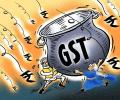
With Goods and Services Tax (GST) officers under pressure to exceed the Rs 1-trillion collection mark per month, industry has faced a barrage of recovery notices and summons issued over the last one month across sectors, according to company executives. Industry bodies have claimed harassment by field officers, blocking of input tax credit, cancellation of GST registration, threats of arrest and steep penalties, impacting their working capital and operations. Company executives pointed at an atmosphere of apprehension and fear due to such notices and summons.
Sources said the action was in line with Prime Minister Narendra Modi's address to the nation from the ramparts of Red Fort when he said some black sheep in the tax administration may have misused their powers and harassed taxpayers, either by targeting honest assesses or by taking excessive action for minor or procedural violations.
Central Board of Indirect Taxes and Customs said despite the electronic way or E-way bill mechanism there has been rampant evasion and there is a need to increase compliance.
In the year-long crackdown on tax evasion, the GST authorities have unearthed over Rs 35,000 crore of tax fraud committed by misuse of input tax credit provision under the Goods and Services Tax (GST) regime. During the 2020-21 financial year, the CGST zones and the Directorate General of GST Intelligence (DGGI) booked about 8,000 cases involving fake ITC of over Rs 35,000 crore, a statement from CBIC said. Under the GST regime, at the time of paying tax on output, entities can reduce the tax they have already paid on inputs.

This will boost availability of these items as well as make them cheaper, it said, adding that Modi also directed the revenue department to ensure seamless and quick custom clearance of such equipment.

The instruction is that audit of large units be completed within seven working days, of medium units in five working days and of small ones in three.

'Shouldn't our investigation agencies be fiercely independent and conduct fair investigations, show some spine and say no to such witch hunting?' 'That they will not be cowed down by what the Centre wants them to do.'
 © 2026 Rediff.com - Investor Information - Advertise with us - Disclaimer - Privacy Policy - Sitemap - Feedback - About us - Terms of use - Grievances