
Since its results for the first quarter of the 2023-24 financial year (Q1FY24) earlier this month, the stock of auto component major Bharat Forge is up nearly 15 per cent and hit its all-time high in the process. The recent gains have extended the returns over the last three months to over 34 per cent. After a strong Q1 performance which beat expectations, brokerages had revised their earnings estimates upwards to factor in the improved outlook.

Abbott India outperformed the Indian pharmaceutical market (IPM) with a year-on-year (YoY) growth of 23 per cent in February. The domestic market grew at a robust 20 per cent on a low base, primarily led by volume growth and price hikes. Abbott continued to outperform the sector in the anti-diabetic space with a growth of 20 per cent and key brands such as Thyronorm (hypothyroidism), biliary agent Udiliv, insulin Ryzodeg posted robust growth.

Airline stocks have been soaring following a steep decline in crude oil prices and sustained passenger traffic. Analysts have particularly turned bullish on the stocks of InterGlobe Aviation and SpiceJet. On December 20, shares of InterGlobe Aviation (IndiGo) hit a record high of Rs 3,009 on the BSE, having surged 43.24 per cent year-to-date (YTD).

Meaningful market share would go to those who have the distribution strength to push their products, such as banks.

The board of Nazara Technologies, a listed online gaming company, has approved the issue of shares worth Rs 100 crore to firms managed by Zerodha founders Nikhil and Nithin Kamath, the company said in a regulatory filing on Monday. The company is proposing to issue 1,400,560 equity shares at a face value of Rs 4 each, for Rs 714 per equity share. This will amount to Rs 99,99,99,840 and will be proportionately allotted to M/s Kamath Associates and M/s NKSquared.

Morgan Stanley has upgraded China's equities amidst optimism about the country relaxing restrictions to slow down the spread of Covid-19. "Multiple positive developments alongside a clear path set towards reopening warrant an upgrade and index target increases for China," the brokerage said in a note. MSCI China's return on equity (ROE) is likely to rise from 9.4 per cent to 11.1 per cent by the end-2023.

India's largest listed pharmaceutical (pharma) company - Sun Pharmaceutical Industries (Sun Pharma) - is expected to maintain its outperformance vis--vis the sector's, as its multiple bets on specialty products, improving product mix, recent acquisitions, and branded business are finding favour with brokerages. While it has gained 7 per cent over the past year, the Nifty Pharma Index is down 13.6 per cent. Its outperformance over two years has been fairly evident, with the market leader gaining 66 per cent to Nifty Pharma's minus 1.4 per cent.

The Reserve Bank of India's (RBI's) latest order on unsecured loans is set to hit the banking sector's growth in the near-term, cautioned analysts, as they see banks slowing down on aggressive retail lending. Besides, cost of funds for non-banking finance companies (NBFC) is expected to inch up as banks will pass on higher capital charge to NBFCs. "We believe the fallout of the RBI action will be mainly on growth, given the rising dependence on unsecured retail loans and lending to NBFCs for growth.

The National Stock Exchange of India (NSE), which is still awaiting regulatory approval for its initial public offering (IPO), is now planning to streamline the process of buying the unlisted stocks of the company, thereby reducing the time taken for such deals from about four months to just a week. The management of India's biggest stock exchange has affirmed that it is working to reduce the time taken. According to the analysts, certain approvals required at present from NSE for buying stocks, are adding to the processing time.

The state with the most people has displaced the state with the largest economy in terms of investor additions. Uttar Pradesh (UP) added 126,000 new investors in April, reveals National Stock Exchange (NSE) disclosures. This is higher than Maharashtra's 118,000. Maharashtra, which is home to India's financial capital of Mumbai, has traditionally been the biggest source of investors.

The retail industry witnessed robust top-line growth for the greater part of the previous financial year, but demand has started to show signs of fatigue seen in the January-March quarter (fourth quarter, or Q4) of 2022-23 (FY23), especially in the apparel and innerwear segments. Jewellery, however, has managed to hold on to demand in the quarter. "In the discretionary space, demand moderation in urban markets is expected to impact the quick-service restaurant and apparel categories the most, while paint, luggage, and jewellery should see resilient growth," Systematic Institutional Equities observed in its preview of the sector.

The newest entrant to the Rs 46-trillion mutual fund (MF) space - Zerodha - plans to focus strictly on the low-cost passive segment and offer its products solely through the commission-free digital route, as it aims to replicate its broking success in the MF space. "We will offer an array of exchange-traded funds (ETFs) and index funds that would help investors take varied exposures and build portfolios based on their financial needs and risk tolerance. "Zerodha Fund House (FH) products will be exclusively distributed online and available as direct plans to engage directly with individual investors and consumers, taking advantage of the pronounced shift from physical to digital interactions," said Vishal Jain, chief executive officer, Zerodha FH.

IT major Accenture's second straight cut in its revenue growth forecast for FY23 suggests there is more pain ahead for the Indian IT sector, say analysts. Accenture has lowered the top end of its FY23 growth guidance in constant currency (CC) to 9 per cent from 10 per cent earlier. The firm, which follows a September-August fiscal cycle, expects a 2-6 per cent CC growth in Q4 of FY23 (June-August 2023) versus the 6-10 per cent prior guidance.

Auto industry volumes have grown by 2.5 per cent overall, led by domestic sales of three-wheelers, two-wheelers and passenger vehicles (PVs) in the first quarter of this financial year. Analysts predict an 18 per cent growth in revenues for automotive original equipment manufacturers (OEMs) and profit growth of 69 per cent year-on-year (YoY). However, on a sequential basis, a decline in revenues as well as earnings before interest, taxes, depreciation, and amortisation (Ebitda) margins is expected.

About 5.3 million fewer investors were active in March than they were nine months ago as sustained volatility weighed on sentiment. The number of active clients on the NSE, the country's largest bourse, stood at 32.7 million, down 5.3 million. This was 14 per cent lower than 38 million in July 2022.

At least 120 insurance intermediaries and aggregators from across the country are under scrutiny, mainly from Mumbai, Gurugram and Bengaluru.

The general elections in April/May 2024 are expected to add volatility to the Indian markets, keeping investors on their toes.

Capital goods companies in their Q2FY24 results are expected to report another steady quarter of earnings growth as order inflows and execution remain healthy, according to analysts. An upward revision in order inflow targets and a margin improvement due to lower raw material costs are also anticipated. "We expect the execution of all capital goods companies and most EPC (engineering, procurement, and construction) companies to remain healthy Y-o-Y (year-on-year), led by strong order book accretion in the past 5-6 quarters," wrote analysts at Kotak Securities in a note, estimating revenue growth of 32 per cent for India's largest company in the capital goods space -- Larsen & Toubro.

Only the top 5 per cent profit makers account for 75 per cent of profits.
At Rs 919 crore, InterGlobe Aviation, the parent firm of low-cost airline IndiGo, posted its best-ever fourth quarterly net profit in the January-to-March quarter (Q4) of financial year 2022-23 (FY23). The bottom-line, however, was lower than the Street's expectations where estimates ranged from Rs 1,160 crore to Rs 2,180 crore. On the bourses, shares of IndiGo have added just 30 paise (0.01 per cent) since the announcement of the Q4-FY23 results on May 18.

Economic growth, which we are taking for granted, slows for a completely different set of local or global factors and the Modi premium vanishes, observes Debashis Basu.

The Securities and Exchange Board of India (Sebi) is discussing with mutual funds (MFs) a proposal on introducing new total expense ratio (TER) slabs linked to the total equity and debt assets by replacing the current ones that are linked to assets of an individual scheme. Senior MF executives confirmed that Sebi had held discussions on this matter with AMCs. Such a change is expected to lead to a lower TER cap for bigger asset management companies (AMCs).

Following a more than 15 per cent surge in the National Stock Exchange (NSE) Nifty 50 from this year's lows, the spread between the 10-year government security (G-sec) and the Nifty earnings has approached the danger zone of 2 percentage points (ppt). At present, the G-sec yield is roughly 7.09 per cent, while the Nifty earnings are 5.12 per cent. As a result, the spread works out to 1.98 ppt, ever so slightly below the danger mark of 2 ppt.

After lagging behind other segments in the automotive (auto) space over the past few years, two-wheelers are expected to reverse their volume underperformance. After witnessing a 36.3 per cent volume decline over the 2018-19 (FY19) through 2021-22 (FY22) periods, the sector staged a recovery in 2022-23 (FY23), with volumes rising 17 per cent. While volumes are still a quarter lower than the FY19 peak of 21 million units, a double-digit growth trajectory is expected to prolong.

Bank of Baroda Q4 results: Key brokerages have raised their target prices on Bank of Baroda after the state-owned lender posted better-than-expected March quarter (Q4FY23) results. Analysts now see up to 29 per cent upside in the stock from a one-year perspective as they believe BoB is well-placed among the large public banks with nearly all key business metrics moving closer to the top-tier banks. Valuations, too, remain attractive despite steady strong quarterly performances.
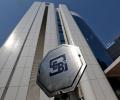
Markets regulator Sebi will put in place a framework for the Application Supported by Blocked Amount (ASBA) facility for investors in secondary market trading, similar to the existing system for IPO investors. Sebi's board approved the proposal during its meeting here on Wednesday. Through the proposed facility, which would be optional for investors as well as stock brokers, Sebi aims to bring in "efficiency in the secondary market ecosystem by allowing usage of same blocked amount towards margin and settlement obligations.

The Reserve Bank of India's latest order prohibiting Bajaj Finance from sanctioning and disbursing loans under its 'eCOM' and 'Insta EMI Card' products may not have serious implications on the non-banking finance company's profitability, provided the ban is lifted within six to eight weeks, analysts said. "In a surprise move, the RBI has asked Bajaj Finance to stop sanction and disbursal under two of its digital lending products. "While the move is negative, the speed of correction will be key to reinstate products," global brokerage Jefferies said in a report.
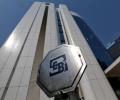
The Securities and Exchange Board of India (Sebi) plans to roll out a new regulatory framework for registrar and transfer agents (RTAs) - the market intermediaries responsible for the record-keeping of bondholders and shareholders after a company offers securities to the public. The markets regulator, sources said, is considering a multifold increase in net-worth requirement, a move that may dissuade companies from having in-house RTAs for record-keeping. At present, the minimum net worth required for RTAs is Rs 50 lakh and Rs 25 lakh in categories I and II, respectively.

Though most analysts expect the global central banks to keep the liquidity tap open, valuations of Indian markets, they say, are beginning to look stretched. Against this backdrop, they remain cautious, with some even expecting a minor correction from here on.

The Reserve Bank of India's rate-setting panel will go for a 0.35 per cent hike in the key repo rate at its meeting next week, an American brokerage said on Wednesday. The hike will be accompanied by a change in the policy stance to "calibrated tightening", Bofa Securities said in a report published ahead of the Monetary Policy Committee (MPC) resolution which is set to be announced on August 5. RBI has hiked the rate by a cumulative 0.90 per cent in two tightening moves in May and June, responding to the runaway headline inflation which has consistently overshot the upper end of the target set for the central bank for many months.

The 2022-23 (FY23) January-March quarter performance of the country's largest listed paint companies was better than Street expectations. Asian Paints, Berger Paints, and Kansai Nerolac Paints (Kansai Nerolac) registered double-digit revenue growth, compared with the year-ago quarter, reinforced by strong volume/value growth. Falling raw material prices also helped the paint majors hoist their gross margins.

The amazing excuses given by people who don't invest their money abound, but you would be wise to ignore them. Excuses won't help you get ahead; they can only hold you back from the retirement you deserve, says financial planning advisor P V Subramanyam

Sashidhar Jagdishan, managing director and chief executive officer of HDFC Bank, the largest private-sector lender of the country, has just completed his first term. The period October 2020-October 2023 was a roller coaster, and the second one, which started on October 27, could be more interesting as the lender absorbs the impact of the merger of HDFC, which was integrated on July 1, and moves to the next growth phase. Soon after he took over the reins from Aditya Puri on October 27, 2020, the Reserve Bank of India (RBI) debarred HDFC Bank from enrolling new credit card customers and launching new products under the Digital 2.0 programme due to repeated outages on its mobile-banking and internet-banking platforms.

Investors are increasingly turning optimistic about shares of new-age companies. From broad-based 'sell' calls, analysts are giving thumbs up to Zomato, Paytm, and FSN e-Commerce Ventures-owned Nykaa as these companies have shifted focus to sustainable profits. The shares of Zomato hit a fresh 52-week high of Rs 126 apiece on the BSE on November 7, having rallied 15.4 per cent in one week.

A muted revenue performance in the September quarter and weak management commentary weighed on the stock of consumer major Marico which shed 8.5 per cent to Rs 542 from its intraday highs on Tuesday. The company indicated that demand trends were similar to that of the June quarter with instances of increasing food prices and below-normal rainfall distribution in some regions impeding the anticipated recovery in rural demand.

Sugar prices are hovering near six-year highs, leaving a bad taste in Indian consumers' palates but sweetening the portfolios of investors in related stocks at Dalal Street. Shares of sugar manufacturers such as Piccadily Agro, DCM Shriram, Magadh Sugar, and Bajaj Hindustan have rallied up to a whopping 200 per cent so far in the financial year 2024 (FY24) as deficient monsoon rains in major sugarcane producer states like Maharashtra and Karnataka are expected to lead to a shortfall in sugar output ahead. In comparison, the BSE Sensex has modestly gained 11 per cent during this period.

The country's largest lender SBI on Saturday reported a 9.13 per cent rise in consolidated net profit to Rs 16,099.58 crore for the September quarter, weighed down by money it had to set aside for employees' impending wage and pension revisions. On a standalone basis, the State Bank of India (SBI) had a 8.03 per cent increase in the profit after tax for the reporting quarter at Rs 14,330 crore. However, the same was down 15.13 per cent compared to Rs 16,884 crore in the June quarter.

Amid cooling raw material prices, the crude-oil linked companies, which includes paint and tyre firms, have been on a roll over the past one year. Shares of related companies have gained up to 84 per cent, as against a 14 per cent rise in the S&P BSE Sensex. Analysts, however, believe stretched valuations in both these sectors could trigger a de-rating.

The S&P BSE Auto Index has been one of the biggest outperformers among sectoral indices over the past year with returns of 26 per cent. By comparison, the benchmarks - the National Stock Exchange Nifty50 and the S&P BSE Sensex - managed about 6-8 per cent during this period. Improving demand, falling raw material costs, and rising product realisations, led by the premiumisation of portfolios, have led to a revision of growth estimates and upgrades by domestic brokerages.
At a time when the market is betting on a 'higher for longer' global interest rate view, Accenture's (ACN) weak revenue forecast is a negative read-through for the Indian IT firms, according to analysts. The Dublin-based company sees its revenue growth at 2-5 per cent in constant currency (cc) for the financial year 2024 (FY24), below the pre-Covid levels of 5-8 per cent for FY17-20. The weak projection, thus, signals that slower demand is likely to persist this year, and any recovery is unlikely in the near-to-medium term, experts note.
 © 2026 Rediff.com - Investor Information - Advertise with us - Disclaimer - Privacy Policy - Sitemap - Feedback - About us - Terms of use - Grievances