
The Indian banking sector could be due for a rise in profitability after several quarters of net interest margin (NIM) compression. The Q2FY26 results suggest NIMs have bottomed out.

Basel-III norms, proposed to be implemented from the beginning of 2013 till 2017, require the equity capital of a bank to be not less than 5.5 percent of risk-weighted loans, as per the draft guidelines issued by Reserve Bank of India.

Infrastructure bonds, which were relied upon the most in 2024-25 (FY25) by commercial banks to raise funds through the domestic debt capital market amid lagging deposit growth, seem to have lost their sheen in FY26. So far in FY26, no bank has tapped the domestic debt capital market to raise funds via infra bonds, and the expectation is that the amount raised through this route will be significantly lower than that last year, unless credit demand picks up.

The ratings agency, in a report, said 'the Reserve Bank of India's deferral of the Basel 3 implementation deadline by a year has eased the pressure on banks to issue hybrid Tier 1 capital in FY15.'

For the first time, Reserve Bank has quantified the cost of implementing Basel-III norms, pegging the recapitalisation needs of the banking system at Rs 1.75 trillion, but added that it is manageable.
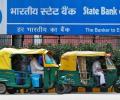
State Bank of India (SBI), the largest lender in the country, has launched a share sale to institutional investors to raise upto Rs 25,000 crore, the biggest qualified institutional placement (QIP) so far by an Indian firm, and has set a floor price of Rs 811.05, which is at a 2.5 per cent discount on Wednesday's closing price.

RBI had rescheduled the starting date for its implementation.

With their weak metrics and high bad loans, India's state-run banks have not been investor favourites

Public sector banks (PSBs) have proposed the Finance Ministry their plan to raise Rs 54,800 crore through Additional Tier-1 (AT-1) and Tier-2 bonds in the current financial year (FY25), 37 per cent more than the Rs 39,880 crore raised in FY24

Commercial banks in India reported a sixth consecutive year of rise in their net profits in 2023-24 while bad loans continued to fall, according to the Reserve Bank of India's (RBI's) annual publication "Trends and Progress of Banking in India", released on Thursday. "Banks' profitability rose for the sixth consecutive year in 2023-24 and continued to rise in H1:2024-25 with the return on assets (RoA) at 1.4 per cent and return on equity (RoE) at 14.6 per cent," the report said.

State Bank of India (SBI) on Saturday reported an almost flat standalone net profit at Rs 17,035 crore for the first quarter of the current financial year. The country's biggest lender had posted a net profit of Rs 16,884 crore in the April-June quarter of 2023-24. The bank's total income increased to Rs 122,688 crore in the first quarter against Rs 108,039 crore a year ago, SBI said in a regulatory filing.

State Bank of India (SBI), India's largest lender, is looking to raise Rs 10,000 crore through 15-year infrastructure bonds as early as next week, said multiple sources aware of the development. Market participants expect a coupon in the range of 7.15-7.18 per cent for SBI's upcoming infrastructure bond issuance. This comes as demand for longer-tenor papers has remained strong in recent domestic capital market offerings.

The Securities and Exchange Board of India (Sebi) on Monday relaxed the norms for valuing perpetual bonds. The norms, which had sought to value banks' deemed residual maturity of Basel III additional tier 1 (AT1) bonds as 100-year debt from April 1, were strongly opposed by the finance ministry. In a statement released on Monday, the regulator said the maturity would be 10 years until March 31, 2022, and would be increased to 20 and 30 years over the subsequent six-month period.

A large part of this fund would be raised through public offers made to retail customers, he said.

Says licensing of new banks should be a continuous process instead of the current stop-go system

Indian banks would require additional Rs 8 lakh crore to meet the minimum capital adequacy under Basel III norms, ratings agency Crisil has said.

This shortfall could continue to hurt loan growth in 2016-17.

The capital infusion would help improve the financial health of banks. While some banks would get necessary regulatory capital while others would get it for fueling growth.

The government may delay Rs 14,000 crore (Rs 140 billion) fund infusion in the public sector banks in view of volatile market conditions.

'We will infuse the next tranche of recapitalisation by mid-December. Close to Rs 42,000 crore remain to be infused as capital in public sector banks in the current financial year,' a senior finance ministry official said.

These PSU banks also account for the lion's share of bad loans or NPAs plaguing the sector and need crores of rupees in new capital in the next two years to meet global Basel III capital norms.

The RBI was not party to the decision to demonetize 500 and 1,000-rupee notes, which was taken at the highest level of India's political leadership.

The S&P BSE Sensex ended higher by 464 points or 1.95% at 24,243.

This issue was discussed at the Gyan Sangam addressed by Prime Minister.

Public sector banks require Rs 2.40-lakh crore.

Arun Jaitley had promised to provide more than the budgeted amount.

Punjab National Bank is the second largest PSU bank, in which government holding is 58.87 per cent.

Banks should start looking for ways to generate more internal capital as the leeway to get additional funds from the government would be limited due to the ongoing fiscal consolidation process, Mundra said.
The government is likely to infuse additional capital of Rs 20,000 crore in the public sector banks next financial year to meet Basel III global capital risk norms.

Banks need to raise capital to comply with Basel III norms. This mode of raising money gives all shareholders equal investment opportunity.

Finance Minister Arun Jaitley on Saturday proposed to infuse Rs 7,940 crore funds next fiscal in the public sector banks.

Banks will need more funds, as they have to provide more capital.

Finance Minister Arun Jaitley on Sunday said the government is planning to bring down its stake in public sector banks to 52 per cent so as to meet Rs 3 lakh crore capital requirement.

Need to conserve profits to strengthen the capital base is driving the effort.

Citigroup is likely to reduce its stake in Housing Development Finance Corporation (HDFC) to below 10 per cent, according to three people familiar with the development.

At present, 58 per cent of the population has bank account.

The foreign bank had earlier pared its holding in the housing finance company from 11.4 per cent to 9.9 per cent.

Mutual fund houses hold Rs 3,400 crore of Yes Bank's 'riskier' bonds. Reliance MF, Franklin Templeton MF and UTI MF account for bulk of these exposures.
The main reasons for this latest rally include strong foreign institutional investor flows, healthy Indian and Chinese manufacturing data as well as less than severe Basel-III norms.

The central bank says that PSU banks need to generate more internal capital and that the government should cut stake.
 © 2026 Rediff.com - Investor Information - Advertise with us - Disclaimer - Privacy Policy - Sitemap - Feedback - About us - Terms of use - Grievances