
A two-judge bench of the top court in 1981 questioned the correctness of the 1967 verdict holding Aligarh Muslim University not to be a minority institution since it was created by a central law and referred the issue to a larger bench for decision.

The Aligarh Muslim University's minority status issue will have to wait to reach a logical end after the Supreme Court majority verdict on Friday asked a regular bench to decide the issue.

The judge further underlined that the minorities of the country had not only joined the mainstream but also were an important facet of it.
The Supreme Court on Friday deferred the question of Aligarh Muslim University's minority status to a fresh bench and overruled the 1967 judgment that said the university cannot be considered a minority institution since it was created by a central law.

On February 1, grappling with the intractable issue of the AMU's minority status, the top court said the 1981 amendment to the AMU Act, which effectively accorded it a minority status, only did a "half-hearted job" and did not restore the institution the position it had prior to 1951.
Aligarh Muslim University is not a minority educational institution, Supreme Court's Justice Dipankar Datta said on Friday and noted had it not been a "race against time" he would have articulated better in his dissenting opinion. The judge also flagged a non-exchange of ideas and opinions in a "true democratic spirit" to build a consensus.

Merely because an educational institution is regulated by a statute does not take away from it the character of a minority institution, the Supreme Court observed on Tuesday as it commenced hearing the vexed question of minority status of Aligarh Muslim University (AMU).

It said AMU is not and cannot be a university of any particular religion or religious denomination as any university which has been declared an institution of national importance cannot be a minority institution.

The mere fact that some part of administration of an educational institution is also looked after by non-minority officials does not "dilute" its minority character, the Supreme Court observed on Wednesday while hearing the hugely disputed minority status of Aligarh Muslim University (AMU).

How does it matter for people whether the Aligarh Muslim University is a minority institution or not when it has continued to be an institute of national importance without the minority tag, the Supreme Court said on Thursday as it underlined that the intent of Article 30 of the Constitution is not to "ghettoise the minority".

There is nothing "fundamentally inconsistent" with a minority institution being an institution of national importance (INI), the Supreme Court said on Wednesday while hearing arguments on the vexed issue of minority status to Aligarh Muslim University (AMU).

Grappling with the intractable issue of Aligarh Muslim University's minority status, the Supreme Court said on Thursday the 1981 amendment to the AMU Act, which effectively accorded it a minority status, only did a "half-hearted job" and not restore to the institution the position it had prior to 1951.
An institution of national importance must reflect the "national structure", the Centre told the Supreme Court on Tuesday while pointing out that around 70 to 80 per cent students studying at Aligarh Muslim University (AMU) are Muslims even without reservation.
The NDA govt told SC that it would withdraw the appeal filed by the erstwhile UPA govt challenging the Allahabad HC verdict holding the AMU as non-minority institution.
Asserting that Aligarh Muslim University is not a minority institution, Rashtriya Swayamsevak Sangh on Saturday said the varsity is committing a "big crime" by not implementing the policy of reservation for SCs, STs and OBCs.
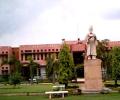
Attorney General Mukul Rohatgi's stand that AMU is not a minority university reveals the anti-minority stand of the political party now in power, says Mohammad Sajjad, outlining the long history behind one of India's premier universities.
 © 2026 Rediff.com - Investor Information - Advertise with us - Disclaimer - Privacy Policy - Sitemap - Feedback - About us - Terms of use - Grievances