
"It was a good long meeting with the governor. He met the finance minister. He reviewed the situation. Rest, wait for the policy," finance secretary Ashok Chawla told reporters.

India on Tuesday distanced from the ongoing Sino-US row over revaluation of Chinese currency yuan saying it is their bilateral issue.

Amid tensions over denial of visa to a top Indian Army General by China, India and China are set to hold two-day high level annual dialogue here on a host of bilateral and global financial issues from September 1.
Ahead of the G-20 Summit, Planning Commission Deputy Chairman Montek Singh Ahluwalia will lead a delegation to a preparatory meet on March 11 in London where deliberations on issues like liquidity crunch and reforms in international financial institutions are likely be taken up.

There is scepticism in some quarters that the Budget for 2010-11, while spreading cheer, may be skating on thin ice. For instance, some of its assumptions will give way if the non-tax revenue projections turn out to be castles in the air.
This was decided after Bangalore International Airport Ltd, the private consortium developing the greenfield airport, rejected the civil aviation ministry's proposal of keeping both the airports operational. The Karnataka high court had recently advised the government to reconsider the concession agreement with the private developers, which says that the existing airport in Bangalore should be shut down after the new one starts functioning.
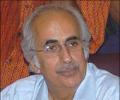
"As far as India is concerned, the impact on us will be minimal. In fact, in the short run -- that is, purely in the short run -- it might help us in terms of India being regarded as a relatively safer haven," Chawla told reporters on the sidelines of a Assocham function in New Delhi.
"We are not looking at increasing FII (investment) limit in government securities," Department of Economic Affairs Secretary Ashok Chawla told reporters. Earlier in June, the government raised the FII investment limit in government securities to $5 billion from $3.2 billion.

At its monetary review on Tuesday, the RBI raised the statutory liquidity ratio by 1 percentage point to 25 per cent and discontinued the special repo facility for banks to provide liquidity to mutual funds and others.
According to sources close to the development, finance secretary Ashok Chawla, who is driving the process, is working on a concept note to provide the framework for consolidation.

The borrowing in the first half of the next fiscal will be less front-loaded (borrowing in tranches) than the similar period of the outgoing fiscal because access to overseas borrowings will be lot more improved next fiscal, finance secretary Ashok Chawla told reporters here today after a meeting with the Reserve Bank of India.

"Subject to synergy, subject to reasonable similarity in culture, they (public sector banks) in the next 5-10 years really need to look at consolidation and merger," finance secretary Ashok Chawla said after launching the mobile banking service of Vijaya Bank in New Delhi.
"We welcome the decision. This will provide adequate impetus to banks to lower their interest rates. Private banks will sooner or later will follow suit," Economic Affairs Secretary Ashok Chawla told reporters in New Delhi on Thursday. On Wednesday, the RBI cut short-term lending and borrowing rates -- Repo and Reverse Repo -- by 50 basis points each, while keeping the other key tool -- Cash Reserve Ratio -- intact.
Finance Ministry and Reserve Bank officials will meet in the next 10-12 days to decide on a schedule for government borrowings for the second half of the current fiscal.
This will help bridge the revenue-expenditure gap, which has been ballooning on account of the stimulus packages and tax concessions announced to spur the economy. Economic Affairs Secretary Ashok Chawla said the government has provided a stimulus of Rs 1,50,000 crore (Rs 1,500 billion) by way of excess expenditure and about Rs 50,000 crore (Rs 500 billion) by way of tax concessions to the industry to battle the economic slowdown.

The government will offload equity in six to seven state-owned companies in the next 12 months, Finance Secretary Ashok Chawla said on Tuesday.
Ruling out upward pressure on interest rates in the near future because of high market borrowings, the government on Tuesday said it will not go for additional borrowings due to the impact of erratic monsoons as tax receipts are expected to be robust.
Admitting that the economy may be impacted if the monsoon is inadequate, the government on Monday said the growth rate in 2009 will not fall to the levels being projected by international agencies like the IMF and the World Bank.
According to the official industrial data, industry grew 2.7 per cent in May, more than double the 1.2 per cent in the previous month. During the month, manufacturing sector output rose by 2.5 per cent, while mining and power generation grew 3.7 per cent and 3.3 per cent, respectively.
The Union finance ministry on Thursday said the falling inflation rate would result in further lowering of interest rates. "The trend is clear for falling inflation and this will translate into lower interest rates," Economic Affairs Secretary in the Finance Ministry Ashok Chawla said while commenting on the inflation data.
The new greenfield airport at Navi Mumbai will come up at the proposed site and not be shifted elsewhere. Maharashtra Chief Minister Vilasrao Deshmukh has also written to the Civil Aviation Ministry for building the airport at the originally proposed site. There had been demands to shift the proposed Navi Mumbai airport to a new site due to environmental issues. The regulator would look into aspects like aeronautical charges, user development fee and passenger fee.
In what would augur well for the industry facing slowdown, the Finance Ministry on Wednesday expressed hope that banks will bring down their lending rates.
Without specifying the date for presentation of the full Budget for the current fiscal in Parliament, finance secretary Ashok Chawla on Wednesday said that the vote-on-account may be needed for another short period, if it is not possible to pass the Budget by August 1.

The Finance Ministry on Tuesday said the RBI's move to retain almost all key rates unchanged will give a positive signal to the economy, which is on the path of recovery.
The government does not expect the stock markets to fall below the levels witnessed on Monday, which saw benchmark Sensex plunging by nearly 700 points during the intra-day trade.
If India takes part in $500-billion resource raising programme of International Monetary Fund, as decided at the G-20 summit in London last week, it will cost the country up to $11 billion (Rs 55,000 crore).

As exporters started complaining about adverse effects of rising value of the rupee against the dollar, the government on Thursday said appreciating Indian currency reflects strength of the economy and it cannot do much so long as the unit rises and falls in a range.
The government on Thursday said it will borrow an additional Rs 1,40,000 crore (Rs 1400 billion) during the first half of next fiscal to fund its increasing public expenditure.

"Growth in the economy was very encouraging and it is expected to improve further going forward," Finance Secretary Ashok Chawla told reporters on the sidelines of a function in New Delhi.
According to the revised borrowing schedule the government would raise Rs 50,000 crore (Rs 500 billion), while the earlier borrowing programme was for Rs 35,000 crore (Rs 350 billion) in the last quarter. The Reserve Bank had revised its indicative calendar for the fourth quarter of 2008-09, superseding the borrowing programme announced on December 5.
The finance ministry on Tuesday said that the divestment programme will kick off with the dilution of government equity in listed entities, where public holding is less.
The government on Thursday said it has stepped up its market borrowing to Rs 2.99 lakh crore for the first half of the current fiscal against Rs 2.41 lakh crore announced earlier.
The Securities and Exchange Board of India is keeping a close watch on the movements in the stock prices at the Bombay Stock Exchange and the National Stock Exchange, which hit the upper circuit halting the trade for the day, a senior finance ministry official said.
The grading system would apply to all airports, including under private developers and the Airports Authority of India, Civil Aviation Secretary Ashok Chawla said at a seminar on Wednesday.
Employees of domestic carrier Indian called off the strike on Thursday afternoon.
In the wake of repeated faults in planes carrying Haj pilgrims from Srinagar, the Union home ministry on Monday summoned civil aviation officials following a strong protest by Jammu and Kashmir Chief Minister Ghulam Nabi Azad.
Work on modernising, expanding and renovating the Netaji Subhas Chandra Bose International Airport will be taken up from January next year, civil aviation secretary Ashok Chawla said on Friday.
Airlines in India have suffered a staggering loss of Rs 4,000 crore (Rs 40 billion) in 2007-08, and it could double in the current fiscal depending on which way fuel prices are headed, Civil Aviation Secretary Ashok Chawla said.
On the day its financial year was ending, Japan on Friday extended the largest ever soft loan package of yen 155,458 million (about Rs 5,910 crore) to India for 2005-2006 fiscal for various projects including the second phase of the Delhi Metro.

Facing flak, TERI's executive vice chairman R K Pachauri on Friday proceeded on leave from two other bodies -- TERI and its governing council, which also appointed former Competition Commission chief Ashok Chawla as the new chairman in an apparent damage control measure.
 © 2026 Rediff.com - Investor Information - Advertise with us - Disclaimer - Privacy Policy - Sitemap - Feedback - About us - Terms of use - Grievances