
From Covid-19 essentials, such as Vitamin C supplements and thermometers, to bicycles, laptops, and personal weighing scales, demand for certain items galloped during last financial year as the pandemic altered what Indians used on a day-to-day basis. Imports of outdoor sports equipment, handbags for women, and dentures, among others, plummeted. With outdoor activities coming to a halt last year and schools functioning virtually, imports of sports goods witnessed a decline, while inbound shipments of laptops and battery chargers saw a sharp uptick, according to the import data for the financial year 2020-21.

Agriculture activity, according to recent channel checks by Prabhudas Lilladher, is expected to continue at a strong pace in FY22.

The record contraction in the growth rate of eight core sectors will have its impact on IIP.

Inflation in food articles during June stood at 2.04 per cent, as against 1.13 per cent in May.

Direct economic stimulus measures such as tax cuts for individuals and industry would have helped to prop up the Indian economy which was hit hard by the lockdowns across several states in India, say economists and corporate leaders. While the measures announced on Monday are focussed more on the supply side, these steps would take a lot of time to move the needle for the economy.
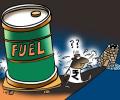
A rise in petrol and diesel consumption can help the government cut cesses on the fuels by Rs 4.5 a litre without impacting revenue collections of FY21, and help cool off the pressure on inflation, domestic rating agency ICRA said on Friday. Petrol consumption is estimated to increase 14 per cent in 2021-22 and diesel by 10 per cent on the lower base, rise in mobility and economic recovery, ICRA said. The rating agency added that it will result in an additional Rs 40,000 crore in revenue for the government through higher collections of the cess.

GST collections in March touched a record high of over Rs 1.23 lakh crore, a 27 per cent growth over the year-ago period, the Finance Ministry said on Thursday. "GST revenues crossed above Rs 1 lakh crore mark at a stretch for the last six months and a steep increasing trend over this period are clear indicators of rapid economic recovery post pandemic," the ministry said. Closer monitoring against fake-billing, deep data analytics using data from multiple sources including GST, income tax and customs IT systems and effective tax administration have also contributed to the steady increase in tax revenue over last few months, it added.

The inflation in the food basket spiked to 7.89 per cent in October 2019 as against 5.11 per cent the preceding month.

The ministry of health and family welfare spent Rs 3,948 crore in May this year compared to Rs 7,816 crore in the corresponding month of the previous year. On the other hand, at Rs 12,930 crore, the expenditure had risen almost 200 per cent in April against Rs 4,327 crore in the corresponding month of 2019-20.

As per commerce and industry ministry data, food inflation fell to 4.91 per cent in March from 7.79 per cent in the previous month.

Inflation in food articles during May stood at 1.13 per cent, as against 2.55 per cent in April.

Pushed by rising prices of essential kitchen items, the retail inflation rose to an eight-month high of 7.34 per cent in September, making the RBI's task to push growth by reducing the interest rate even more difficult in coming the days. The Consumer Price Index (CPI)-based inflation was 6.69 per cent in August and 3.99 per cent in September 2019. Inflation has been hovering above 4 per cent since October 2019.

Spiralling prices pinched the pocket of consumer as edible oil, fuel and many other commodities turned dearer this year amid pandemic-induced disruptions but the inflationary pressure is anticipated to ease, though marginally, in the coming months. As consumers, at retail as well as wholesale levels, are willy-nilly learning to live with the new normal of curbs to contain the spread of coronavirus infections, experts are of the view that elevated inflation is likely to stay longer. After dealing with the devastating blows from the second COVID wave, especially during the April-June period, the economy is well on the revival path but the emergence of Omicron might unsettle the recovery trajectory in the short term.

Imports too declined 26 per cent to $29.47 billion in August, leaving a trade deficit of $6.77 billion.

This is the third consecutive month when GST mop-up remained below the Rs 1 lakh crore mark, despite the festival season.

Retail inflation remained above the RBI's comfort level for the second consecutive month despite slipping slightly to 6.26 per cent in June while the factory output recorded a growth of 29.3 per cent in May, mainly on account of the base effect, the government data showed. The marginal slippage in the Consumer Price Index (CPI)-based inflation was noticed despite little firmness witnessed in the food inflation which inched up to 5.15 per cent in June from 5.01 per cent a month ago. Retail inflation based on Consumer Price Index (CPI) was 6.3 per cent in May 2021 and 6.23 per cent in June 2020.

Outlay for infra is also expected to see a significant increase in view of the government's Rs 111-trillion investment plan under the national infrastructure pipeline to develop social and economic infrastructure over five years.

Sectors with positive growth during the month include rice, iron ore, oil seeds, oil meals, meat, dairy and poultry products, pharmaceuticals, coffee, engineering goods, and plastic.

To meet the revised estimates for 2019-20, the central government will have to garner Rs 5.03 trillion in total revenues in March, which has seen the worst phase of the coronavirus pandemic so far and the resultant lockdown.
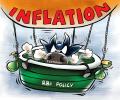
With pricing power of producers unlikely to strengthen and commodities ex-crude oil likely to remain sluggish in the immediate term, the core-WPI inflation may remain sub-zero in the rest of this calendar year.
Mop up grows 10% y-o-y at Rs 1.05 trillion, almost equal to levels in February before a nationwide lockdown to contain the coronavirus pandemic

To make possible discretionary spending including capex and that on welfare, the government decided to borrow more than planned in FY21 -- Rs 12.7 trillion.
The wholesale price-based inflation accelerated to a record high of 12.94 per cent in May, on rising prices of crude oil and manufactured goods. Low base effect also contributed to the spike in WPI inflation in May 2021. In May 2020, WPI inflation was at (-) 3.37 per cent. This is the fifth straight month of uptick seen in the wholesale price index (WPI)-based inflation. In April, 2021, WPI inflation hit double digit at 10.49 per cent. "The annual rate of inflation, based on monthly WPI, was 12.94 per cent for the month of May, 2021 (over May, 2020) as compared to (-) 3.37 per cent in May 2020.

A government official said out that with hardly any economic activity, an immediate duty hike will not be productive and could be announced once the lockdown eases and demand revives.
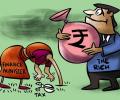
While the tax-to-GDP ratio of 9.88 per cent has been assumed for FY21, the same as last year, when it touched a decadal low, for FY22 a ratio of 10.7 per cent has been assumed, an average of the last five years.
These core industries comprise 40.27 per cent of the weight of items included in the Index of Industrial Production.

Import segments which recorded negative growth include gold, silver, transport equipment, coal, fertiliser, machinery and machine tools. However, exports of oil seeds, coffee, rice, tobacco, spices, pharma, and chemicals reported positive growth in June.

To help revive the economy battered by COVID-19, Finance Minister Nirmala Sitharaman on Monday announced a slew of measures, including Rs 1.1 lakh crore credit guarantee scheme for improving health infrastructure, and enhancing the limit under the ECLGS by 50 per cent to Rs 4.5 lakh crore for the MSME sector facing liquidity crunch. Sharing the details of stimulus package, the finance minister said this comprises eight relief measures and other eight measures to support the economic growth. She announced Rs 1.1 lakh crore loan guarantee scheme for COVID-affected sectors, including health sector, which includes guarantee cover for expansion or for new projects. Besides, she said, additional Rs 1.5 lakh crore limit enhancement done for Emergency Credit Line Guarantee Scheme (ECLGS) scheme.

'The real lifting of the economy will happen only if this momentum sustains in the coming months.'
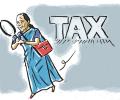
While the ratio determines the extent to which the government is able to finance its expenditure, it is also an indicator of tax compliance. Developed countries have a higher contribution of tax to their GDP.
Experts warn of over-interpreting the numbers and said their sustainability needed to be watched beyond November, says Indivjal Dhasmana.
Inflation in food articles, fuel and power contracted in July.

India's factory output climbed 22.4 per cent in March, benefiting from the base effect of the lockdown-marred month a year back as well as a turnaround in the manufacturing sector, while retail inflation slipped to a three-month low of 4.29 per cent in April. The high positive annual growth in the index of industrial production (IIP) in March 2021 came on back of a contraction of (-)0.9 per cent and (-)3.4 per cent in January and February 2021 respectively, according to the data released by the National Statistical Office (NSO) on Wednesday. This turnaround was led by recovery in the mining, manufacturing and electricity sectors.

After the government sought Parliament's nod for a second batch of supplementary demand for grants that will cause a hit of Rs 2.99 trillion to the exchequer, doubts suddenly arose about the government's ability to meet the Budget projections of reining in its fiscal deficit at 6.8 per cent of gross domestic product (GDP), or Rs 15.06 trillion, for the current financial year. Till now, many were of the opinion that the government would succeed in checking the deficit at a much lower figure than what was given in the Budget Estimates (BE). The government had sought Parliament's approval to spend Rs 3.74 trillion extra, but Rs 74,517.01 crore will be matched by equal savings on other heads.

Exports rise for 8th month, albeit at lower pace

No longer Bengal's finance minister, Amit Mitra, Mamata's principal chief advisor, will still advise and aid the 'chief minister and finance department on all matters relating to management of state finance', represent the 'state government in national and international events/meetings/committees' and examine 'important proposals/files and policy issues relating to financial matters referred to him for advice/views'.
Experts say a large part of the expenditure in April was spent on heads such as creating infrastructure for testing capacity and procuring testing kits, among other things.

Barring rice, spices, iron ore and pharmaceuticals, all the remaining 26 key sectors registered negative growth in May. Imports too plunged 51 per cent to $22.2 billion in May.

The government clarified that the majority of industrial establishments had reported nil production, and cautioned that the numbers should not be compared with those of previous months. "It is not appropriate to compare the IIP of April 2020 with that of earlier months, and users may like to observe the changes in the IIP in the following months," said the ministry of statistics & programme implementation.

Almost all infrastructure ministries continued spending on capex throughout the lockdown, even as the Centre tried to maintain some semblance of economic normalcy.
 © 2026 Rediff.com - Advertise with us - Disclaimer - Privacy Policy - Sitemap - Feedback - About us - Terms of use - Grievances