
The Indian Centre has spent 37 per cent of its ~12.22 trillion capital expenditure target in the first four months of FY27, marking a 30 per cent year-on-year increase, while simultaneously keeping the fiscal deficit under control at 27 per cent of the Budget Estimate.

India's trade deficit reached a six-month high of $31.98 billion in July, driven by a sharp increase in imports, particularly crude oil, electronic goods, coal, and fertilisers. Both merchandise exports and imports recorded their second-highest levels during the same period.

The Reserve Bank of India (RBI) is widely expected to keep its benchmark repo rate unchanged in the August monetary policy review, with economists citing elevated inflation risks and the pending closure of the FCNR(B) deposit scheme as key factors. Most anticipate a 'Neutral' policy stance but with a hawkish tone due to geopolitical tensions, high crude oil prices, and an uneven monsoon.

The government maintained a strong pace of capital expenditure, which jumped nearly 24 per cent to Rs 3.40 trillion in April-June.

India's retail inflation rose to 4.38 per cent in June, driven primarily by costlier food items, pushing it above the Reserve Bank of India's median target of 4 per cent for the first time under the new series.

The Indian central government has reduced its total expenditure by approximately 60,000 crore in FY26, below its revised estimate, to successfully achieve the fiscal deficit target of 4.4 per cent of gross domestic product (GDP), according to the latest data from the Controller General of Accounts (CGA).

India's core sector output contracted by 0.4 per cent in March, marking the first decline in five months, with coal, crude oil, fertiliser, and electricity production falling, according to official data.

The Reserve Bank of India (RBI) has announced a record surplus transfer of Rs 2.87 trillion to the central government for FY26, driven by increased income and an expanded balance sheet, despite a reduction in the contingent risk buffer (CRB) to 6.5 per cent.
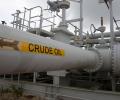
Production growth in India's eight core infrastructure sectors slowed to a three-month low of 2.3 per cent in February, impacted by contractions in crude oil, natural gas, and refinery products output.

India's retail inflation marginally increased to 3.4 per cent in March, up from 3.21 per cent in February, primarily due to an uptick in certain food items and the initial impact of the West Asia crisis on fuel prices, according to government data.

A prolonged supply shock can transmit to lower incomes, and dampen confidence and sentiment, warns Aditi Nayar, chief economist, head-research and outreach, ICRA.

India's industrial production saw a 5.2 per cent increase in February, primarily fuelled by a significant improvement in the manufacturing sector, with 14 out of 23 industry groups recording positive growth.

India's eight core infrastructure sectors experienced a slowdown in production growth, reaching a two-month low of 4% in January. Crude oil and natural gas output declined, while refinery products remained flat. Overall growth for the April-January period was also lower compared to the previous fiscal year.

India's net oil import bill could rise by $56 billion to $64 billion annually assuming global crude averages $110 to $115 per barrel in FY27.

India's eight key infrastructure sectors registered a four-month high growth rate of 3.7 per cent in December last year, driven by a jump in the output of fertiliser and cement, according to official data released on Tuesday.

India's eight key infrastructure sectors grew at a slower pace of 1.8 per cent in November against 5.8 per cent in the same month last year, amid a dip in production of crude oil, natural gas, refinery products, and electricity, according to official data released on Monday.

If the conflict continues for a prolonged period, State-run oil companies may have to review retail fuel prices accordingly.

Analysts predict India will face oil price volatility and macroeconomic effects due to the escalating Iran crisis, though the country's oil supply chain is not yet structurally insecure.

Gold imports climbed 349.22 per cent to $12.07 billion in January, while silver imports rose 127 per cent to $2 billion.

India's economy experienced a growth of 7.8 per cent during the October-December quarter of 2025-26, according to the new series of national accounts with 2022-23 as the base year.
Retail inflation rose to a three-month high of 1.33 per cent in December 2025 mainly due to higher prices of kitchen essentials, including vegetables and protein-rich items.

Growth of eight key infrastructure sectors remained flat in October as expansion in output of petroleum refinery products, fertiliser and steel was offset by a contraction in coal and electricity production, according to official data released on Thursday.

India's eight key infrastructure sectors' growth jumped to a 13-month high of 6.3 per cent in August 2025 on account of expansion in coal, steel, and cement production, according to official data released on Monday. The core sectors' output growth was 3.7 per cent in the previous month of July.

India's exports contracted 11.8 per cent to $34.38 billion in October, showed government data released on Monday. Imports jumped 16.63 per cent to $76.06 billion.

India, the world's fourth largest economy, is set to maintain the 'goldilocks' phase with tailwinds of good growth, low inflation and robust banking performance as well as reform initiatives poised to sustain the economic pace witnessed during 2025.
India's merchandise trade deficit widened to a record $41.68 billion in October, as gold imports trebled and outbound shipments registered their sharpest contraction in 14 months, according to data released by the commerce department.

Retail inflation in August rose slightly to 2.07 per cent from 1.61 per cent in the preceding month, mainly due to increase in prices of vegetables, meat and fish, according to a government data released on Friday.
The Indian economy recorded a six-quarter high growth of 8.2 per cent in July-September, as factories churned out more products in anticipation of a consumption boost from the GST rate cut, according to government data.
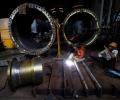
The country's industrial production grew at 4 per cent in August, mainly due to better performance by the mining sector, according to government data released on Monday.

While participants in the domestic financial market are expecting a 25 basis-point policy repo rate cut in the December meeting of the Monetary Policy Committee (MPC) of the Reserve Bank of India (RBI), economists remain torn between a reduction in rate cut and a pause.

India's net revenues from the Goods and Services Tax (GST) rose at a three-month high pace of 10.7 per cent in August even as growth in gross collections slowed to 6.5 per cent from 7.5 per cent in the previous month, thanks to a nearly 20 per cent decline in refunds to taxpayers during the month.

The Centre's fiscal deficit stood at 17.9 per cent of the full-year target at the end of June, according to data released by the Controller General of Accounts (CGA) on Thursday. It was at 8.4 per cent of Budget Estimates (BE) of 2024-25 in the first three months of the previous financial year.
Retail inflation slipped to 1.54 per cent in September from 2.07 per cent in the preceding month mainly due to subdued prices of food items, including vegetables and pulses, according to government data released on Monday. The consumer price index (CPI) based inflation was 5.49 per cent in September 2024.

The output of eight key infrastructure sectors slowed down to an eight-month low of 0.5 per cent in April due to contraction in the production of crude oil, refinery products and fertiliser. According to official data released on Tuesday, these eight sectors -- coal, crude oil, refinery products, natural gas, steel, cement, electricity and fertiliser -- expanded by 6.9 per cent in April 2024.

India's industrial production growth accelerated to a 4-month high of 3.5 per cent in July this year due to good performance of manufacturing sector, according to official data released on Thursday. The country's industrial output earlier recorded this level of growth at 3.9 per cent in March 2025.

The output of eight key infrastructure sectors slowed down to 3.8 per cent in March, as against 6.3 per cent growth registered a year ago on account of moderate expansion in sectors like coal and crude oil, according to official data released on Monday. On a monthly basis, the growth rate in the production of these sectors was slightly higher than the 3.4 per cent expansion recorded in February.

CAG warns most states of fiscal imprudence as March spending overshoots limits, with key departments exhausting large portions of budgets in the last month of FY24.

Indian economy grew by 7.8 per cent in April-June -- the highest in five quarters -- before the disruptive US tariffs were imposed.
India's industrial production growth slowed to a nine-month low of 1.2 per cent in May 2025 due to poor performance of manufacturing, mining and power sectors caused by the early onset of monsoon, according to official data released on mMonday. The factory output, measured in terms of the Index of Industrial Production (IIP), had expanded by 6.3 per cent in May 2024.
India's consumer price index (CPI)-based retail inflation rate is likely to have cooled further in June, thus remaining below the 4 per cent target of the Reserve Bank of India (RBI) for a fifth consecutive month, giving the central bank wiggle room to focus on growth. Economists reckon that the decline is on account of easing prices in various categories of goods, especially food items, and a favourable base effect.
