
Shares of Reliance Industries Limited (RIL) tumbled on Tuesday, posting its biggest single-day decline in 19 months, amid controversy over its purchase of Russian oil and profit-booking after recent gains.

Brokerages on DMart Q3 results: Avenue Supermarts (DMart) shares slipped as much as 5.74 per cent to hit an intraday low of Rs 3,474 per share on Monday. However, the stock recovered slightly to close at Rs 3,507.95, down 4.82 per cent. Notably, the 52-week low for DMart shares is Rs 3,400. The downward movement in DMart's share price was triggered by the company's 2024-25 (FY25) October-December quarter (Q3) results, which missed Street expectations.
The stock of India's largest listed pure-play retail company, Avenue Supermarts (DMart), has slipped over 10 per cent from its monthly highs. A weak operational performance in the fourth quarter (January-March) of financial year 2024-25 (Q4FY25) and muted near-term outlook due to intense competitive pressures and higher costs could lead to downward momentum on the stock. While the stock dipped by 3.44 per cent in early trade on Monday, it recovered a bit to close 1.07 per cent lower at 4,017.

Eyewear retailer Lenskart Solutions is gearing up to launch its initial public offering (IPO) on October 31, aiming to raise Rs 2,150 crore through a fresh issue of shares. This marks its much-awaited entry into the public markets.

Trent reported decent margins in the second quarter (July-September) of 2025-26 (Q2FY26) but growth moderated. Same store growth was low single-digits. Trent's revenue growth decelerated in Q2FY26 at 17 per cent year-on-year (Y-o-Y) while area additions were offset by decline in revenue per square foot (sq ft).

Discount retailer DMart (Avenue Supermarts) hit its highest levels in a year and a half last week and is up over 11 per cent in the last one month. The company depends on low operating costs to offer the lowest prices to consumers, which enables sales velocity and scale, further reducing costs. This virtuous feedback loop has helped DMart gain market share in a sector dominated by unorganised stores.
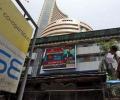
Shares of Avenue Supermarts (DMart) have rallied 15 per cent in the past month, even as the benchmark National Stock Exchange Nifty has remained flat. The stock has garnered favourable commentary from both fundamental and technical analysts after three years of poor performance. "DMart has reached its first 52-week high since October 2021, taking off from solid base formations.
Ramping up e-commerce operations and going beyond its current strongholds are key challenges for the grocery chain in its battle with Mukesh Ambani's retail behemoth.

The bigger threat for DMart is that the Reliance-Future combine now has grocery revenues that are nearly 2.5 times of it, putting pressure on the former to improve stickiness of its consumers.

Share prices of Nestle India, Asian Paints, Bandhan Bank, Tata Technologies, AU Small Finance Bank and Avenue Supermarts, all a part of the BSE 500 index, have hit their respective 52-week lows on the BSE in Thursday's intra-day trade after a sharp correction in the equity markets.

DMart's everyday low pricing model is being replicated aggressively by most players (online as well offline retailers), compelling the firm to keep prices down significantly.

Shares of Avenue Supermarts (DMart) have gained about 5 per cent over the past week on better than expected June quarter (Q1FY25) performance, hopes of a recovery in discretionary demand, and margin gains going ahead. The key takeaway from the results was the robust gross margin performance. Riding on improving mix, DMart posted a 34 basis point year-on-year (Y-o-Y) improvement in gross margins to 14.9 per cent.

Among the new entries, the largest by market capitalisation are LIC, Avenue Supermarts (DMart), Adani Green Energy, Zomato and Jio Financial Services.
Shares of Avenue Supermarts, which owns and operates the DMart stores, hit a two-year high of Rs 4,710.15 as they surged nearly 6 per cent on the BSE in Thursday's (April 4) intraday trade after reporting strong revenue growth in the January-March quarter (Q4) of the previous financial year (FY24). DMart, in the Q4FY24 pre-quarter update, said the company reported 20 per cent growth in standalone revenue from operations at Rs 12,393 crore, as against Rs 10,337 crore in the third quarter (Q3) of 2022-23 (FY23), driven by a 7 per cent growth in revenue per store and a robust 13 per cent year-on-year (Y-o-Y) increase in store additions. In Q3 of 2021-22, the company reported revenue of Rs 8,606 crore and in Q3 of 2020-21, it posted revenue of Rs 7,303 crore.
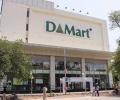
The company was looking to raise around Rs 1,800 crore for a stake sale of 10 per cent.
Avenue Supermarts, the operator of DMart retail chain, reported good results for the July-September quarter (Q2FY24) with strong earnings before interest before interest, taxes and depreciation (Ebitda) and profit before tax (PBT) growth, but lower PAT due to higher tax incidence. The operating margin improved, and like-to-like store sales growth was strong. Average bill value also increased though this may be a seasonal effect to some extent. Analysts are assuming this means the slowdown in retail may have bottomed out.

Retail companies are expected to witness a tepid strong same-store sales growth (SSSG) expansion in the third quarter (October - December) of the current financial year (Q3FY24) on the back of subdued sales in the festival season. The third quarter of the financial year typically witnesses higher sales since it coincides with the festival season. This time around, weak customer sentiment has dragged down SSSG.

The ongoing fourth quarter earnings season, global factors and macroeconomic data would guide the trends in the equity markets this week, analysts said. Markets would also take cues from trading activity of foreign investors, rupee-dollar trend and movement of global oil benchmark Brent crude. "Domestically, the next batch of Q4 earnings reports will drive stock-specific movements, Hero MotoCorp, Larsen & Toubro, BPCL, State Bank of India, Eicher Motors and Tata Motors are some of the big names in the list and the next phase of voting," said Pravesh Gour, senior technical analyst, Swastika Investmart Ltd.

Union Minister of Commerce and Industry Piyush Goyal's recent comments on large e-commerce players have reignited the debate about their impact on smaller offline retailers. On Wednesday, Goyal said that the rapid growth of e-commerce in India is a "cause for concern" and is diminishing the market share of small, mom-and-pop stores by offering high-margin products such as consumer electronics and apparel at discounted rates.

The market regulator's newly proposed selection criteria for the over Rs 400-trillion-a-day futures and options (F&O) market could pave the way for the entry of popular stocks such as Life Insurance Corporation (LIC) of India, Jio Financial Services, Zomato, Paytm, DMart, and Adani Energy into the derivatives segment. The Indian derivatives market, which accounts for most of the trading volumes, could see big churn with over two dozen exits from the current list of 182 stocks due to an upward revision in the eligibility thresholds.

The Bengaluru-based quick-commerce application (app) Zepto is making big strides. According to Sensor Tower data, it surpassed JioMart in November, securing the second position among grocery apps in terms of monthly usage. This shift, identified by BofA Global Research, closely monitoring key segments of the app business, has pushed JioMart to third place in the grocery space.

Stock exchanges are expanding the buffet of index derivatives even as the number of stocks permitted to trade in this space, generating an average daily turnover of Rs 450 trillion, is shrinking. This week, the National Stock Exchange (NSE) started issuing futures and options (F&O) contracts based on the Nifty Next 50 Index, bringing the total count of index derivatives to five.

The National Stock Exchange (NSE) Nifty Next 50 Index could undergo large-scale changes if the proposed tweaks to its computation methodology get implemented. In a discussion paper floated recently, NSE Indices, which owns and manages a portfolio of over 350 indices under the Nifty brand, proposed that only stocks that are traded in the futures and options (F&O) segment can be part of the index. Currently, as many as 11 non-F&O stocks are part of the Nifty Next 50 Index, which, as the name suggests, represents the next rung of large and liquid securities after the Nifty50.

The sharp jump in shares of Kalyan Jewellers (Kalyan) has surprised many on the Street; however, analysts believe more steam could be left in the stock as the Thrissur-based gold retailer pivots to a new asset-light network expansion model. Kalyan's stock has surged 62 per cent in the past month, even as the S&P BSE SmallCap Index has gained just 5 per cent. In its latest business update, the company said its consolidated sales grew more than consensus expectations at 31 per cent year-on-year, led by strong domestic sales regardless of the volatility in gold prices.

Among the many exits from the billionaire's club in 2022 are D Uday Kumar Reddy of Tanla Solutions (net worth down 66 per cent), Sushil Kanubhai Shah of Metropolis Healthcare (down 65.7 per cent), Vijay Shekhar Sharma of One97 Communications (down 66 per cent), and C K Birla (down 43.4 per cent).

Radhakishan Damani is the only billionaire to see his wealth grow by around 20% during the lockdown.

Radhakishan S Damani, investor and promoter of the D-Mart supermarket chain, has broken into the elite club of the top 100 global billionaires. Damani, who grew up in a single-room apartment in Mumbai, is now ranked 98th on the Bloomberg Billionaires Index with $19.2 billion as his net worth. The index is a daily ranking of the world's richest people. The other Indians on the top 100 rich list ahead of Damani are Mukesh Ambani, Gautam Adani, Azim Premji, Shiv Nadar, and Lakshmi Mittal.

The retail industry witnessed robust top-line growth for the greater part of the previous financial year, but demand has started to show signs of fatigue seen in the January-March quarter (fourth quarter, or Q4) of 2022-23 (FY23), especially in the apparel and innerwear segments. Jewellery, however, has managed to hold on to demand in the quarter. "In the discretionary space, demand moderation in urban markets is expected to impact the quick-service restaurant and apparel categories the most, while paint, luggage, and jewellery should see resilient growth," Systematic Institutional Equities observed in its preview of the sector.
The stock of the retail chain Avenue Supermarts (Dmart) was the biggest loser in the BSE 100 Index shedding 4.35 per cent on Thursday and added to these losses on Monday by falling an additional 1.3 per cent. The Street was reacting to lower than expected operational performance by the company in the March quarter. The country's largest listed retailer by market capitalisation reported a 20 per cent year-on-year (y-o-y) growth in its top line to Rs 10,337 crore.

A family man, a confident investor, someone who was sure two decades ago that India and its stock market were going to boom. T N Ninan recalls his chats with Rakesh Jhunjhunwala.

One hundred and forty nine new individuals joined the rich list club of 1,103 Indians across 122 cities who cumulatively accumulated a wealth of Rs 100 trillion. Bengaluru -based Kaivalya Vohra, 19, of grocery delivery application Zepto is the youngest self-made and the youngest rich individual, according to IIFL Wealth Hurun India Rich List 2022. The report found 1,103 Indians with a networth of Rs 1,000 crore each - an increase of 62 per cent over five years. There are 221 billionaires (Rs 100 crore networth) in India on the 2022 list - down 16 compared with last year, while 13 people born in the 1990s made it to the list, all self-made.

Experts say Biyani will now become a contract manufacturer of fashion and FMCG products, with the Reliance group being one of his customers.

The firm is on course to replace state-owned Gail India in the widely-followed index during the semi-annual review set for March.

Real estate experts say rentals have corrected by 5-10 per cent across formats, including office, retail and housing, with a pick-up expected over the next few quarters as the economy recovers.

CSD was created to provide easy access to quality products of daily use, at prices less than market rates to the soldiers, ex-servicemen and their families

Since September, Reliance Retail has raised money from Silver Lake, KKR, Mubadala, Abu Dhabi Investment Authority , GIC, TPG, General Atlantic and Saudi Arabia's Public Investment Fund in a divestment programme that mirrored sister Jio Platforms a few months earlier.

Ajit Mishra, vice president, research, Religare Broking, answers your queries.

Mukesh Ambani remains the country's wealthiest promoter as his stake in Reliance is now worth Rs 3.25 trillion!

Free speech is the soul of a great university. By compromising on it, the founders have bartered away its soul, said Rajan.

India has the third highest number of billionaires in the world after the US and China, according to a new list by the prestigious Forbes magazine, which said Reliance Industries chairman Mukesh Ambani reclaimed his spot as Asia's richest person, dethroning Chinese business tycoon Jack Ma who was the richest person in the region a year ago.
 © 2026 Rediff.com - Investor Information - Advertise with us - Disclaimer - Privacy Policy - Sitemap - Feedback - About us - Terms of use - Grievances