
Barring coal, electricity and steel, all sectors -- crude oil, natural gas, refinery products, fertiliser and cement -- recorded negative growth in September 2020.

The wholesale price-based inflation eased to a five-month low of 13.93 per cent in July on easing prices of food articles and manufactured products. The WPI-based inflation softened for the second consecutive month in July, raising hopes of further decline in wholesale prices in the months to come. The Wholesale Price Index-based inflation, after scaling a record high of 15.88 per cent in May, declined to 15.18 per cent in June. It was 13.43 per cent in February. It was 11.57 per cent in July last year.

'The RSS has opposed the introduction of GM Mustard tooth and nail, but PM Modi does not give a hoot for what they think.'

A curious, inventive school student is among the 1200 international students whose science project has made the cut for an international science competition, the grand prize for which is a trip to the Nobel Prize Ceremony in Stockholm.

'The signal is crude oil prices will rise, I am cutting my subsidy. Be prepared, prices will rise.'

Barring coal and fertiliser, all sectors -- crude oil, natural gas, refinery products, steel, cement and electricity -- recorded negative growth in August.
Chambal Fertilizers & Chemicals Ltd said it has not received any communication from the government on the company's application to Foreign Investment Promotion Board.

The farm sector has been resilient to the COVID-19 shock and is estimated to grow at 3.9 per cent this fiscal, the Economic Survey said on Monday, while suggesting to the government to give priority to crop diversification, allied farm sectors and alternative fertilisers like Nano urea. The Economic Survey 2021-22 also pitched for increasing agriculture research and development (R&D) and organic farming, besides use of new technologies like drones. "The performance of the agriculture and the allied sector has been resilient to the COVID-19 shock. ...Growth in allied sectors including livestock, dairying and fisheries has been the major drivers of overall growth in the sector," the Survey said. The agriculture sector has experienced buoyant growth in the past two years.

The output of eight core infrastructure sectors grew marginally by 0.1 per cent in January, mainly due to growth in the production of fertiliser, steel and electricity. The core sectors had expanded by 2.2 per cent in January 2020, according to the provisional data released by the commerce and industry ministry on Friday. Coal, crude oil, natural gas, refinery products, and cement recorded negative growth in January.

Foreign ministers of G20 major economies will meet in the national capital on March 1 and 2 to deliberate on pressing global challenges amid escalating confrontation between Russia and the West over the Ukraine conflict that entered the second year this week.

The primary and immediate impact of a depreciating rupee is on the importers who will have to shell out more for the same quantity and price. However, it is a boon for the exporters as they receive more rupees in exchange for dollars. The rupee depreciation has wiped away some of the gains that would have accrued to India from international oil and fuel prices dropping to pre-Ukraine war levels.

The 193-member general assembly voted overwhelmingly on Wednesday to condemn Russia's "illegal so-called referendums in regions within the internationally recognised borders of Ukraine and the attempted illegal annexation of the Donetsk, Kherson, Luhansk, and Zaporizhzhia regions of Ukraine, following the organisation of the above-mentioned referendums".

India's exports entered negative territory after a gap of about two years, declining sharply by 16.65 per cent to $29.78 billion in October, mainly due to global demand slowdown, even as trade deficit widened to $26.91 billion, according to data released by the commerce ministry on Tuesday. Key export sectors, including gems and jewellery, engineering, petroleum products, ready-made garments of all textiles, chemicals, pharma, marine products, and leather, recorded negative growth during October. Imports during the month under review rose by about 6 per cent to $56.69 billion on account of increase in the inbound shipments of crude oil and certain raw materials such as cotton, fertiliser and machinery.

Agriculture activity, according to recent channel checks by Prabhudas Lilladher, is expected to continue at a strong pace in FY22.

'A lot has been done under the leadership of PM Modi. He is a patriot of his country. His idea of 'Make in India' matters both economic wise and in ethics. Future belongs to India, it can be proud of the fact that it's the largest democracy in the world,' the Kremlin said at Valdai Discussion Club.

'He is exposing the failings of the BJP, which is rankling the party.'
The output of eight core sectors rose 4.4 per cent in September on account of healthy performance by segments like natural gas, refinery products and cement, official data showed on Friday. The eight infrastructure sectors of coal, crude oil, natural gas, refinery products, fertilisers, steel, cement and electricity had grown by 0.6 per cent in September 2020, as per the data released by the commerce and industry ministry.

The bull run in the Indian equity markets is intact, said analysts at Morgan Stanley in a recent note. They expect the S&P BSE Sensex to hit 80,000 levels by December 2023 in their bull-case scenario, to which they have assigned a 30 per cent probability. From the current level, this translates into an upside of nearly 29 per cent.

With Prime Minister Narendra Modi on Wednesday inducting four new faces from Karnataka into his ministry, and chemicals and fertilisers minister D V Sadanda Gowda resigning ahead of the reshuffle, the state's representation in the Union council of ministers now stands at six.

So far, GMTS has defaulted on the supply of more than 20 cargoes or shiploads, 13 of which were set to be received in the second quarter (July-September), officials said.

We are looking at bringing quality control orders for mass production items such as smart meters and ceiling fans. This will benefit our own industry and consumers, a government official said.

Barring fertiliser, all seven sectors -- coal, crude oil, natural gas, refinery products, steel, cement and electricity -- recorded negative growth in July.

Dhoni says no to brand endorsements amid pandemic, keeps busy with organic farming

The Union Cabinet on Thursday approved a revision in the formula for pricing of natural gas and imposed cap or ceiling price to help cut CNG and piped cooking gas prices by up to 10 per cent. Natural gas produced from legacy or old fields, known as APM gas, will now be indexed to the price of imported crude oil instead of benchmarking it to gas prices in four surplus nations such as the US, Canada and Russia, Union I&B Miniser Anurag Thakur told reporters after a meeting of the Cabinet. APM gas will be priced at 10 per cent of the price of basket of crude oil that India imports (Indian basket of crude oil).

The splendid rock figures around Cappadocia and the silent, eternal ruins of Ephesus made a trip to Turkey even more memorable.

Prime Minister Narendra Modi spoke with Ukrainian President Volodymyr Zelenskyy on Tuesday and asserted that there can be no military solution to the Ukraine conflict, while also underlining that endangerment of nuclear facilities could have catastrophic consequences.

The 62 per cent increase in natural gas prices by the Indian government will boost the profitability of upstream companies in the country and support their investment spending, Fitch Ratings said on Tuesday. The price for gas from fields that were assigned by the state to oil companies, mainly Oil and Natural Gas Corporation (ONGC) and Oil India Ltd (OIL), increased to $2.90 per million British thermal units (mmBtu) for October 2021-March 2022, from $1.79 per mmBtu in the previous six months. "Higher gas prices will increase the input cost for key end-consumer sectors, to the extent the price hike is passed on," Fitch said.
Prime Minister Narendra Modi on Saturday released Rs 20,946 crore to 10.09 crore farmers across India as the 10th installment of financial aid under the PM-KISAN scheme and said there was a need for innovation in agriculture along with promotion of natural farming. Under the Pradhan Mantri Kisan Samman Nidhi (PM-KISAN) scheme, a financial benefit of Rs 6,000 per year is provided to the eligible farmer families, payable in three equal installments of Rs 2,000. The PM-KISAN scheme was announced in the February 2019 Budget.

Sectors which recorded positive growth were coal, refinery products and fertiliser.

'80% of the rural and urban population don't have enough purchasing power.'

The output of eight core sectors jumped by 56.1 per cent in April mainly due to a low base effect and uptick in production of natural gas, refinery products, steel, cement and electricity, official data released on Monday showed. The eight infrastructure sectors of coal, crude oil, natural gas, refinery products, fertilisers, steel, cement and electricity had contracted by 37.9 per cent in April 2020 due to lockdown restrictions imposed to control the spread of coronavirus infection. In March this year, the eight sectors had recorded a growth rate of 11.4 per cent.

India abstained in the UN General Assembly on Thursday on a resolution that underscored the need to reach "comprehensive, just and lasting peace" in Ukraine, citing the resolution's "inherent limitations" in reaching New Delhi's desired goal of securing lasting peace and ending the conflict which has been raging for one year now.

The output of eight core sectors declined by 4.6 per cent in February, the steepest contraction in the last six months which experts said could drag the overall industrial production in the month into the negative territory. All the key segments, including coal, crude oil, natural gas, and refinery products, witnessed a decline in production, according to the official data released on Wednesday. The growth rate of the eight infrastructure sectors -- coal, crude oil, natural gas, refinery products, fertilisers, steel, cement and electricity -- stood at 6.4 per cent in February 2020. Last time in August 2020, the sectors had recorded a negative growth of 6.9 per cent.

PowerGrid was the top gainer in the Sensex pack, rising around 4 per cent, followed by ITC, Bajaj Finance, Infosys, NTPC and Tech Mahindra. NSE Nifty advanced 117.15 points to 17,072.60.

If they can sit together and hammer out 'Black Sea Initiative' deal for much needed food shipments, surely, they should be able to address the madness of the larger military conflict?

India's G20 priorities will be shaped in consultation with not just our G20 partners, but also our fellow-travellers in the global South, whose voice often goes unheard, he said.

As stringent sanctions imposed by the European Union and US are crippling business and trade, desperate Russian oil companies are offering huge discounts to India, provided a payment mechanism to bypass the SWIFT ban is quickly approved by the government. According to sources familiar with the development, Russian oil firms are offering 25-27 per cent discount to the dated Brent crude prices. State-run Rosneft is one the biggest oil companies that supply crude to India.
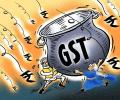
The Centre is looking to convene a meeting of the all-powerful Goods and Service Tax Council in early January. The meeting is likely to focus on rectifying the inverted duty structure for a few more items and will also serve as a platform for pre-Budget discussions between Union Finance Minister Nirmala Sitharaman and state finance ministers, Business Standard has learnt. "The current Winter Session of Parliament ends on December 23, followed by the Christmas-New Year period. "After that we would like to have a meeting of the GST Council, depending on whether there can be a quorum," a top government official said.

The resolution was adopted by a vote of 33 in favour, China and Eritrea voting against and 12 abstentions, including India, Armenia, Bolivia, Cameroon, Cuba, Kazakhstan, Namibia, Pakistan, Senegal, Sudan, Uzbekistan and Venezuela.

'Nirmalaji must consider herself a very lucky finance minister, partly because of the government's response to covid and partly because we as a nation have done very well as an economy, post pandemic.'
