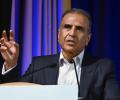
'If you are going to have only a handful of telecom players on whom the entire dream of Digital India rests, it's important they are financially sustainable.'


Vodafone Idea on Wednesday said its board has approved availing the four-year spectrum payment moratorium being offered by the government as part of its relief package for the telecom sector. The other options offered in the Telecom Department's notification will be considered by the board of directors within the stipulated timeframe, it said in a regulatory filing. "...we wish to inform you that the Board of Directors of the company has approved the exercise of the option of deferment of the company's spectrum auction instalments for a period of 4 years (October 2021 to September 2025) in accordance with ...the notification dated 14 October 2021 issued by the Department of Telecommunications (DoT) to the company," it said.

Prime Minister Narendra Modi on Saturday inaugurated the 6th India Mobile Congress at Pragati Maidan in Delhi and launched 5G services. The 5G telecom services seek to provide seamless coverage, high data rate, low latency and highly reliable communications system. The three major telecom operators of the country demonstrated one use case each in front of the prime minister to show the potential of 5G technology in India.

The Cellular Operators Association of India (COAI) has bluntly told the government there is no reason for its members to roll out 5G networks as they will be unviable if 'captive private wireless networks' are allowed to be run by enterprises. The COAI, which has Bharti Airtel, Reliance Jio and Vodafone Idea as its key members, has written to Communications Minister Ashwini Vaishnaw saying there is 'no business case for the roll out of 5G networks'. Permitting such captive networks will 'diminish the revenue so much that there will be no viable business case left for the telecom service providers and there will not remain any need for 5G network roll out by telecom service providers (TSPs)'.

Rs 3,050-crore penalty on Airtel, Voda Idea gets nod. Final decision will be taken by DoT.
Bharti Airtel chairman Sunil Mittal has expressed hope that the government and regulators will step in to ensure the sector remains a viable place for continued investments and asserted that the industry requires "long overdue" support to maintain its current 3+1 structure. In the latest annual report of Airtel, Mittal said as the sector's role in the economy becomes more pervasive, its challenges loom larger. Issues such as unsustainable pricing and low returns in a highly capital-intensive environment, coupled with legacy legal issues, "have extracted their toll", Mittal observed.

Bharti Airtel CEO Gopal Vittal on Wednesday asserted that a large nation like India needs three private players in the telecom sector, and hoped the government would take measures to offer relief to the industry that is facing "serious financial stress". The comments assume significance in the backdrop of Vodafone Idea's desperate struggle to stay afloat. Aditya Birla Group chairman Kumar Mangalam Birla had in June this year offered to hand over the group's stake in debt-laden Vodafone Idea Ltd (VIL) to the government or any other entity to ensure that the company remains a going concern.
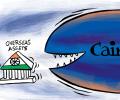
Faced with prospect of its assets across the globe being seized just like Pakistan and Venezuela, the government decided to scrap retrospective taxation but the international embarrassment could have been avoided had 'attached' shares of Britain's Cairn Energy Plc not been sold, according to tax and legal experts. On Thursday, the government introduced a Bill in Parliament to scrap the tax rule that gave the tax department power to go 50 years back and slap capital gains levies wherever ownership had changed hands overseas but business assets were in India. The 2012 legislation was used to levy a cumulative of Rs 1.10 lakh crore of tax on 17 entities, including UK telecom giant Vodafone, but substantial punitive action was taken only in the case of Cairn.

Vodafone-Idea is working on a multi-pronged strategy to begin its long journey to get back in the game but much hinges on how much money it can raise following the government's decision to go for equity conversion last week. Based on discussions with sources aware of the company developments and with vendors, VIL's immediate plan is to invest in increasing 4G coverage to the level of its competitors. Currently, it covers a 1 billion population with 4G while its competitors cover 1.2 billion people.

Kumar Mangalam Birla will be the non-executive chairman and Balesh Sharma the new CEO of the merged entity, which will remain listed.

In big bang reforms, the Union Cabinet on Wednesday approved a relief package for the telecom sector that includes a four-year moratorium on payment of statutory dues by telecom companies as well as allowing 100 per cent foreign investment through the automatic route. Briefing reporters on the decisions taken by the Cabinet, Telecom Minister Ashwini Vaishnav said nine structural reforms for the telecom sector were approved. The definition of AGR, which had been a major reason for the stress in the sector, has been rationalised by excluding non-telecom revenue of telecom companies.

To outgoing Vodafone CEO Vittorio Colao, negotiating big deals was an art form, as an international report pointed out after the $130-billion sale of Vodafone's 45 per cent stake in Verizon Wireless, says Nivedita Mookerji.

Six consecutive profitable quarters after an equal number of losses - for Bharti Airtel, the turnaround has been quick. But it is not a result of higher tariffs or absence of exceptional items alone. Execution and strategy are playing a part, too. Bharti Airtel's chief executive officer Gopal Vittal summed it up in a post-result conference call last month. "We track the profit in each of our 237,500 (cell) sites.

The government will settle almost all the retrospective tax cases this month, closing a chapter that plagued India's reputation as an investment-friendly destination, a top official said on Friday. A 2012 amendment that gave taxmen powers to go back 50 years and slap capital gains levies wherever ownership had changed hands overseas but business assets were in India, was used to raise Rs 1.1 lakh crore demand against multi-nationals such as telecom group Vodafone, pharmaceuticals company Sanofi and brewer SABMiller, now owned by AB InBev, and Cairn Energy Plc. Such demands brought uncertainty in the minds of investors.
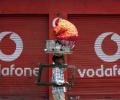
The onus of the tax dues of Rs 22,100 crore on Vodafone India's British parent could also fall on the merged entity.

'The promises of netas and babus and new laws, however well-meaning, mean little.' 'What matters is implementation on the ground.' 'Every law is finally implemented by a vast army of offici

Vodafone Idea Ltd (VIL) CEO Ravinder Takkar did some plain speaking. In an analyst call after its quarterly results recently, Takkar said that the main stumbling block to raising fresh capital from investors is "pricing" - telecom tariffs, in other words. Nine months ago, the telecom company's board had cleared a proposal for raising Rs 25,000 crore from investors, after the promoters made it clear that they were not ready to pump in more money. But potential investors are concerned that without clarity on tariff hikes (there have been none for more than 18 months) they might just lose their money. The lack of visibility on raising tariffs has also impelled VIL to request the Department of Telecom (DoT) for a fresh reprieve by extending the two-year moratorium on paying its spectrum instalment of Rs 8,200 crore for another year till FY23.

The merged entity would be known as 'Vodafone Idea Ltd'.

The management plans to invest Rs 27,000 crore in 2019-20, supported by savings of around Rs 14,000 crore that it expects to come from synergising operations of merged entities.
It came as a surprise to all stakeholders - competing telecom companies (telcos), most analysts and even the government's internal projections on revenues from the 5G auctions. Reliance Jio disrupted all calculations by paying a stiff Rs 40,000 crore to buy 10 MHz of spectrum in the 700-MHz band, globally considered a key band for efficient 5G service coverage, along with the default 3.5 GHz band and the ultra-high speed and low-latency millimetre band of 26 GHz band. So what made Jio pay almost 45 per cent of its total spend in this auction for the 700 MHz band - much more than what it rustled up even for the 3.5 GHz band?
India is believed to have challenged in a court in The Hague an arbitration tribunal verdict that overturned its demand for Rs 10,247 crore in back taxes from Cairn Energy Plc -- the second time in three months that it has refused to accept an international award against retrospective tax.

Telecom Minister Ravi Shankar Prasad had told Parliament in November that Bharti Airtel, Vodafone Idea and other telecom companies owe the government as much as Rs 1.47 lakh crore in past statutory dues.
The problem is simple: None of the incumbent players, including Vodafone Idea, has a similar offer to challenge Jio and ensure that its 2G customers do not migrate.

With telecom disruptor Reliance Jio not raising tariffs, incumbents Bharti Airtel and Vodafone Idea are focusing on the minimum monthly recharge and higher first recharge offers to ensure they retain only loyal and revenue-incremental subscribers, reports Romita Majumdar.

AGR dues calculated by the government for 16 entities add up to Rs 1.69 lakh crore, while telcos' self-assessment place their dues at a mere Rs 37,176 crore.
The statement came a day after Bharti Airtel and Vodafone Idea Ltd announced a hike in call and data charges from next month.
The company has made payment in compliance with Telecom Department's instructions for self assessment, Mittal said, adding that the Supreme Court had not mentioned specific amounts.
Reliance Jio's aggressive target to reach 100 million households through the launch of the 5G fixed wireless access (FWA) could make it one of the world's largest players in this space. But this also marks a change from its earlier strategy of offering fibre-to-the home (FTTH) broadband to households. Despite its best efforts, in two years Jio has been able to connect only 7 million households with FTTH, as permission for right of way for the last mile became a major impediment and the process of laying ducts for the roll-out was slow and cumbersome.
Both the promoter groups - Vodafone and Aditya Birla - have confirmed their participation of up to Rs 11,000 crore and up to Rs 7,250 crore, respectively, in the issue.
day after Finance Minister Nirmala Sitharaman announced a Rs 1 lakh crore spending package, a top government source said the Centre has not closed its options for another stimulus package.

Providing services like broadband connectivity, cable TV, enterprise solutions, and payment wallets is the need of the hour for telcos, and a second wave of consolidation is upon the industry, a rating agency said on Tuesday. India Ratings and Research said the sector, which was battered following the aggressive entry of Reliance Jio, will continue showing signs of recovery amid conducive regulatory environment and maintained a "stable" outlook for the industry in FY22. The second round of consolidation (Consolidation 2.0) is kicking-in in the industry, which will bring a transformation in the business models of telecom companies, leading to the evolution of incumbents from the providers of traditional voice-only services to complete digital solutions for households, it said.

Justice Lahoti was appointed as the 35th chief justice of India on June 1, 2004. He retired on November 1, 2005.

The government is planning to roll out 5G testbed in early January to enable small and medium enterprises and other industry players to test their solutions on a working platform, a top Department of Telecom official said on Thursday. For the promotion of 5G indigenous technology, DoT in March 2018, had approved a multi-institute collaborative project to set up an indigenous 5G Test Bed at a total cost of Rs 224 crore. A testbed consists of a specific environment including hardware, software, operating system, and network configuration to test a product or service.
.jpg)
Moving quickly towards ending a retrospective tax dispute with a firm that gave India its largest oilfield, the government has accepted Cairn Energy PLC's undertakings which would allow for the refund of taxes, sources said. Meeting the requirements of the new legislation that scraps levy of retrospective taxation, the company had earlier this month given required undertakings indemnifying the Indian government against future claims as well as agreeing to drop any legal proceedings anywhere in the world. The government has now accepted this and issued Cairn a so-called Form-II, committing to refund the tax collected to enforce the retrospective tax demand, two sources with direct knowledge of the development said.

Debt-ridden telecom operator Vodafone Idea is evaluating the option of converting interest dues arising out of the deferment of statutory payments into equity, a senior company official said on Monday. The company is also in talks with banks and investors for raising funds and part of the proceeds is likely to be utilised towards meeting obligations related to debt maturing this fiscal, Vodafone Idea Limited (VIL) chief financial officer Akshay Moondra said during the company's earning call. VIL MD and CEO Ravinder Takkar said the company expects to conclude fund raising plan by the end of the current financial year.

According to telcos and analysts, this is due to SIM consolidation happening after the minimum recharge plans were implemented by incumbents.

The merger will result in substantial cost and capex synergies with an estimated net present value of around USD 10 billion after integration costs and spectrum liberalisation payments, with estimated savings of USD 2.1 billion annually from the fourth year of the merger.
Evolving a common work ethic and culture will be critical so that the merged entity does not lose focus on the common enemy outside -- and instead becomes more obsessed with internal turf wars.
