
A growing conflict between India's insolvency law and tax rules is creating fresh uncertainty for companies undergoing resolution, with tax authorities increasingly denying the benefit of carrying forward past losses even after resolution plans have been approved by the National Company Law Tribunal (NCLT).

Ola Electric is making a renewed push into the electric motorcycle market with aggressive pricing and in-house battery manufacturing, aiming to replicate its earlier success in electric scooters while addressing past quality and service issues.

Gold prices experienced a significant decline in futures trading due to uncertainty surrounding geopolitical tensions in West Asia and conflicting statements regarding the conflict. Investors are also awaiting key macroeconomic data for further direction on interest rate cuts.
India's core sector output contracted by 0.4 per cent in March, marking the first decline in five months, with coal, crude oil, fertiliser, and electricity production falling, according to official data.

The Indian rupee depreciated by 32 paise to close at 92.83 against the US dollar, influenced by escalating global tensions, particularly the US-Iran conflict, and the deadline for the RBI's instructions to banks to curb overnight positions.

Shares of Avenue Supermarts, operator of DMart, fell 5.2 per cent after reporting mixed Q4 FY26 results, with brokerages offering divergent 'sell', 'buy', and 'hold' ratings based on factors like valuation, competitive intensity, and store expansion strategies.

Analysts are revising down India Inc's financial year 2026-27 (FY27) earnings growth forecasts, citing persistently high crude oil prices above $100 a barrel due to the West Asia conflict, which is expected to dent corporate financial performance in the coming quarters.

The Indian rupee depreciated by 52 paise to settle at 93.35 against the US dollar, driven by failed US-Iran peace talks, surging crude oil prices due to a potential US blockade of Iranian ports, and a global flight to the greenback. This geopolitical uncertainty is also leading to foreign capital withdrawal from domestic equities.

The Indian rupee depreciated 20 paise to close at a fresh all-time low of 94.88 against the US dollar, driven by surging Brent crude oil prices, hovering around USD 115 per barrel, and persistent foreign capital outflows.

India's largest private refiner, Reliance Industries Ltd, successfully navigated a volatile energy market in the last quarter of FY26 by diversifying crude sourcing and demonstrating operational agility, particularly in response to geopolitical disruptions and cost fluctuations.

Despite recent share price dips, Bharti Airtel is strategically positioned for growth, driven by investments in data centres via Nxtra, a potential tariff hike, and strong performance in Africa, alongside efforts to deleverage and expand its subscriber base in underpenetrated rural markets.

Godrej Properties Limited (GPL) reported its highest-ever quarterly profit of 649.5 crore in Q4 FY26, a 70.13 per cent year-on-year increase, driven by record revenues and bookings. The company aims for over 39,000 crore in residential bookings for FY27 and plans to raise up to 3,000 crore through debt securities.

The central bank is yet to consider actions such as a rate hike or mobilising dollar inflows from non-resident Indians to boost forex reserves as it cannot afford to continue with them for long when the rupee's internationalisation tops its agenda, explains Tamal Bandyopadhyay.

State-owned Indian Oil Corporation (IOC), Bharat Petroleum Corporation Ltd (BPCL), and Hindustan Petroleum Corporation Ltd (HPCL) are reportedly incurring losses of Rs 18 per litre on petrol and Rs 35 per litre on diesel, as they continue to absorb rising crude oil costs without increasing retail prices. This situation is leading to expectations of a fuel price hike after upcoming state elections.

'...the enormous responsibility and faith the youth has put on his shoulders, that he is going to solve their problems.'

Global rating Moody's on Monday affirmed India's long-term local and foreign-currency issuer ratings and the local-currency senior unsecured rating at 'Baa3' with a 'stable' outlook on the back of robust economic growth and sound external position. The rating agency also affirmed India's other short-term local-currency rating at P-3.

Indian equities on Dalal Street saw volatility as global market trends and oil price hike impacted investor sentiment. Track Sensex, Nifty50 movement and key market drivers for Apr 23, 2026.

Gaganjeet Bhullar battled tough conditions to shoot one-over 72 in the third round of the Singapore Open, remaining inside the top-5. Korea's Jeongwoo Ham leads the USD 2 million International Series event.

The Reserve Bank of India (RBI) net-bought $7.4 billion from the spot foreign exchange market in February, its highest buy since March 2025, before heavily intervening by selling dollars in March as the rupee declined over 4 per cent following a spike in crude oil prices.

Small- and midcap stocks have delivered their biggest monthly rally in 12 years, but rising oil prices and global tensions could make the road ahead volatile.

What we will not do is discount deeply, neither will we compromise on product substance, says Managing Director and Chief Executive Officer (MD&CEO) Santosh Iyer.

Paras Defence and Space Technologies partners with Northstar Aviation to provide air-to-air refuelling technologies and support services to the Indian armed forces, enhancing mission endurance and operational flexibility.

Indian carmakers experienced a robust start to the new fiscal year, with an estimated 4.5 lakh passenger vehicles sold in April, marking a 27 per cent increase year-on-year, attributed to factors like GST 2.0, repo rate cuts, and income tax benefits.

Paytm (One 97 Communications Ltd) has stated that the Reserve Bank of India's action on Paytm Payments Bank Ltd (PPBL) has no financial or business impact on the company. The fintech firm clarified it has no material business arrangements or exposure with the banking entity, which operates independently.

Financial year 2025-26 (FY26) saw a significant shift in corporate fundraising, with rights issues more than doubling to a multi-decade high of 51, raising 44,290 crore, while qualified institutional placements (QIPs) more than halved to 29 issues, mobilising 62,954 crore, driven by sharp equity market corrections and regulatory changes.

Trent reported a 20 per cent revenue rebound in Q4FY26, driven by a recovery in like-for-like growth and significant store additions. The company's board has approved raising up to 2,500 crore in equity to fund investments in store network upgrades, new brands, supply chain automation, and Star Bazaar expansion, alongside a 1:2 bonus issue and a 6 dividend.

Champagne consumption in India is expanding beyond major metropolitan areas into smaller cities like Kanpur, Guwahati, and Lucknow, driven by a desire for sophisticated lifestyle declarations and a growing appreciation for the beverage.
Indian exporters are unlikely to receive direct tariff refunds from the US's $166 billion payout, but the rollback of reciprocal duties is enhancing their pricing power and improving order prospects, particularly in textiles, apparel, and engineering goods.

India's GST revenues experienced significant growth in March, reaching pre-tax cut levels, driven by increased imports and domestic sales. The report analyses the impact of tax rate changes and provides insights into future trends and economic stability.

India's economy is projected to maintain growth above 7 per cent in 2026-27 (FY27), supported by strong domestic consumption and investment, even as global growth faces risks from geopolitical tensions, according to industry body Assocham.

Aviation fuel prices for domestic airlines remain unchanged, providing stability for local carriers, while commercial LPG and 5-kg cylinders see a significant rate hike due to rising international energy costs.

India's private sector activity saw a significant recovery in April, driven primarily by robust growth in manufacturing output and sales, following a three-year low in March attributed to the West Asia conflict.

Indian benchmark indices Sensex and Nifty experienced volatility due to conflicting developments in West Asia, including reports of the Strait of Hormuz closure, which led to a rebound in crude oil prices and heightened investor concerns about supply disruptions and inflation.

The Indian rupee appreciated by 23 paise to settle at 92.91 against the US dollar, driven by a weakening American currency, retreating crude oil prices, and renewed foreign institutional investor (FII) inflows amid increasing hopes of easing geopolitical tensions.

Global energy markets saw a significant correction as oil prices nosedived following Iran's announcement that the Strait of Hormuz has been fully reopened, dismantling the 'war-risk' premium that had gripped the market.

Travel is now the dominant spending category for India's affluent consumers, who are prioritising experiences and luxury goods over retail buying, according to a new report.

The OECD projects India's GDP to grow at 7.6% in the current fiscal year and 6.1% in 2026-27, despite global economic challenges stemming from the Middle East conflict and energy price volatility.

'... with the rest split between mid and smallcaps, as valuations are becoming more attractive across segments.'
The Indian rupee depreciated by 28 paise to settle at 93.44 against the US dollar, influenced by ongoing uncertainties surrounding West Asia peace negotiations, volatile crude oil prices, and the Reserve Bank of India's recent adjustments to non-deliverable forward market regulations.
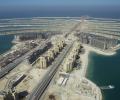
Ongoing geopolitical tensions in West Asia have slowed deal momentum in Dubai's luxury residential market, but Indian high-net-worth individuals (HNIs) are not exiting their marquee assets, with any 'discounted' resale deals attributed to investor liquidity stress rather than geopolitical flight.
