

Sri Lanka asserted its neutrality by refusing a US request to land warplanes, highlighting the nation's commitment to remaining non-aligned amidst escalating Middle East tensions and strategic interests in the Indo-Pacific region.

Key Points
- Sri Lanka denied the US permission to land two warplanes at Mattala International Airport in early March.
- The decision was made to maintain Sri Lanka's neutrality amidst pressures related to the Middle East conflict.
- The US request involved warplanes armed with anti-ship missiles seeking to land from a base in Djibouti.
- Sri Lanka also diverted an Iranian vessel to Trincomalee port and accommodated sailors at a naval facility.
- The US Special Envoy for South and Central Asia met with Sri Lankan leaders to discuss safeguarding sea lanes and trade.
Sri Lanka refused permission for the US to land two of its warplanes in the island's southeast Mattala International Airport in early March, President Anura Kumara Dissanayake told Parliament here on Friday.
Dissanayake said that two US warplanes from Djibouti asked for permission to come to Sri Lanka on March 4 and 8. Both requests were rejected, he said.
"We want to maintain our neutrality despite many pressures. We won't give in. The Middle East war poses challenges but we will do everything possible to remain neutral," he said.
"They wanted to bring in two warplanes armed with eight anti-ship missiles from base in Djibouti to the Mattala International Airport and we said no," the Sri Lankan president said.
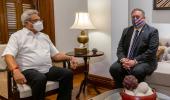
Dissanayake's statement comes a day after his meeting with US Special Envoy for South and Central Asia Sergio Gor.
The two leaders discussed US efforts to safeguard vital sea lanes and secure ports, reinforce mutually beneficial trade and commercial ties, and advance a free, open, and prosperous Indo-Pacific, a statement said.
Iranian Vessels and Regional Tensions
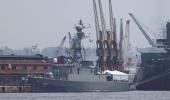
On March 4, the US torpedoed the Iranian frigate Iris Dena off Galle, the island's southern coastal town, killing 84 sailors while 32 were rescued.
The ship was returning home from Visakhapatnam in India after a naval fleet review exercise.
Two days later, a second Iranian vessel, Iris Bushehr, sought entry to Colombo port with 219 sailors.
Sri Lanka asked the vessel to be diverted to the eastern port of Trincomalee from its anchor outside the port here. A total of 204 of the sailors are now accommodated at the Naval facility near Colombo.








 © 2026