

India's last three major commercial aviation accidents -- Patna (2000), Mangaluru (2010), and Kozhikode (2020) -- could offer critical safety lessons for the ongoing investigation.
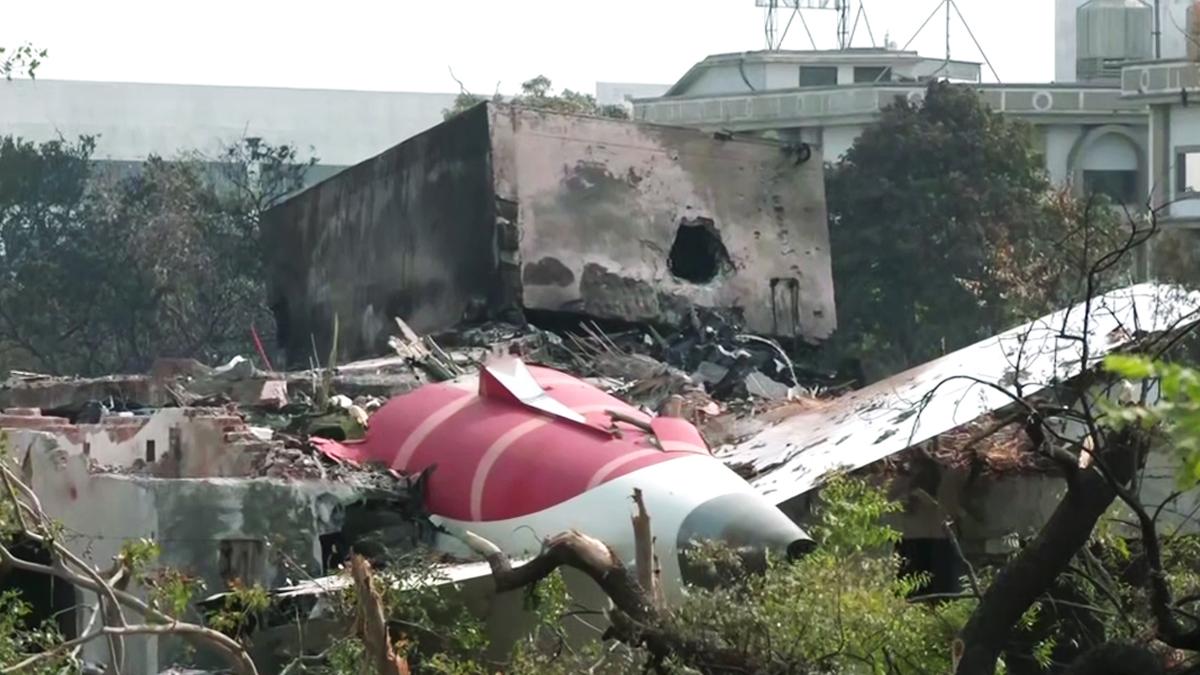
The Aircraft Accident Investigation Bureau (AAIB) has submitted its preliminary report on the AI 171 crash that occurred near Ahmedabad airport on June 12, 2025.
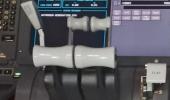
Investigators will now focus on determining why the flight's fuel switches moved to cutoff mode, leading to a loss of thrust and the subsequent crash.
Meanwhile, India's last three major commercial aviation accidents -- Patna (2000), Mangaluru (2010), and Kozhikode (2020) -- could offer critical safety lessons for the ongoing investigation.
Patna Crash (2000)
The crash of Alliance Air Flight CD-7412 in Patna on July 17, 2000, which killed 60 people, was the result of pilot error, according to the Court of Inquiry report submitted to the government in March 2001.
What Happened
The Boeing 737-200 aircraft was on a scheduled flight from Kolkata to Delhi via Patna and Lucknow.
As it neared Patna airport around 7:30 am, the pilots realised the plane was flying too high to land safely.
They requested permission to make a full 360-degree turn to lose altitude -- a standard manoeuvre -- but while turning, the plane lost lift and crashed into the Gardani Bagh residential area.
All six crew members and 49 passengers on board died.
Five people on the ground also lost their lives, and the aircraft was destroyed in the crash and fire.
What Caused the Crash
The inquiry, led by Air Marshal P Raj Kumar, found that the aircraft was mechanically sound and had no system failure.
The crash was caused entirely by pilot actions.
Instead of following the standard path and speed for landing, the pilots allowed the aircraft to fly too slowly while trying to descend quickly.
In this unstable condition, they made abrupt turns and tilted the nose of the plane up -- a risky combination that caused the aircraft to stall, or lose the ability to stay airborne.
When a warning system alerted them, the pilots tried to climb away instead of using the correct recovery technique.
This led to total loss of control and the crash.
What the Report Recommended
The report told Alliance Air to improve pilot training, especially in flight discipline, teamwork in the cockpit, and handling of emergency situations.
It also recommended changes to maintenance oversight and airport safety.
Highlighting Patna airport's limitations, it suggested developing Bihta airbase as an alternative.
Other recommendations included clearing trees and traffic near the runway, upgrading navigational equipment nationwide, and improving Patna Medical College Hospital's mortuary facilities for handling air disasters.
Mangaluru Crash (2010)
The Court of Inquiry into the Air India Express Flight IX-812 crash that killed 158 people at Mangaluru airport on May 22, 2010 concluded the accident was primarily caused by pilot error.
The report, submitted to the government by investigation head Air Marshal B N Gokhale, found no mechanical faults with the aircraft.
What Happened
The Boeing 737-800 operating from Dubai to Mangaluru crashed during its approach in good weather conditions.
The aircraft made an unstable landing, touching down too far down the runway to stop safely.
Despite multiple automated warnings and the first officer's repeated calls to abort the landing, the captain continued the approach.
The plane overshot the table-top runway, hit an antenna structure, and plunged into a gorge, leaving just eight survivors among the 166 people on board.
What Caused the Crash
Investigators determined the captain failed to execute a go-around when the approach became unstable, with the aircraft too high and fast.
The captain had been asleep for most of the flight, likely suffering from sleep inertia when suddenly awakened for the landing.
The first officer did not take control despite recognising the danger, highlighting shortcomings in cockpit authority protocols.
Mangaluru airport's challenging table-top runway design and lack of safety systems contributed to the severity of the crash.
What the Report Recommended
The inquiry called for significant aviation safety reforms, including improved pilot fatigue management, enhanced training for unstable approaches and cockpit coordination, and installation of runway safety systems at critical airports.
It strongly recommended establishing an independent Indian Civil Aviation Safety Board to oversee accident investigations and safety standards. This led to the creation of the AAIB in July 2012.
The report emphasised that proper adherence to procedures and timely decision-making could have prevented this tragedy.
Kozhikode Crash (2020)
The Air India Express Flight IX-1344 crashed at Kozhikode airport on August 7, 2020, killing 21 people and leaving 169 injured.
The AAIB investigated this accident, and its findings pointed to a combination of pilot error and institutional safety failures as the root causes of the disaster.
What Happened
The Boeing 737-800 aircraft, operating as a repatriation flight from Dubai under the Vande Bharat Mission, made two landing attempts at Kozhikode's challenging table-top runway during heavy monsoon rains.
After aborting the first approach due to poor visibility, the pilots attempted to land on the opposite runway with strong tailwinds.
The aircraft touched down nearly halfway down the 8,858-foot runway, leaving insufficient stopping distance.
Despite the first officer's calls to abort the landing, the captain continued, resulting in a catastrophic overrun.
The plane careened through the runway safety area, sheared off critical equipment, and plunged 110 feet into a gorge, breaking into three sections upon impact.
What Caused the Crash
The investigation revealed multiple critical failures.
The captain persisted with an unstable approach despite clear warnings, while the first officer failed to take decisive control when needed, exposing serious flaws in cockpit communication and crew resource management.
Compounding these errors, the aircraft's windshield wiper malfunctioned during the approach, and air traffic control provided inaccurate wind information.
The captain's medical condition -- he was taking unprescribed diabetes medication -- and operational pressure to complete the flight due to crew scheduling issues further contributed to the disastrous outcome.
Systemic shortcomings, including inadequate runway safety areas and poor maintenance of critical airport equipment, amplified the risks.
What the Report Recommended
The AAIB called for sweeping reforms, including stricter medical oversight of pilots, particularly regarding medication use.
It mandated airlines to implement enhanced simulator training for wet runway operations and reinforce crew resource management protocols, specifically emphasising first officers' authority to take control during unsafe approaches.
Airports received orders to extend runway safety areas by 300 metres and install centreline lighting at all table-top runways by 2024.
The DGCA enforced a ban on landings with tailwinds exceeding 10 knots during monsoons and required 100 per cent flight data monitoring.
Feature Presentation: Ashish Narsale/Rediff




 © 2026