
French officials believe the campaign against Rafale was part of a coordinated disinformation drive by China and Pakistan, although their State involvement has not been established.
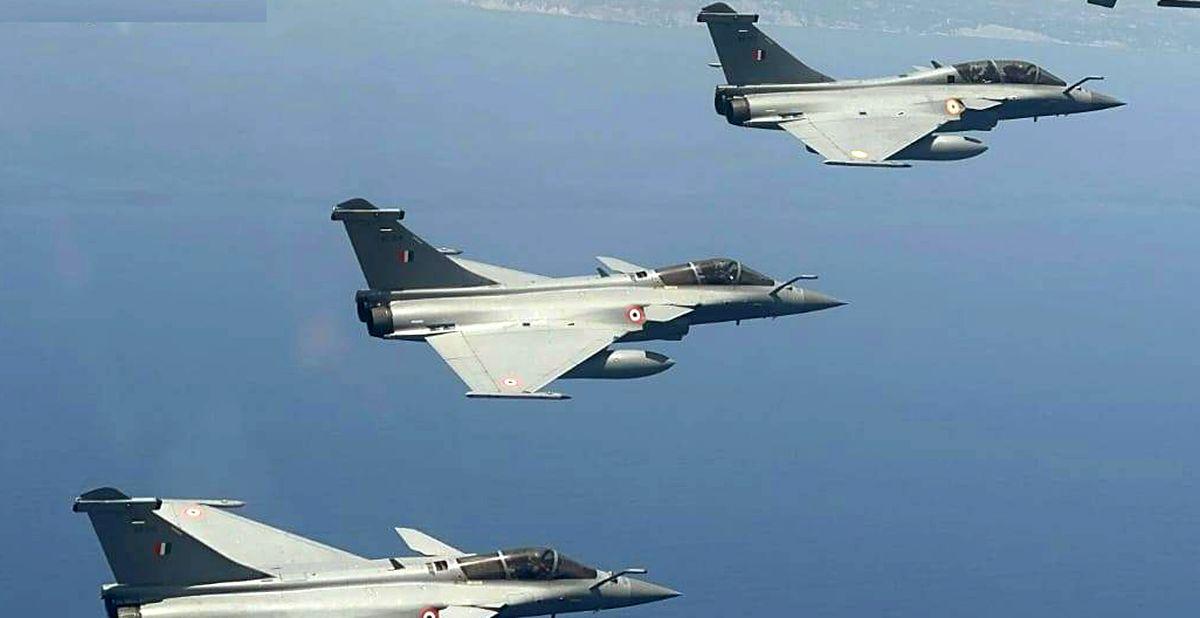
China used its embassies to discredit French-made Rafale fighter jets following their deployment during Operation Sindoor, according to French military and intelligence officials quoted in an investigation (external link) by the Associated Press.
The investigation, cited in media reports, accessed findings from a French intelligence report alleging that Chinese defence attaches lobbied several nations -- especially Rafale buyers like Indonesia -- to reconsider future purchases in favour of Chinese alternatives.
The clashes between India and Pakistan in May 2025 after the terrorist attack in Pahalgam, involved dozens of fighter jets, including India's Rafales.
Following the confrontation, questions arose over the Rafale's combat performance, particularly after Pakistan claimed it downed five Indian aircraft, including three Rafales.
In an interview, India's Chief of Defence Staff General Anil Chauhan acknowledged losses without confirming numbers.
However, French intelligence sources cited in some media reports pointed to 'evidence of three losses': one Rafale, a Sukhoi, and a Mirage 2000.
Dassault Aviation has exported 323 Rafales to nations including India, Egypt, Qatar, and Indonesia -- which has ordered 42 and is considering more.
The French government believes the campaign against Rafale was part of a coordinated disinformation drive by China and Pakistan.
It allegedly involved social media posts, AI-generated visuals, manipulated images, and even video-game clips.
Over 1,000 new online accounts reportedly pushed a narrative favouring Chinese military technology.
While direct State involvement hasn't been proven, French intelligence says Chinese defence officials repeated these narratives in diplomatic meetings.
France's defence ministry condemned what it called a 'vast disinformation campaign' targeting a strategic national product.
China's defence ministry denied the allegations, calling them 'baseless rumours and slander'.
However, experts say the campaign appears aimed at weakening France's growing defence ties in Asia, where China is keen to limit Western influence.










 © 2025