

At the upper end of that range, the bourse would rank among the seven most valuable listed firms in the country.
Key Points
- NSE is targeting a valuation between Rs 6 trillion and Rs 7 trillion for its upcoming IPO.
- The IPO could become India's largest, surpassing Hyundai Motor India's Rs 27,870 crore record offering.
- The issue will be entirely an offer for sale, with investors diluting around 4.5 to 5 per cent stake.
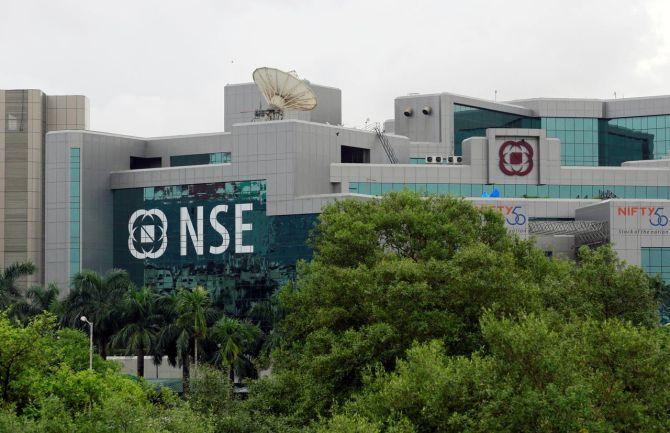
The National Stock Exchange (NSE), the country's largest stock exchange, is likely to target a valuation of Rs 6 trillion to Rs 7 trillion ($65 billion to $75 billion) in its upcoming initial public offering (IPO), according to people familiar with the matter.
At the upper end of that range, the bourse would rank among the seven most valuable listed firms in the country.
The IPO could also become India's largest, surpassing Hyundai Motor India's record Rs 27,870 crore offering in October 2024, sources said.
The proposed issue will be entirely an offer for sale (OFS), with existing investors expected to dilute 4.5 to 5 per cent of their holdings.
India's largest IPO race
"Existing investors are likely to divest between 4.5 per cent and 5 per cent in the IPO. At a valuation of Rs 6 trillion to Rs 7 trillion, the issue size could range between Rs 28,000 crore and Rs 38,000 crore," said an investment banker.
Despite the potential to overtake Hyundai Motor India's IPO in size, the fees paid to investment bankers are likely to be lower than the record Rs 493 crore -- about 1.77 per cent of the issue size -- in the automaker's listing.
People familiar with the process said the NSE might pay between Rs 300 crore and Rs 400 crore in fees, to be shared among the 20 banks appointed to manage the IPO.

The exchange is expected to file its draft red herring prospectus (DRHP) with the Securities and Exchange Board of India (Sebi) within the next four to six weeks.
'Pursuant to the NOC (no-objection certificate) issued by Sebi, the board approved an initial public offering of the company through an offer for sale on February 6, 2026.
No further comments at this stage,' the NSE said in response to queries from Business Standard.
The final valuation, however, could change depending on market conditions and the exchange's financial performance closer to the issue, expected towards the end of the year.
The NSE appointed record 20 investment banks to handle the share sale — four global lenders and the rest domestic institutions.
The exchange has also engaged eight legal advisors.
If the exchange seeks a valuation near Rs 7 trillion, it would represent a premium of roughly 40 per cent over its current valuation of about Rs 5 trillion in the unlisted market.
The NSE continues to dominate India's cash equities segment, with a market share of around 93 per cent.
In February, the exchange recorded an average daily turnover of Rs 1.23 trillion in cash equities.
In equity derivatives, its share in notional average daily turnover stood at 57 per cent, with daily volumes of Rs 291 trillion.
The IPO comes at a time when the exchange's performance has moderated with a decline in trading volumes amid regulatory tightening in the derivatives market.
The market's retreat from record highs reached in September 2024 has also weighed on activity.
For the nine months ended December 2025, the NSE reported a consolidated net profit of Rs 7,431 crore, down from Rs 9,538 crore in the same period a year earlier.
Revenue from operations fell to Rs 11,634 crore from Rs 13,369 crore, mainly because of lower trading income.
"The NSE's performance is expected to improve going ahead as most of the regulatory tightening is now behind us," an analyst said.
"The recent spike in market volatility also tends to support trading volumes."
Feature Presentation: Aslam Hunani/Rediff










 © 2026