

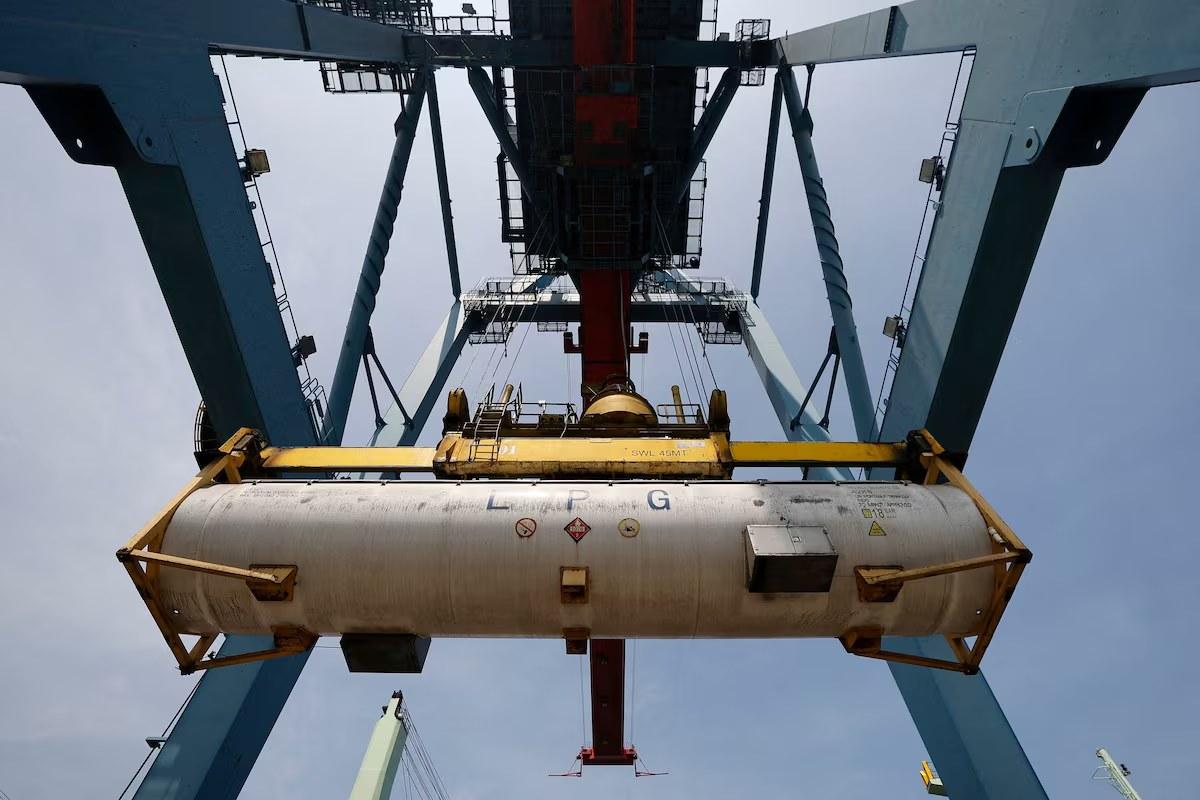
A new report highlights how blending dimethyl ether (DME) produced from coal gasification with LPG can significantly reduce India's reliance on LPG imports and save billions in foreign exchange.
Key Points
- Blending 20% dimethyl ether (DME) with LPG could cut India's LPG imports by 6.3 million tonnes annually.
- Reduced LPG imports through DME blending could save India up to USD 4.04 billion in foreign exchange each year.
- DME, produced from coal gasification, offers a homegrown alternative to imported LPG, enhancing India's energy security.
- The Bureau of Indian Standards (BIS) has approved blending up to 20% DME with LPG in India.
- Increased DME production through coal gasification can help India reduce its reliance on imported fuels.
The blending of 20 per cent dimethyl ether (DME) --produced from coal gasification -- with LPG could reduce LPG imports by about 6.3 million tonnes annually, leading to a saving of forex of up to USD 4.04 billion (around Rs 34,200 crore) per year, according to a latest report.
Coal gasification converts coal into syngas, which is then transformed into DME's clean-burning fuel that serves as a homegrown substitute for imported LPG.
The report assumes significance in the wake of India facing Liquefied Petroleum Gas (LPG) supply constraints since the war broke out in West Asia.
Benefits of DME Blending for Energy Security
According to the report titled 'Coal gasification for energy and chemical security' by EY-Parthenon and New Era Cleantech Solution Ltd -- a domestic coal gasification firm -- "DME, producible from coal gasification, can partially substitute LPG imports".
It further said 20 per cent blending could displace approximately 6.3 million tonnes of LPG imports annually.
The Bureau of Indian Standards (BIS) has already notified standards permitting up to 20 per cent DMG-LPG blending in India.
DME as a Clean Fuel Alternative
The report further said DME is emerging as a clean fuel alternative, particularly for LPG blending. India currently has limited pilot-scale domestic DME production.
Balasaheb Darade, MD, New Era Cleantech, said, "A clear blending policy will be key to unlocking investments and scaling domestic DME production."
Production Pathways and Global Trends
DME can be produced from coal gasification, natural gas reforming, biomass gasification or waste-derived syngas through two major production pathways: the indirect route (syngas to methnol to DME) and the direct route (syngas to DME via single reactor catalytic process).
Countries with large coal reserves can therefore produce DME domestically through coal gasification technologies.
DME combustion produces significantly lower emissions compared with conventional hydrocarbon fuels.
China accounts for nearly 90 per cent of global DME production capacity, primarily due to its large scale coal-to-chemicals industry.
Global DME production is dominated by coal-based routes, which account for overwhelming majority of output. A much smaller shares come from natural gas or methane based pathways, while bio DME contributes only a minimal fraction.







 © 2026