

Women are increasingly using gig work as a pathway to economic independence which has no entry barrier, especially as an alternative to traditional jobs.
Nearly 83 per cent of women gig workers -- who are the sole earners in a household -- are married, and this may reflect a 'growing' shift in the household dependency patterns, a recent study by a government-run think-tank on female gig workers shows.
This is driven by male job losses, migration or pandemic-induced distress, it added.
The study, which investigates the experiences of women in the gig economy, notes that these sole earning women are becoming more central to the financial stability of their households.
This could be attributed to changing societal norms and the increased flexibility of gig work, which allows women to balance both work and family responsibilities.
Of the total women surveyed in the Delhi-National Capital Region, 16.3 per cent responded as being sole earners.
'The intersection of sole earning patterns and marital status provides an interesting insight. Interestingly, among those who are sole earners, 82.7 per cent are still married, which may reflect a growing, although limited shift in household dependency patterns, potentially driven by male job loss, migration or to overcome the economic crisis due to the pandemic,' the study by the labour ministry-affiliated V V Giri National Labour Institute notes.
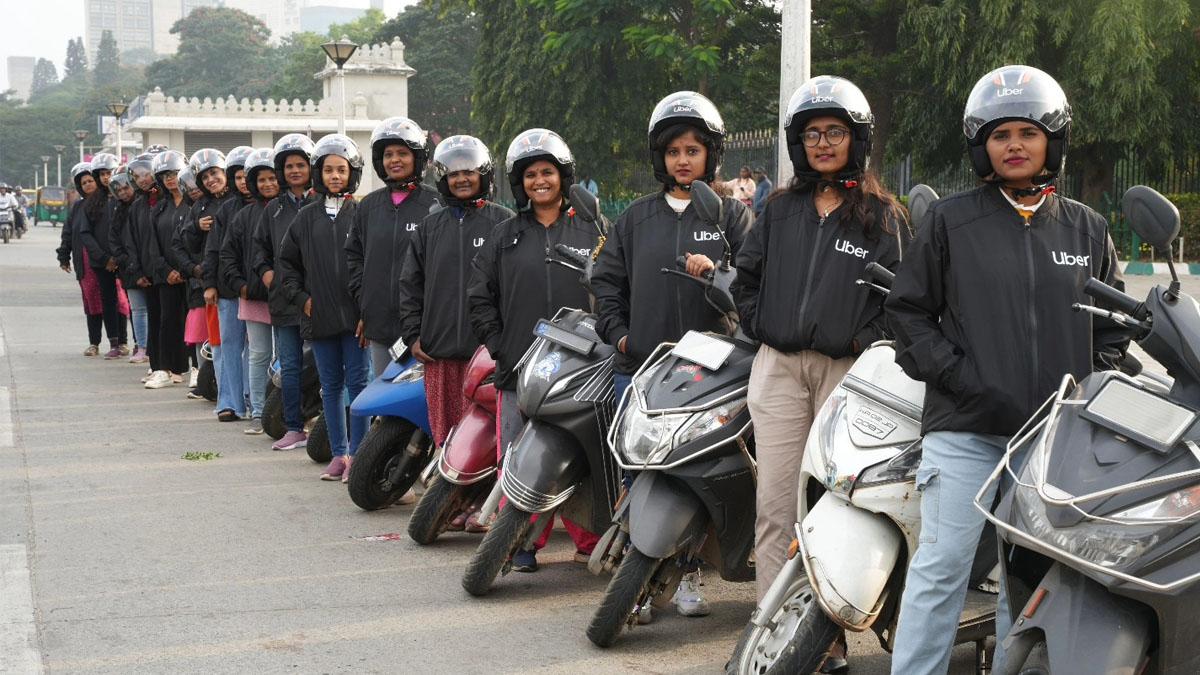
Dhanya M B, a fellow at the V V Giri National Labour Institute, said women are increasingly using gig work as a pathway to economic independence which has no entry barrier, especially as an alternative to traditional jobs.
Certain factors such as digital literacy, access to technology, public nature of delivery work, exposure to unknown locations and socio-cultural aspects influence participation.
"However, they continue to primarily occupy the role of secondary earners. A lesser proportion of women workers report themselves as being sole earners and central to the household incomes," Dhanya added.
Meanwhile, the remaining 17 per cent of sole earner women fall under the 'Other' category (widowed, divorced, or separated).
This indicates that women who lack spousal support have to shoulder complete economic responsibility.
The study also notes that there is a complete absence of unmarried sole earners.
This may indicate continued economic dependence on families among young, unmarried women workers, which aligns with the cultural constraints around women's financial independence.
In terms of earnings, the study notes that nearly 57 per cent of women workers earn more than ₹20,000 per month, with over half concentrated in the ₹20,000 to ₹35,000 range.
'Gig and platform work have emerged as important avenues for women's economic empowerment, offering flexible income-generating opportunities. Among the total sample, 37 per cent earn between ₹15,000 and ₹20,000. However, only 0.3 per cent of women gig workers earn above ₹35,000,' the study notes.
Women take charge
*16.3% of total respondents sole earners
*Nearly 83% married
*Remaining 17% fall under 'other' category (widowed, divorced, or separated)
*Study suggests a shift towards women playing central role in financial stability of the household
*Nearly 57% of women workers earn over ₹20,000 per month
Feature Presentation: Rajesh Alva/Rediff








 © 2026