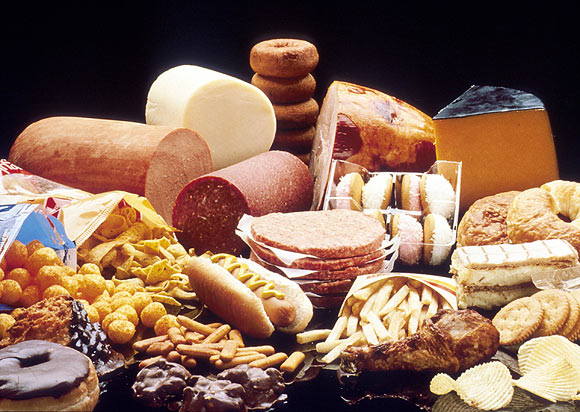
Saturated, monounsaturated, trans and poly. Are you confused yet?
You may be, even if you've been keeping up on what types of fat to eat and which to shun. By now you've probably heard of stealthy trans-fats. If they're not on the 'Nutrition Facts' panel yet, they're soon to arrive.
Trans-fats are sinister because like saturated fat, they raise total cholesterol and LDL, the "bad" cholesterol levels. Trans-fats lower levels of beneficial, HDL cholesterol in the body.
Also, consumption of trans-fats may inhibit the absorption of healthy fats that are necessary for the growth and functioning of vital organs.
Though much has been made about the dangers of trans-fats, experts caution that those warnings shouldn't overshadow the potentially disastrous effects of saturated fats. The saturated fats "increase cholesterol levels, which can lead to clogged arteries, heart attacks, strokes and obesity."
In the following pages, we take a closer look at the different types of fats.
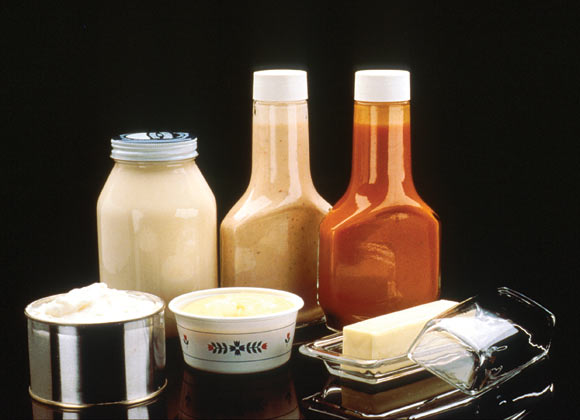
This debate has raged on for years. If you're looking for a healthy morning spread, avoid stick margarine. Choose a light, soft margarine or butter substitute that says "trans-fat free" on the package. Butter lovers should use it sparingly to cut down on saturated fat.
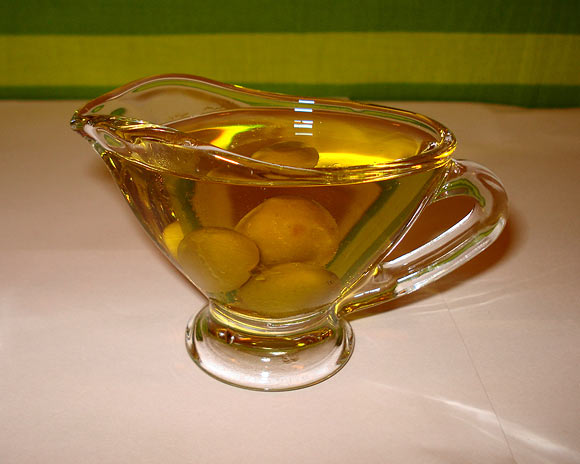
What's the bottom line? At 9 calories per gram, fats are our most caloric energy source, so we need to keep track of how much we're eating, no matter what type. Still, you'll improve your health greatly by eating more monounsaturated and polyunsaturated fats, including omega-3 fatty acids. Make an effort to cut back on saturated fats and try to avoid trans-fats.
 © 2025 Rediff.com - Investor Information - Advertise with us - Disclaimer - Privacy Policy - Feedback - About us - Terms of use - Grievances