

Sebi aims to stay proactive as HFT and quant firms like Citadel Securities, Optiver, Millennium, and IMC Trading are expanding rapidly in India, which is home to the world's largest derivatives market by contracts traded.
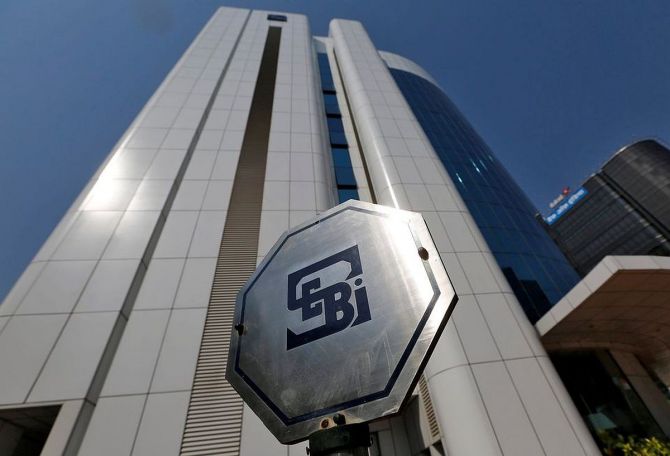
The Jane Street controversy has prompted the Securities and Exchange Board of India (Sebi) and stock exchanges to intensify scrutiny of the trading strategies employed by global high-frequency trading (HFT) and quantitative (quant) firms.
The case involving US trading firm Jane Street, where suspicious trading was flagged in August 2024, has exposed vulnerabilities in the existing oversight mechanisms. After several months of investigation, Sebi was able to issue a Rs 4,840 crore impounding order against the New York-based firm recently, highlighting the complexity of monitoring sophisticated trading strategies.
Sources indicate that no immediate violations of the scale of Jane Street have been observed. However, Sebi aims to stay proactive as HFT and quant firms like Citadel Securities, Optiver, Millennium, and IMC Trading are expanding rapidly in India, which is home to the world's largest derivatives market by contracts traded.
While the trade and algorithmic strategies of these firms are highly confidential and sophisticated, Sebi and exchanges are enhancing their surveillance systems to detect manipulative trading patterns and attempts to influence prices across futures, options, and cash markets, said people in the know. This will enable better surveillance without these firms having to disclose their strategies to the exchanges.
"This (Jane Street matter) may be one of India's most significant surveillance cases in recent years, showing how even the most sophisticated global players are not beyond the law. Sebi's detailed forensic work, focusing on trade-by-trade and second-by-second manipulation, sets a powerful precedent for future action," said Nimish Maheshwari, cofounder, Beat the Street, who publishes on Smartkarma.
Jane Street's alleged strategies included "intraday index manipulation" and "extended marking the close". In the former, the firm reportedly drove up the Bank Nifty index prices through aggressive buying of heavyweight stocks, such as HDFC Bank and ICICI Bank, in both the cash and futures markets, while simultaneously taking bearish positions in Nifty Bank options.
This allowed Jane Street to profit by liquidating its cash and futures positions to drive down prices. In the latter strategy, large directional trades in index constituent stocks and futures influenced index closings to favour its options positions.
Sebi's internal committee, aided by advanced systems, identified these patterns and sought Jane Street's response as early as August 2024.
The case has prompted Sebi to investigate similar manipulative strategies, such as "killing volatility" or "exploding volatility," across indices like the Nifty 50 and Sensex.
To curb manipulation risks, Sebi has introduced stricter derivatives trading rules in recent months. These include a new "delta" calculation for open interest, revised market-wide position limits (MWPL), and intraday MWPL monitoring at least four times daily to mitigate settlement risks.
For index options, Sebi has set a net end-of-day futures-equivalent open interest limit of Rs 1,500 crore and a gross limit of Rs 10,000 crore. Similar caps have been introduced for futures across foreign portfolio investments, mutual funds, proprietary accounts, individuals, and family offices.
Sebi has also capped the weightage of single stocks at 20 per cent and the top three components at 45 per cent in indices that are part of the derivatives segment. A wider distribution of weight will reduce the influence of a few stocks in the index, making it difficult to influence the index.
Further reforms are under consideration, including shifting to fortnightly expiries and introducing measures to reduce speculative trading in the futures and options segment. A source noted that excessive focus on short-term expiries fuels retail losses, suggesting that promoting longer-term trading, hedging, and investment strategies would benefit the ecosystem.
The Jane Street episode has sparked discussions on introducing guardrails to protect retail investors, who end up losing money in nine of 10 trades, according to a Sebi white paper.








 © 2026