

The East India Company, once a symbol of British colonial power and later revived by Indian businessman Sanjiv Mehta, has ceased operations and entered liquidation, marking the end of an ambitious attempt to transform its historical legacy.

By the beginning of June 1857, the Delhi, Meerut, Rohilkhand, Agra, Allahabad and Benares divisions had been placed under martial law.
The British confronted the brutal rebellion with brutal tyranny. Photograph: Kind courtesy wikipedia.org/Creative Commons
Key Points
- The East India Company, revived in 2010 by Sanjiv Mehta, has entered liquidation.
- Sanjiv Mehta acquired the rights to the East India Company name, aiming to transform its image from colonial exploitation to a modern brand.
- The East India Company's flagship store in London is now vacant and available for rent.
- The original East India Company was a powerful British trading company that once ruled parts of the world through its armies before being dissolved in 1874.
The East India Company has once again ceased operations.
The company, which was revived in 2010 by Indian businessman Sanjiv Mehta, has now gone into liquidation.
When Mehta acquired the rights to the historic name, the move was widely seen as symbolic -- a reversal of colonial history.
Headlines across the world highlighted the irony that a company once associated with British rule in India was now owned by an Indian entrepreneur.
However, the modern incarnation of the company has now folded.
According to a report in Britain's The Sunday Times newspaper, 'The East India Company Limited appointed liquidators in October 2025.'
The company reportedly owed more than £600,000 (Rs 6.3 crore) to its parent group registered in the British Virgin Islands, £193,789 (Rs 2.03 crore) in taxes, and £163,105 (Rs 1.71 crore) to employees.
The newspaper also reported that several related entities carrying the 'East India' name and linked to Sanjiv Mehta have been dissolved.
The company's web site is no longer operational.
Its flagship store at 97 New Bond Street in Mayfair, London, is reportedly vacant and being offered for rent. Another associated firm, East India Company Collections Limited, recently faced a winding-up petition from creditors.

Sanjiv Mehta and the East India Company Revival
Sanjiv Mehta began the process of acquiring the East India Company name in the early 2000s from shareholders who had attempted to relaunch it as a wholesale business.
In 2010, he opened a 2,000 square foot luxury retail store in London's Mayfair district.
The store sold premium teas, chocolates, confectionery, spices and other high-end goods, positioning itself alongside iconic British retailers such as Fortnum & Mason.
Mehta described his ownership as an effort to transform a symbol of colonial exploitation into a modern brand rooted in positive values.
In a 2017 interview with Britain's The Guardian newspaper, he said: 'The fact that an Indian now owns the East India Company means that the negative has become a positive. The historic East India Company built itself on aggression, but today's East India Company is about compassion.'
The Historical Significance of the East India Company
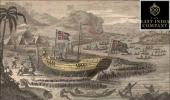
East India Company was a British trading company formed in the year 1600.
At its peak the East India Company was the largest company ruling different parts of the world through its armies.
By 1800 some 200,000 soldiers were employed by the East India Company which was twice the membership of the English army at that time.
The company used its army to subdue Indian states and principalities with which it had initially entered into trading agreements and eventually started ruling India by forceful means.
Following the 1857 Indian Mutiny, control of the company's territories was transferred to the British government.
In 1858, the British Crown formally took over administration from the East India Company marking the beginning of direct rule known as the British Raj.
The East India Company was formally dissolved in 1874 by the East India Stock Dividend Redemption Act (1873).






 © 2026