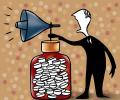
For decades, multinational pharmaceutical companies and Indian drugmakers worked in ways that supported each other: MNCs brought innovation and brands, while Indian companies built scale through generics and cost efficiency. There was an important overlap - generic drugs - but this is shrinking fast. And the consequences are reshaping India's gigantic pharmaceutical market.

The figures are grim. India accounts for around 19 per cent of global cervical cancer cases and 23 per cent of deaths.

Indian car buyers care more about affordability than technology, keeping ICE vehicles dominant while hybrids emerge as the preferred transition option and EVs struggle in the mass market.

Artificial intelligence (AI) is no longer a side conversation for Indian pharma. It is fast becoming central to how drugs will be discovered, made, and supplied. Along with that shift comes a sharper focus on innovation, on the one hand, and quality and trust, on the other.

Skoda India is focusing on cleaner fuel options, including CNG and EVs, while compact SUV Kylaq drives volumes, expands first-time buyers and strengthens the brand in India's competitive market

The tariff removal will lower prices of Harley's large-displacement imported motorcycles, which retail between 14.5 lakh and 45.8 lakh but after the duty cut volumes are expected to remain modest.

Hyderabad is rapidly emerging as a strategic hub for multinational companies (MNCs) deepening their focus on artificial intelligence (AI), life sciences, and global capability centres (GCCs), supported by the city's strong pharmaceutical (pharma) base, deeptech talent pool, and a policy environment that encourages high-value investment.

Jaguar Land Rover will begin assembling premium cars at its new Tamil Nadu plant on February 9, marking a step towards full-scale luxury car manufacturing in India.

India's electric vehicle (EV) markets expanded gains in January compared to the year-ago period, as two-wheeler and passenger vehicle sales triggered a shuffle in the competitive landscape, data from an automobile dealers' association showed.

The India-EU free trade deal could help Indian-made cars enter Europe at lower costs and challenge Chinese dominance.

Maruti Suzuki sold more cars than ever before, earned more money, and saw many first-time buyers choosing small cars again.

For patients, the immediate impact is a reduction in the final cost of therapies that often run into lakhs per month.

Jeep outlines a renewed regional roadmap with higher localisation, export expansion and focus on products and ownership experience amid intense competition in India's SUV market.

GSM, which is potentially eyeing a Hong Kong listing and was recently valued at $20 billion, operates on a distinct model -- it owns the e-taxis and employs the drivers, while also supplying cars to independent drivers or fleet operators.

Two-wheeler (2W) major Bajaj Auto on Friday posted its highest ever quarterly revenue and profit during the third quarter of 2025-26 (Q3FY26). Bajaj Auto's consolidated net profit for the quarter grew by 25 per cent year-on-year (Y-o-Y) to Rs 2,749 crore, with the revenue also growing 23 per cent to Rs 16,204 crore.

Tata Motors' commercial-vehicle (CV) business reported a 48 per cent year-on-year decline in net profit to Rs 705 crore in Q3FY26, even as profit before tax (PBT) rose 65 per cent to Rs 2,568 crore.

India's electric two-wheeler (e2W) manufacturers have urged the government to extend subsidies under the PM E-Drive (Electric Drive Revolution in Innovative Vehicle Enhancement) scheme beyond March 2026, cautioning that a withdrawal could slow near-term demand even as confidence in long-term electric mobility adoption remains intact.

India's electric passenger vehicle (ePV) market has expanded sharply over the past five years, with registrations rising from just 3,252 units in 2020 to about 170,000 in 2025. Throughout this scale-up, southern states have remained the bedrock of adoption, consistently contributing around one-third of national electric vehicle (EV) registrations - emphasising the region's role as the structural backbone of India's EV transition.

India's two-wheeler industry is seen growing 6-9% in 2026, though a proposed ABS mandate for sub-125cc models could push up prices and temper volumes.
Buoyant domestic sales are expected to lift revenues for pharma companies by 8-11 per cent in Q3FY26, even as declining generic Revlimid (cancer drug) sales in the US remain a key drag. Most brokerages forecast a modest 2-4 per cent growth in profit after tax (PAT) for the quarter. Hospitals and diagnostics companies, meanwhile, are likely to post much stronger numbers, with revenues seen growing 20-22 per cent year-on-year (Y-o-Y).
 © 2026 Rediff.com - Investor Information - Advertise with us - Disclaimer - Privacy Policy - Sitemap - Feedback - About us - Terms of use - Grievances