
Petrol pump dealers seek exemption from the proposed 5 UPI charge on fuel purchases above 2,000, citing pressure on their margins.

'If crude remains above $100 per barrel, with restricted retail-price increases, OMCs could face negative petrol and diesel marketing margins, higher LPG under-recoveries, higher crude-landing, freight and insurance costs, working capital and debt accumulation and inventory losses if crude subsequently corrects sharply.'

India's current account deficit could widen to 1.7 per cent of GDP, or about $71 billion, if crude oil prices stay above $90 a barrel for a significant part of the second half of FY27.

State-run ONGC plans a massive Rs 1 trillion investment in deepwater exploration over the next five years, aiming to drill 87 wells to counter declining domestic crude oil and natural gas production. The company is also establishing a trading firm and its overseas arm, OVL, is pursuing operatorship of assets in Venezuela.

'As long as the vehicle has a flex engine, it is irrelevant if the mixture is 15 per cent or 30 per cent; the performance is the same.'
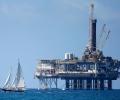
State-run Oil and Natural Gas Corporation (ONGC) Ltd reported a 112 per cent year-on-year increase in standalone net profit for Q1 FY27, reaching 17,034 crore, primarily due to higher crude oil prices and increased realisations from new well gas. Despite a consolidated net profit decline due to HPCL's losses, ONGC's core upstream business showed robust growth.

Indian Oil Corporation Ltd (IOCL) plans to invest approximately Rs 1 trillion in petrochemical projects over the next five to six years, aiming to significantly increase its petrochemical intensity and production capacity to meet growing domestic demand.

State-owned refiners Bharat Petroleum Corporation Ltd (BPCL) and Hindustan Petroleum Corporation Ltd (HPCL) have reported substantial losses for the first quarter of financial year 2026-27 (Q1FY27), primarily driven by a sharp increase in crude oil prices exacerbated by the ongoing West Asia crisis and suppressed marketing margins on petroleum products.

'Energy prices would shoot up with the closure of Hormuz again.'

It, however, conceded that 20 per cent blending of ethanol with petrol leads to 3-5 per cent lower mileage in vehicles than conventional petrol, but said the blend offers a significantly higher octane rating, superior anti-knock properties, faster combustion, better pickup, smoother acceleration, and cleaner engine operation.
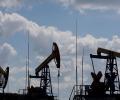
A tripartite pact -- amid the promise of removing AFSPA from almost all of the North East -- revives hydrocarbon exploration along the Assam-Nagaland border after decades of dormancy.

India's crude oil imports from Russia reached a record high of approximately 2.73 million barrels per day (mbpd) in June, driven by discounts of $2-5 a barrel. This surge comes as the West Asia crisis disrupted supplies from traditional sources and China reduced its own purchases, leading Russia to offer more favourable terms to India.

Reliance Industries Ltd (RIL) has expressed caution regarding 'extreme volatility' risks stemming from the West Asian conflict, which could impact global oil demand and the company's margins, while also noting that near-term retail consumption demand may remain sensitive to macro conditions. Chairman Mukesh Ambani, in the annual report, remained silent on the timeline for Jio Platforms' anticipated public listing, stating the group will 'continue to evaluate strategic pathways'.

The Indian government has issued a stern warning to industrial users who are reportedly procuring cheaper retail fuel instead of industrial-grade fuel, leading to significant losses for state-run oil marketing companies (OMCs) and potential local shortages. This diversion, driven by a substantial price difference between retail and bulk diesel, is adversely impacting OMCs, which are absorbing daily losses of approximately 550 crore to keep retail prices stable.

India bought 1.87 million barrels of Russian oil per day in May so far, meeting approximately 40 per cent of its oil imports.
State-run Bharat Petroleum Corporation Ltd (BPCL) plans a significant capital expenditure of 25,000 crore for the financial year 2026-27, primarily for ongoing expansion projects. The company also stated that the recent 4-per-litre price hike in petrol and diesel has provided some financial relief amidst volatile crude oil prices and mounting losses.

'OMCs are incurring losses of Rs 1,000 crore per day due to the West Asia crisis.'

Infrastructure major Larsen & Toubro (L&T) reported a 3 per cent year-on-year decline in consolidated net profit for Q4 FY26, reaching 5,325.60 crore, primarily due to exceptional gains in the previous year. Despite this, the company's consolidated order book surged by 28 per cent to 7.4 trillion, with international orders accounting for 52 per cent.

'Historically, India has depended on the Middle Eastern Gulf for nearly 90 per cent of its LPG imports. Shifting to alternative suppliers is not something that can happen quickly.'
Indian refiners are recalibrating their crude sourcing strategy due to supply disruptions in West Asia, leading to Venezuela and Brazil emerging as top five suppliers in April, replacing traditional sources like Iraq and the United States.
