
India's fertiliser subsidy bill is projected to increase by approximately 70,000 crore, reaching around 2.41 trillion in FY27, primarily due to rising import costs exacerbated by the ongoing West Asia crisis.

The Indian government's decision to ban sugar exports until September 30 has drawn sharp criticism from the sugar industry and farmer leaders, who fear long-term negative impacts despite the stated aim of controlling domestic prices and ensuring availability.

'This system will be of immense help in agricultural planning, disaster management and water resources management.'

'Monsoon is the pran (life) of our water system.' 'A weak monsoon will have a very negative impact on crops and people's lives.'

Despite significant price differences, Indian farmers are increasingly adopting non-subsidised speciality fertilisers, which are seen as a potential solution to the rising fertiliser subsidy burden exacerbated by global supply shocks.

India's sugar consumption is projected to fall by nearly 400,000 tonnes in the 2025-26 season, primarily due to the ongoing liquefied petroleum gas (LPG) shortage exacerbated by the West Asia conflict and unseasonably cool weather.

A poor monsoon could drag overall economic growth and compound the impact of the West Asia conflict on the Indian economy.

"The world might face a food crisis if the war continued till the end of April, as it could have a dramatic impact on planting in Europe and North America," said Matt Simpson, CEO of Brazil Potash.

'During the hot season (April to June), above-normal minimum temperatures are likely over most parts of the country, except in some regions of Maharashtra and Telangana, where minimum temperatures are expected to be normal to below normal,' IMD said.

Unseasonal rainfall could damage standing wheat crops, especially late-sown fields nearing maturity and grain-filling stages.

Revenue collection next financial year may be affected, and, along with this, subsidies on food and fertilisers can go up if the war in West Asia drags for long, according to experts.

'It's a changing world and the opening up doesn't mean that concerns with regards to security have gone away.'
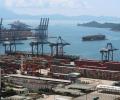
With the Iran war escalating sharply and crisis deepening in the global energy market, India on Monday unveiled a coordinated plan to support exporters and shippers caught in the fallout.

'The contours of the trade deal need to be reworked now.'

Gold imports climbed 349.22 per cent to $12.07 billion in January, while silver imports rose 127 per cent to $2 billion.
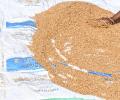
500,000 tonnes of sugar exports allowed on top of an existing 1.5 mt window

'Based on the joint statement, a formal agreement will be drafted, which may take a month or month-and-a-half to finalise. We aim to sign the formal agreement by mid-March.'

New Delhi will substantially reduce tariffs on industrial and agricultural goods while continuing to protect sensitive sectors. Tariffs on some agricultural products that are not traditionally considered sensitive will be brought down to zero, while in the case of relatively sensitive items, duties will be reduced in a graded manner and quotas will be imposed.

India's marine product exports facing rough weather from punitive US tariffs are expected to get a big boost following the reduction of 26 per cent tariff as part of the India-EU Free Trade Agreement (FTA), but concerns over non-tariff barriers, which are a dominant aspect of marine trade to the EU, still remain.

India has been on an FTA-signing spree of late. Since 2021, it has signed eight trade agreements, three of which -- with the UK, Oman and New Zealand -- were finalised in 2025 alone.
 © 2026 Rediff.com - Advertise with us - Disclaimer - Privacy Policy - Sitemap - Feedback - About us - Terms of use - Grievances