
'PM Modi is trying to reduce the volume of fuel consumed instead of raising prices sharply.'

Preferential equity listings in India reached an unprecedented 1,307 in FY26, marking a 33% increase from the previous year and reflecting a strategic choice for companies during market volatility.

Most active traders prefer mobile applications that provide real-time alerts, including price targets -- functions that dealers once delivered through client calls.

India's new manufacturing project announcements more than halved in the fourth quarter of FY26, falling 60 per cent sequentially and 78 per cent year-on-year to approximately 1.7 trillion, driven by global uncertainties, geopolitical conflicts in West Asia, and existing unutilised manufacturing capacity.

Only 2.5 per cent of the equity in Jio Platforms will be offloaded through the OFS route -- meant for secondary share sale.

Goldman Sachs has materially lowered its earnings growth forecast for Indian companies by a cumulative 9 percentage points over the next two years.

Hiring demand strongest in ecommerce, tech startups, healthcare, and energy sectors, with Bengaluru, Hyderabad, and Pune leading.

'Being an important institution in the banking system, we are subject to regulatory supervision, both offsite and onsite.' 'When you look at the intensity at which these levels of supervision come, we, on the board and in management, believe there should not be any surprises.'
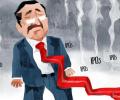
Share of IPOs opening above issue price drops to 64.6%, median gains shrink sharply amid market volatility.

'Uncertainty level A in the morning, uncertainty level B in the afternoon. If I answer about tariff rates now, I'll be outdated by the evening.'

'The day that the market realises that they've overspent (on AI) and there's a sudden collapse in the capex, then India can start outperforming again.'

'Not the back office for the world's content. The leader. The standard-setter.'

There were 18 exits from the index between 1995 and 2000. The pace has since dropped to single-digit exits over every five-year period.

Companies' rent and lease expenses have seen a significant decline relative to the money they make since the pandemic.

The deployment of the army in all sectors along the Line of Actual Control, the de facto border between India and China, is 'robust, well poised and prepared to deal with any emerging contingency'.

Less than 12 per cent of the exits were from companies with Rs 10,000 crore in market capitalisation or above.

The largest tranche came in July, in the wake of Operation Sindoor, with the DAC according acceptance of necessity -- or initial approval -- for 10 capital acquisition proposals amounting to approximately 1.05 trillion through indigenous sourcing.

Open offers this calendar year, following attempts at acquisition and takeover, came in at more than two a week. There were 121 such open offers to acquire additional shares following a substantial acquisition or change of control, shows the data compiled by primedatabase.com.
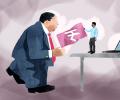
In the mid-1990s, when the shares of listed companies first began to be held in electronic form, they accounted for less than 1 per cent of the stocks bought and sold on the stock exchanges. This climbed to 99.5 per cent by 2001.

Companies are squeezing more profits from their operations relative to the capital they put to work, the highest now since 2011. Profit after tax relative to capital employed came in at 10.47 per cent in September, shows data from the Centre for Monitoring Indian Economy (CMIE), higher than the 8.41 per cent seen in September last year. This is the highest since March 2010.
 © 2026 Rediff.com - Advertise with us - Disclaimer - Privacy Policy - Sitemap - Feedback - About us - Terms of use - Grievances