
American industry groups sought punitive tariffs on Indian goods at USTR hearings, while Indian officials defended the country's manufacturing growth as demand-led and WTO-compliant.

'OMCs are incurring losses of Rs 1,000 crore per day due to the West Asia crisis.'
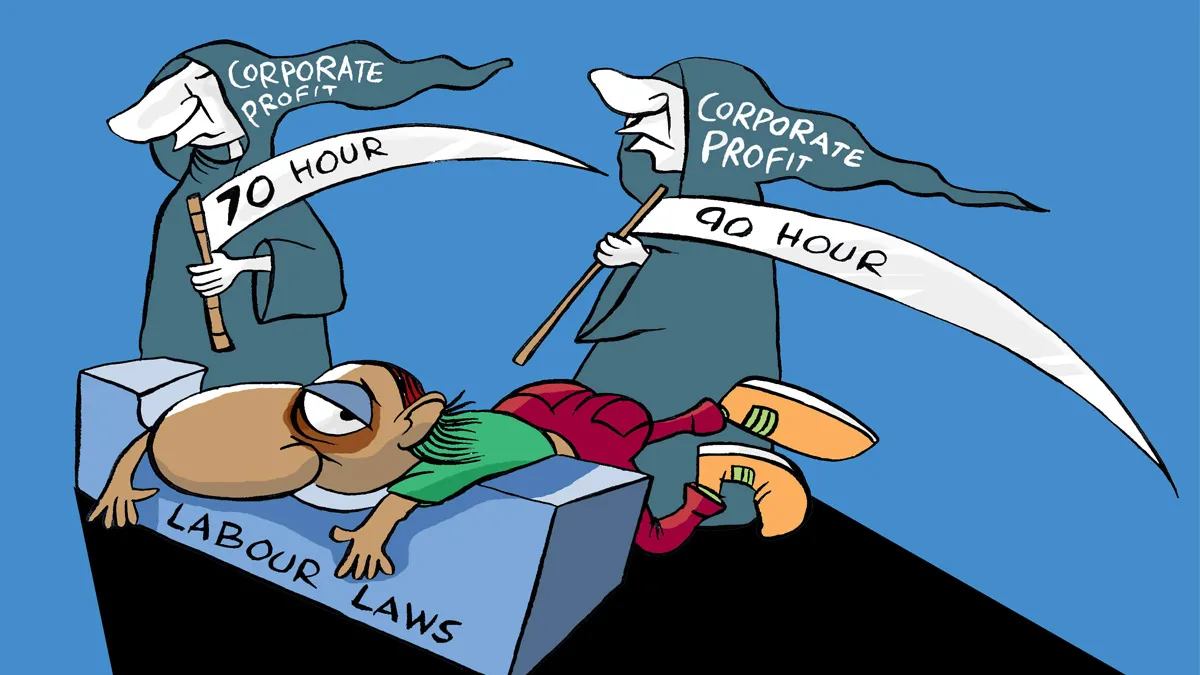
The Indian government has notified final rules under four labour codes, potentially enabling a four-day workweek in certain sectors by capping weekly working hours at 48 while allowing daily flexibility. This move also introduces significant changes to wage fixation, compliance obligations, and social security norms.

Indian exporters are unlikely to receive direct tariff refunds from the US's $166 billion payout, but the rollback of reciprocal duties is enhancing their pricing power and improving order prospects, particularly in textiles, apparel, and engineering goods.

Ashok Lahiri, a distinguished economist with experience in government, the private sector, and electoral politics, has been appointed as the new Vice-Chairman of NITI Aayog, tasked with strengthening India's reform trajectory and policy-making.

The finance ministry has clarified that its letter to state chief secretaries, urging them to align their bonus policy to promote pulses, oilseeds, and millets, was an advisory and not a directive. This clarification comes in response to Tamil Nadu Chief Minister M K Stalin's criticism, who called the advisory a 'treacherous act against farmers'.

'The West Asia or the Gulf crisis has shown that what we develop as national infrastructure when things are not as bad as they could be, we forget to plan for adversities.'

'Whether you will bring this down and cause hurt to senior citizens, who are probably living on that little interest rate that they earn out of it... But equally, if I just look at the kitty of the National Small Savings Fund, it is from that same kitty that I'm borrowing.'

The Confederation of Indian Industry (CII) has proposed a 20-point policy agenda to the finance ministry, including a conflict-linked emergency credit line guarantee scheme and tax rationalisation on energy inputs, to support MSMEs, exporters, and energy-intensive industries affected by the ongoing West Asia war.

The Parliamentary Standing Committee on Finance has asked the finance ministry to spell out a clear legal strategy, including options such as a "golden share" or indirect control structures, to maintain strategic oversight in public sector entities if state ownership falls below 51 per cent.

Revenue collection next financial year may be affected, and, along with this, subsidies on food and fertilisers can go up if the war in West Asia drags for long, according to experts.

Fitch Ratings on Friday said persistently higher oil prices could cause India's retail inflation to rise faster than the expected gradual pace, and lead to a slowdown in economic growth in the first half of financial year 2026-27 (FY27).

Asian Development Bank (ADB) on Friday warned that India's limited crude oil reserves of about 100 million barrels - sufficient for only 40-45 days of consumption - leave the country particularly vulnerable to supply disruptions through the Strait of Hormuz amid the ongoing war in West Asia.

'Engaged in very fruitful discussions to expand our trade and economic partnership.'

'The contours of the trade deal need to be reworked now.'

On Agri Stack, Expenditure Secy V Vualnam says it's progressing well; using IT, farmers will be able to choose exact fertiliser quantities needed, reducing crowding at fertiliser outlets.

'Among corporates, about 60% of income is now reported under the new tax regime.'

The turning point came with the appointment of Sergio Gor as the US ambassador to India.

'This Budget has a one-year agenda, which you can call the sprint, and the marathon is towards Viksit Bharat.'

'Grassroots-level corruption, which disrupts the last-mile work, cannot be ignored in your enthusiasm and drive to get going to complete the project.' 'Like it was in MGNREGA, in some states, it is the case with the Jal Jeevan mission.' 'The last minute levels of corruption can ruin the intent of the project itself.' 'When you see that people can game a particular well-intended and well-crafted project, you need to correct that.'
 © 2026 Rediff.com - Advertise with us - Disclaimer - Privacy Policy - Sitemap - Feedback - About us - Terms of use - Grievances