
'India has the potential to do a lot more to take advantage of the time today where we stand to gain, geopolitically and in terms of market attractiveness.'
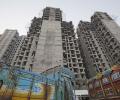
Bengaluru-based Prestige Estates Projects recently said it aims to double its annual residential sales bookings to Rs 25,000 crore by FY26 from its current markets and others such as Mumbai, Pune and National Capital Region (NCR). The company's chairman and managing director Irfan Razaq tells Raghavendra Kamath about his plans to achieve the target and outlook for the real estate market.

'The rising cost of construction, the cost of doing business, high compliance, and inflation/interest rates going up have already reduced returns to single digits.'

Most players are looking to invest anywhere between $500 million and $1 billion in new ventures in the next couple of years, said experts on this segment.

Shankar Prajapati, a 57-year-old potter in Dharavi, has given up hope of getting a bigger house for his family. He lives cheek by jowl in a hutment measuring 200 square (sq.) feet (ft) in the nondescript shanty town. "We have surrendered to our fate. We cannot wait forever for better accommodation. "Perhaps we are not meant to dream big," despairs Prajapati. Raju Korde, president, Dharavi Redevelopment Committee, and a local resident, agrees with Prajapati.
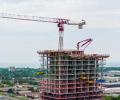
The NCR and the MMR together account for 77 per cent of 10 big housing projects stuck because of developers' bankruptcy or litigation.

'Periods of high volatility are usually bad for mid-caps and this is something that has to be kept in mind.' 'Focus on quality is of paramount importance.'

'After Covid, people started looking for bigger houses with pools and landscaped gardens.' 'Even middle class buyers are looking at plots of land in smaller towns.'

'Then select those that are well-aligned with your risk-return profile and investment time horizon.'

A 5% increase is expected due to additional interest on approval costs.
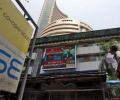
Analysts believe that investors should look at stocks that hit 52-week lows only if they have a dividend paying track record, are debt-free and have sound fundamentals.

After years of living with his family in a poky 110 sq. ft. 'house', textile worker Sambhaji Surve dreams of moving into a home four times the size once the Maharashtra government starts its ambitious redevelopment of the 39-acre Kamathipura shanty town in south-central Mumbai. Sharing his dream are about 8,000 other families hoping for a better life when the redevelopment project, part of the government's effort to redevelop old settlements and make life more livable for some residents, gets underway. The Shiv Sena-Nationalist Congress Party aims to redevelop BDD Chawl and Dharavi but for Surve all the matters is Kamathipura where he arrived in the 1970s from Nasik to work in a textile mill. Kamathipura was originally built 150 years ago following construction of a causeway to connect the seven islands of Mumbai. From the British Raj to post-independence, it became infamous for slums and brothels.

'Large-caps are better placed to withstand the impact of higher input cost inflation, rising rates and withdrawal of excess global liquidity.'

Sebi is reportedly examining the matter internally and has reached out to the fund house on the matter.

'With the ease of access, we have seen an increased participation from tier-2, tier-3, and tier-4 cities/towns.'

'It will be a cat and mouse game between investors and the government.' 'The issue will be launched only if there is sufficient demand from investors and the government is in agreement with the bankers on the valuations.'

From March 3, investors in India will be able to trade in select US stocks through the NSE International Exchange (NSE IFSC), a wholly owned subsidiary of the National Stock Exchange (NSE). Investors can invest in NSE IFSC receipts on US stocks, which will be in the form of unsponsored depository receipts (DRs). For a start, this will include DRs of 50 US stocks such as Apple, Alphabet, Amazon, Tesla, Microsoft, Morgan Stanley, Nike, P&G, Coca-Cola, and Exxon Mobil. Indian retail investors will be able to transact on the NSE IFSC platform under the Liberalised Remittance Scheme (LRS) limits prescribed by the Reserve Bank of India (RBI), which currently stand at $250,000 per year.

The National Stock Exchange (NSE) has got into firefighting mode to control the reputational damage caused by the Securities and Exchange Board of India's (Sebi's) order against its former managing director and chief executive officer Chitra Ramkrishna and others. According to sources, the exchange's management over the past one week has met several key stakeholders, including officials in the finance ministry and Sebi, major shareholders, and trading members, trying to distance itself from the controversy. The exchange plans to hold more meetings in the coming week to ensure that trading volumes and confidence in the bourse don't get impacted, they added.
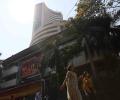
Currently, trades on the Indian stock exchanges are settled within two days, just like most major markets such as Singapore, Hong Kong, Australia, Japan, and South Korea. Indian exchanges, however, will be moving to T+1 settlement from February 25 in a phased manner.

'Younger investors start their journey with very little capital so they are risking less while they have a lot of time to experiment and learn early on.'
 © 2026 Rediff.com - Advertise with us - Disclaimer - Privacy Policy - Sitemap - Feedback - About us - Terms of use - Grievances