
Astronaut Sunita Williams discusses how space travel changed her perspective on life, emphasizing the unity of Earth and the silliness of human conflicts when viewed from space.
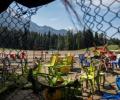
The Pahalgam attack in Jammu and Kashmir impacted tourism, but recovery efforts are underway with government initiatives and events to promote the region and boost MICE tourism.

India's Deepavali (Diwali), the festival of light, has been inscribed on UNESCO's Representative List of the Intangible Cultural Heritage of Humanity during a meeting held at the Red Fort in Delhi.

Voters in Bihar's Jehanabad and Ghosi express their hopes for change, particularly regarding job creation and development, in the upcoming government following the state elections.

Prashant Kishor's Jan Suraaj party faces skepticism and challenges as it enters the Bihar Assembly elections, with critics questioning its experience and impact.

'We should not look at him as a representative of the Indian community, especially now that he is the mayor of New York. What is important is the value he upholds, which are general values that liberals across the world would believe in'

The National Stock Exchange (NSE) faces around 170 million cyberattacks daily, requiring a dedicated team of "cyber warriors" to work around the clock to ensure uninterrupted operations. The NSE recorded its highest-ever 40 crore (400 million) cyberattacks in a single day during 'Operation Sindoor', designed as a DDoS simulation. However, attackers failed to cause any damage due to the coordinated efforts of men, machines, and advanced technology.

A man running a community kitchen for pilgrims was rescued alive after being trapped under debris for 30 hours following a cloudburst in Kishtwar, Jammu & Kashmir. The disaster has left many dead or missing and the annual pilgrimage suspended.
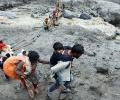
Nine-year-old Devanshi was among the hundreds of pilgrims who had gathered in Chositi for the last leg of the yatra to Machail Mata temple when tragedy struck on Thursday. Buried under mud and debris when a Maggi-point shop was hit by flash floods, she emerged hours later, rescued by her uncle and other villagers.

The shocking scenes of physical and psychological trauma unfolded on a massive scale as search and rescue operations were underway, digging out mud-buried bodies and rescuing the injured trapped in slush and rocks after flash floods triggered by a cloudburst devastated Chositi village in Jammu and Kashmir's Kishtwar district on Thursday.

Defying apprehensions of the horrific April 22 terror Pahalgam attack casting a shadow on the Amarnath Yatra this year, hundreds of pilgrims from various parts of the country lined up at the registration centre in Jammu on the first day.
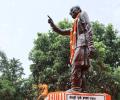
On that fateful day, Narayan, popularly known as JP and a fierce critic of the then-Indira Gandhi government, addressed a massive gathering at the Ramlila Maidan in Delhi.
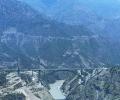
Prime Minister Narendra Modi on Friday flagged off two specially designed Vande Bharat trains between Katra town and Srinagar city, reducing travel time between the two places by two to three hours and ensuring all-weather surface connectivity with the Kashmir valley.

Following the Pahalgam terror attack, the Indian Army launched Operation Sindoor, targeting Pakistani terror infrastructure and posts in the Poonch sector of Jammu and Kashmir. Over 600 artillery shells were fired in three days, decimating 20 Pakistani posts used for infiltrating terrorists into India. The precision strikes crippled enemy logistics, material, and morale, prompting retaliatory attacks by Pakistan on civilian areas. Despite the retaliation, Indian Army officers described the operation as a success, highlighting the high morale of the troops and the effective coordination between artillery and air defense units. The article details the intensity of the artillery shelling and the impact on both sides, highlighting the strategic significance of the Poonch sector and the ongoing tension between India and Pakistan.

People along the Line of Control and International Border in the Jammu region continue to live under the shadow of death, with unexploded mortar shells fired by Pakistani troops still embedded in farmlands and residential areas even though hostilities have stopped for nearly a week. IMAGE: Kindly note that this image has been posted for representational purposes only. Photograph: / Rediff.com Despite the May 10 understanding between India and Pakistan, locals describe the border areas as a 'death trap'. Sixty-two-year-old Balvinder Singh, who returned to his home in Pargwal sector on May 14, recounted a narrow escape. "Two shells exploded in our compound, damaging our house. Three more landed on our farmland. We were terrified and told our family to stay away from the fields until the Army could help," Singh told PTI. Army engineers later came to the village and safely defused the unexploded shells, bringing a temporary sense of relief. "Fear is writ large on the faces of people to these death traps in border hamlets", he said. Scenes of destruction are evident rooftops torn apart, broken houses, windows punctured by shrapnel, and carcasses of cattle lying in pools of blood. The acrid smell of gunpowder still lingers in the air. Sardar Gurmeet Singh faced a similar ordeal. His family could not re-enter their home as a live mortar shell had sunk into the compound in a village close to the International Border. "The army's bomb disposal squad removed it after four days, allowing us to finally enter, back home," he said. Indian Army engineers have launched a sweeping clearance operation across border districts, defusing over 80 unexploded shells in the past five days -- including 6 in Pargwal, 19 in Rajouri, 42 in Poonch, and 12 along the IB. "These shells, mostly 120 mm calibre, have a range of 15 to 30 km and pose a serious threat to both civilian and military targets," an Army officer said. "Many of them were fired by Pakistan during recent hostilities." On May 7, the Indian Army launched Operation Sindoor, conducting precision strikes on nine terror hubs in Pakistan and Pakistan-occupied Jammu and Kashmir (PoJK) in response to the April 22 terror attack in Pahalgam that killed 26 people, most of them tourists. The subsequent retaliation by Pakistan pushed the region to the brink of war. From 7 to 10 of May, 27 civilians were killed and over 70 injured in Pakistani shelling in the Jammu region. Farid Din Gujjar, a resident near the border, expressed fear about returning to his fields. "Several shells created deep craters in our paddy land. We cannot resume work until all unexploded ordnance is cleared. It's a death trap," he said. Army units, in coordination with Jammu and Kashmir Police, have evacuated high-risk zones and issued stern warnings to residents not to touch any suspicious objects or unexploded shells. In one major operation, 42 live shells were safely destroyed in the Poonch villages of Jhullas, Salotri, Dharati and Salani. "All safety protocols were followed. The shells posed a serious danger to local lives," an Army spokesperson said, calling the effort a 'continued commitment to protect civilians and restore normalcy'. Poonch saw the vast majority of deaths due to shelling. Security officials said that Pakistan used a mix of mortar shells, armed drones, and missiles during the shelling spree, specifically targeting civilian habitations and border towns in Jammu, Samba, Kathua, Rajouri, and Poonch. As clearance operations continue, the border residents are slowly returning to their homes, but with caution, fear, and lingering uncertainty about shelling that may yet happen in the future.
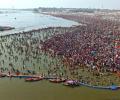
The Maha Kumbh, billed as the world's largest gathering, concluded on Wednesday after 45 days, with lakhs of devotees taking a dip in the Sangam, the confluence of the Ganga, Yamuna, and mythical Saraswati rivers. Despite a stampede that killed at least 30 people, millions continued to visit the Kumbh, seeking salvation through the ritual bath. The event saw a mix of faith, tradition, and technology, drawing pilgrims and tourists from across the globe.

The 45-day Maha Kumbh in Prayagraj concluded on Mahashivratri with a record-breaking number of pilgrims taking a holy dip at the Triveni Sangam. Over 65 crore pilgrims participated in the event, which took place once every 12 years.
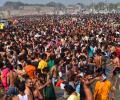
In 1911, French pilot Henri Pequet flew the world's first official airmail, carrying over 6,500 letters and postcards, during the Kumbh Mela in Allahabad, now Prayagraj. The flight, which covered five miles in 13 minutes, marked a significant milestone in aviation and postal history. The mail included letters to Jawaharlal Nehru and King George V, and special commemorative postcards signed by Pequet are now prized collector's items. The event, which coincided with the Kumbh Mela, highlights the intersection of spiritual and technological advancements in India's history.

The exchange took place at five Border Personnel Meeting points along the LAC, the sources added.

Following the disengagement, both sides will soon start the coordinated patrolling in their respective areas, sources added.
 © 2026 Rediff.com - Investor Information - Advertise with us - Disclaimer - Privacy Policy - Sitemap - Feedback - About us - Terms of use - Grievances