
The Central Board of Secondary Education is poised to introduce Mandarin Chinese in class sixth from April next year in view of China emerging as one of the major global economies and Mandarin being spoken by a large population of the world.

The company currently has slightly less than 3,000 people in India.
After Research In Motion (owners of BlackBerry), the home ministry will now turn the screws on Microsoft, Google, IBM and Oracle. These companies provide technology and services for the virtual private networks (VPNs) run by various operators in India. The government will ask them to conform to regulation that allows intelligence agencies to lawfully intercept data. Failure to do so could result in the termination of VPN services by operators using their technology.

Even as hackers attacked more than 5,500 websites in the first six months this year, security agencies are groping in the dark to find a way to tackle the problem.

With all the criticism over the mistake, the IPCC has decided to bring in editors and coordinating lead authors for its fifth assessment report.

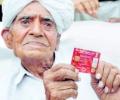
A Congress bastion over the years, the tribal dominated Nandurbar district in Maharashtra has been chosen for the launch of Aadhaar, the unique identity (UID) numbers.
PepsiCo India is planning to launch beverages and snacks priced below Rs 5. This is part of a drive to address the mass market looking for nutritional products. The new range, being developed in India, is expected to be launched on a pilot basis in select markets by next year.
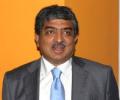
The newly constituted National Innovation Council (NIC) headed by Sam Pitroda, aims to have a $1-billion (around Rs 4,600 crore) fund to promote new ideas for inclusive development and innovation in the country.

The old Bimaru area comprises 36 per cent of India's population, with 40 per cent of India's youth.
This is based on the proposals given by a task force set by the government a year before to suggest measures to stimulate the growth of IT, IT-enabled services and the electronics hardware manufacturing industry. Electronics hardware production rose from Rs 84,410 crore (Rs 844.1 billion) in 2007-08 to Rs 94,690 crore (Rs 946.9 billion) in 2008-09, a growth of 12.1 per cent.

After individuals, now even institutions like government departments, schools and companies would get unique identification numbers (UIDs) to enroll the country's residents for the UID system.

The draft proposal of the five-year plan focuses on a multi-pronged strategy to achieve e-development: creation of e-infrastructure to facilitate and promote e-governance, promotion of electronics and information technology industry, promotion of e-inclusion, providing support for creating innovation, building knowledge networks and securing India's cyber space.
After individuals, now even institutions like government departments, schools and companies would get unique identification numbers (UIDs) to enroll the country's residents for the UID system. These institutions or service delivery organisations would get a UID-like identifier, called Entity ID, which would help enrol people and deliver services.

Despite their slugfest on the high street, Korean chaebols Samsung and LG have independently charted a similar strategy that will see India operations carve out a larger slice of their global turnover

The MSP tender, considered as one of the largest information technology outsourcing contracts floated in India, is estimated to be in excess of Rs 1,000 (Rs 10 billion) crore for the 7-10-year lifespan of the project.
It's one tender that could usher in an era of partnership between domestic and global IT service providers, who compete fiercely for deals in India and abroad.
Like any other government organisation, the Unique Identification Authority of India (UIDAI) is facing manpower crunch. Vacancies in eight of its regional offices have not been filled since they became functional in November 2009.
The consortia include algorithm and system integration providers.
South Korean giant LG Electronics is working on using technology to revamp its product line by next year, based on three key parameters.

The labour shortage for the Games is about 20 per cent, according to Rakesh Mehta, chief secretary of the Delhi city government. He told Business Standard several projects are suffering due to this problem.
 © 2025 Rediff.com - Investor Information - Advertise with us - Disclaimer - Privacy Policy - Sitemap - Feedback - About us - Terms of use - Grievances