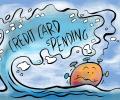
The Central Board of Indirect Taxes and Customs (CBIC) has enabled UPI, debit, and credit card payments for Customs duty on the ICEGATE portal, enhancing ease of doing business for importers and exporters.

Benchmark stock indices Sensex and Nifty dived sharply by nearly 2 per cent on Sunday after Finance Minister Nirmala Sitharaman proposed a hike in the Securities Transaction Tax (STT) on derivatives. Reversing the early gains, the 30-share BSE Sensex plunged sharply by 2,370.36 points or 2.88 per cent to slide below the 80,000-mark at 79,899.42 in afternoon trade as the finance minister announced a hike in STT on futures contracts to 0.05 per cent from the current 0.02 per cent.

Shares of brokerage-related companies nosedived 18 per cent on Sunday after Finance Minister Nirmala Sitharaman proposed raising securities transaction tax on commodity futures to 0.05 per cent from 0.02 per cent in the Union Budget 2026-27.

'Long-term investors seeking sustainable gains from resilient, fundamentally strong companies may go for these funds.'

Finance Minister Nirmala Sitharaman on Sunday announced an increase in the Securities Transaction Tax (STT) on Futures and Options trade with a view to discouraging small investors from speculative trading in derivatives, which led to a sharp decline in the stock market.

The market capitalisation of BSE-listed companies eroded by Rs 9,40,581.75 crore to Rs 4,50,61,658.60 crore (USD 4.90 trillion) in a single day.

'Trading without strict position sizing, stop-loss discipline, or a clear exit plan almost guarantees losses.' 'Chasing tips, reacting to intraday noise, or assuming frequent trading improves outcomes are equally damaging habits.'

They accounted for 39.1 per cent of the premium paid to trade equity options in September 2025.
'Sebi's move to cap brokerage charges will help investors by lowering the overall cost of investments.'

From Rs 73k to over Rs 1.2L between January-December 2025 -- is buying gold in 2026 still sensible?

'Allocating 5 to 10 per cent of one's portfolio and staying disciplined through market cycles helps in having a positive investment experience.'

Do home prices really never fall? Ramalingam Kalirajan begs to differ.

Although most high-frequency traders (HFTs) prefer to set up shop close to stock exchanges to enjoy better latency, a few are willing to sacrifice proximity to save a few bucks. Two HFTs have already established their offices at the GIFT City (Gujarat International Finance Tec-City) IFSC while many more are likely to follow suit.

Non-resident Indians (NRIs) haven't gone big on the Indian stock market story despite the post-pandemic boom. While domestic participation through mutual funds (MFs) and dematerialised accounts has soared, NRI participation figures show limited signs of a similar rise.

'Begin with a small investment, observe performance, then scale up gradually.'

Sebi's probe against Jane Street is part of its efforts to mitigate losses for individual derivative traders.

Exporters incur transaction costs not only in transportation of goods and dealing with banks, but also in complying with various laws and procedures, besides meeting documentation requirements.

Ahead of unveiling the Foreign Trade Policy, Commerce Minister Anand Sharma on Wednesday said the government was looking at cooperating with states to bring down transaction costs to make exports more competitive. India's exports have been on a downslide since October 2008.

SST remains as a turnover tax (whether profit or loss) and not tax on income. Day traders and arbitrageurs, who generally trade on thin margins, are affected the most as STT raise their transaction cost. Any further hike in SST could prove negative and damper market sentiments. Removal or reduction in STT will pep up the stock market. Asset pricing is also likely to go up with reduction in transaction cost.

Maaza, a desi mango fruit-based drink owned by Coca-Cola, has touched the milestone of becoming a billion-dollar brand in 2024, its Chairman and CEO James Quincey has said.

Unless something changes, Mr Trump is a huge threat right now, which is perhaps not being recognised fully, cautions Debashis Basu.

Ask rediffGURU and PF expert Milind Vadjikar your insurance, stocks, mutual fund and personal finance-related questions.
An analysis by the Securities and Exchange Board of India (Sebi) has revealed that retail traders remain at the wrong end of the stick when it comes to equity derivatives trading. About 93 per cent of them incurred an average loss of Rs 2 lakh (per trader) during the last three financial years. The new report highlights an increase in the loss-making individual investors in futures and options (F&O) to 91.1 per cent in FY24 compared to 89 per cent in FY22.
To curb speculative trading, markets regulator Sebi on Tuesday put in place a stricter framework for equity index derivatives by increasing the minimum contract size and mandating upfront collection of option premiums. Other measures announced by Sebi included intra-day monitoring of position limits, removal of calendar spread benefit on expiry day, rationalisation of weekly index derivatives and increased tail risk coverage.

'Sebi had no problem with derivatives until trading exploded after Covid.' 'But now, having built a dangerous road, from which different entities, mainly governments, are extracting a heavy toll, Sebi is concerned that people are driving on it in much greater numbers,' explains Debashis Basu.

Businesses across the country may soon be required to issue electronic invoices, or e-invoices, directly to consumers for the sale of goods and services. The Goods and Services Tax (GST) Council, in its forthcoming meeting on Monday, is expected to discuss extending the e-invoicing mandate to cover business-to-consumer (B2C) transactions. Currently, e-invoicing is compulsory for businesses with a turnover of Rs 5 crore and above, but only for their business-to-business (B2B) transactions.

Several candidates, including Taranjit Singh Sandhu, the BJP's Amritsar candidate, are promising resumption of India-Pakistan trade via the Attari-Wagah land route.

'Investing abroad helps mitigate currency risk for foreign-currency denominated goals, such as children's higher education and international travel.'

India is expected to ramp up its purchase of crude oil from the United Arab Emirates (UAE) in the coming months following discussions between the two countries on the sidelines of the ongoing COP28 summit in Dubai, multiple sources in the know said. The UAE has historically been India's third-largest source of crude. It has suffered the largest drop in shipments since Indian refiners began to binge on Russian crude in 2022.

Among index funds, the most popular products are funds tracking the Nifty 50 and Sensex, says Dwaipayan Bose, and explains the finer points of selecting the right index mutual fund.

Crypto assets should not be granted official currency or legal tender status, the much-awaited synthesis paper by the International Monetary Fund (IMF) and Financial Stability Board (FSB) has said ahead of the G20 leadership summit under India's presidency. However, the report has argued against a blanket ban on activities linked to crypto assets, explaining that such a move can be costly as well as technically demanding to enforce. Central banks should avoid holding crypto assets in their official reserve as they pose a risk to monetary and global financial stability, according to the synthesis paper.

India should become a middle-income country and then push to make INR (rupee) a hard currency, and till then, it must promote the settlement of global trade in the local currency, think tank GTRI said on Sunday. Global Trade Research Initiative (GTRI) said that transforming a currency into a hard currency is a complex process that hinges on several pivotal factors. Firstly, economic stability is paramount; a country must exhibit low and stable inflation, consistent growth, and a balanced trade environment.
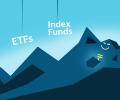
Dwaipayan Bose highlights the similarities and contrasts between ETFs and Index Funds.

The government on Friday proposed hiking the securities transaction tax on Futures & Options (F&O) contracts, a move that will increase the trading costs in the derivatives segment as well as help in curbing excessive trades. In the Finance Bill 2023, passed by the Lok Sabha on Friday, the Securities Transaction Tax (STT) on options is proposed to be increased to 0.0625 per cent from 0.05 per cent and on futures contracts to 0.0125 from 0.01 per cent. Analysts opined that higher STT will shore up the government's revenues to some extent and also discourage excessive trading since a large number of retail traders are losing money in the segment.

Gift Nifty will provide Indian investors cues on how domestic markets could react to global events.

India's first digital rupee pilot project will commence on Tuesday with nine banks, including SBI, HDFC Bank and ICICI Bank, issuing the virtual currency for transactions in government securities. "...the first pilot in the digital rupee - Wholesale segment shall commence on November 1, 2022," the RBI said in a statement on 'Operationalisation of Central Bank Digital Currency-Wholesale (e?-W) Pilot'. It also announced that the first pilot in digital rupee - Retail segment is planned for launch within a month in select locations in closed user groups comprising customers and merchants.

In the face of tax blow, brokerages remain sanguine about the prospects of asset management companies (AMCs). A sharp correction in the shares of AMCs over the past three months factors in most of the negatives and turned valuations attractive, observe analysts. In its latest report, Kotak Institutional Equities (KIE) has upgraded HDFC AMC to 'add' (from 'reduce') and reprised 'add' and 'buy' ratings on the rest of the listed AMCs - Nippon, UTI, and Aditya Birla Sun Life.
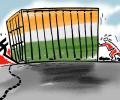
The government on Friday came out with Foreign Trade Policy (FTP) 2023 which seeks to boost the country's exports to $2 trillion by 2030 by shifting from incentives to remission and entitlement based regime. Unlike the practice of announcing 5-year FTP, the latest policy has no end date and will be updated as and when needed, said Director General of Foreign Trade (DGFT) Santosh Sarangi while briefing media about FTP 2023. Earlier, Commerce and Industry Minister Piyush Goyal unveiled FTP 2023 which will come into effect from April 1, 2023.
The Reserve Bank will launch the first pilot for retail digital rupee in Mumbai, New Delhi, Bengaluru and Bhubaneswar on December 1, and later expand it to nine more cities in the initial phase. This follows a month after the RBI had started a pilot in the digital rupee - wholesale segment on November 1. The Reserve Bank announces the launch of the first pilot for retail digital rupee (e?-R) on December 1, 2022, the central bank said in a statement on Tuesday.
 © 2026 Rediff.com - Advertise with us - Disclaimer - Privacy Policy - Sitemap - Feedback - About us - Terms of use - Grievances