
'There will not be a consensus to treat India separately from everybody else,' says security expert Michael Krepon.

'A lot of people in India are not ready to move on. You are still concerned that any defence deal with the US will constrain your strategic autonomy, as if the US had the power to do that,' says Michael Krepon, co-founder of the Henry L Stimson Centre, a Washington, DC think-tank.
'Its internal security concerns are greater.'
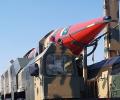
With India's growing conventional capabilities and more pro-active military plans, Pakistan's military authorities have begun to emphasise the utility of tactical nuclear weapons, says Michael Krepon.
Pakistan's nuclear stock pile is likely to grow in the coming years, as its programme unlike that of India is controlled by military leaders who consider this as both a political and military instrument, a noted American analyst has said.
Michael Krepon, the co-founder of Washington, DC-based think tank Stimson Centre, believes that the horrific 26/11 terror attacks in Mumbai set the bar very high for the next India-Pakistan crisis.
Michael Krepon, longtime arms control guru and the godfather of promoting confidence building measures in South Asia, believes the only panacea for nuclear risk reduction in South Asia after Mumbai is cooperation in counter-terrorism between New Delhi and Islamabad, but acknowledges it may be utterly quixotic.
The scholars said using the nuclear deal to break the decades of mistrust between the two countries was an odd and unfortunate choice.
'It appears that the GoI got all that it wanted from this deal. All future options are open, both with respect to bombs and electricity. India even got assured USG support for fuel if it resumes nuclear testing.'

Pakistan's zero tolerance policy against terrorism is questionable given its reluctance to take action against Lashkar-e-Tayiba and the perpetrators of the Mumbai terrorist attack, a US expert has s

Underlining that cross border attacks have greatly "diminished" Pakistan's international standing, an American think-tank expert has said that as a result of India's new policy of retaliation Pakistan is in a bind of "its own making".

The report said that Pakistan will retain its capabilities for the foreseeable future as a necessary deterrent against perceived existential threats from India.
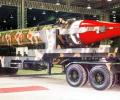
For the world and India, one of the most enduring challenges of the times is for Pakistan's nukes to be neutralised, before they are ever used by the State, their sponsored non-State actors or any rogue elements from the many terror tanzeems dotting Pakistan's unstable landscape, says Lieutenant General Kamal Davar (retd).
 © 2026 Rediff.com - Advertise with us - Disclaimer - Privacy Policy - Sitemap - Feedback - About us - Terms of use - Grievances