
India on Friday presented evidence to Pakistan regarding involvement of ISI in the July 7 Kabul embassy bombing as the members of the Joint Anti-Terror Mechanism (JATM) met in New Delhi.

Pakistan's intelligence agency ISI was behind the attack on the Indian embassy in Kabul which killed 17 people and wounded more than 60 others, Afghan envoy to the US has claimed.

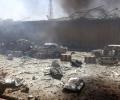
A huge explosion outside the Indian embassy in Kabul killed at least five people, reports said. The cause of the blast was not immediately known. Though there are no immediate reports of any Indian being injured, TV reports suggest the embassy embassy wall has been severely damaged.
Nearly 23 officials signed the cable that went to Blinken and Director of Policy Planning Salman Ahmad, The Wall Street Journal added.

Hinting at Pakistani link to the Kabul embassy attack, India on Saturday said Afghanistan faces threat from terrorists and their "patrons residing across the border" and that the blast was handiwork of those who want to undermine Indo-Afghan friendship.
Displaying anger at the Kabul embassy blast in which "elements" based in Pakistan were involved, New Delhi on Monday said the incident had vitiated the atmosphere putting the dialogue process "under stress" and asked Islamabad to address its concerns.
Describing the organisers of the 26/11 and Kabul embassy attacks as "clients and creations" of Pakistan's Inter-Services Intelligence, India has said those behind the carnages are known to prepare for strikes across the world and cautioned against any compromise with such forces.
Terming the Kabul embassy bombing an attack on the Indo-Afghan friendship, Prime Minister Manmohan Singh on Friday declared that it would not deter New Delhi from continuing its reconstruction of the war-torn country and announced a fresh assistance worth $450 mn for it.
'A couple of more such happenings in the coming weeks can push Kabul into total anarchy, and a Syria-like conflict may ensue,' warns Ambassador M K Bhadrakumar.

'An operation such as the Mumbai attacks, which needed expert technical assessment, money and time to prepare, could not have been carried out without the knowledge of the ISI's leadership.'
 © 2026 Rediff.com - Advertise with us - Disclaimer - Privacy Policy - Sitemap - Feedback - About us - Terms of use - Grievances