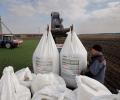
For the first time, the government is likely to dip into the Oil Industry Development Fund (OIDF) to finance part of its fertiliser subsidy programme for 2025-26, according to official sources. The finance ministry has accounted for Rs 23,000 crore in the FY26 Budget as net additional resources to be drawn from dedicated reserve funds, including the OIDF, the Agriculture Infrastructure and Development Fund, and the Universal Service Obligation Fund.
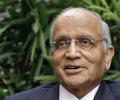
The government should not be running businesses as public sector companies are inefficient and do not generate enough resources to fund their own growth, according to Maruti Suzuki India chairman R C Bhargava. Public sector companies need support all the time to grow and need funds from the government for capital investments, he told PTI in an interview. "I have no doubt that government should not be in business. No way," he said when asked if governments should be in the business of running enterprises on the basis of his experience of witnessing the transformation of the then government-owned Maruti Udyog Ltd to Maruti Suzuki India Ltd, majority owned by Japan's Suzuki Motor Corporation.

The ministry of railways has projected a three-time increase in Plan size to Rs 7,19,677 crore (Rs 7,196.77 billion) for the five-year period.

While the five years of the Modi government have indeed seen a healthy increase in PSUs' outlay and the Budgetary support for them, the next year's numbers reveal the squeeze in the government's own resources even though it is expecting a much higher dividend income from the PSUs. These do not augur well for the PSUs in 2019-20 and the years ahead, unless these numbers are revisited and, hopefully, revised in the full Budget that will be presented later in July this year, says A K Bhattacharya.
While the five years of the Modi government have indeed seen a healthy increase in PSUs' outlay and the Budgetary support for them, the next year's numbers reveal the squeeze in the government's own resources even though it is expecting a much higher dividend income from the PSUs. These do not augur well for the PSUs in 2019-20 and the years ahead, unless these numbers are revisited and, hopefully, revised in the full Budget that will be presented later in July this year, says A K Bhattacharya.

With the latest diesel price rise, coming after a rollback of most of the earlier proposals for a passenger fare increase, Indian Railways' operational surplus is expected to come down by 24 per cent, to Rs 11,707 crore (Rs 117.07 billion) in 2012-13 as against the Rs 15,557 crore (Rs 155.57 billion) anticipated at the beginning of the financial year.
State-owned enterprises are depending more on government money to fund their capital expansion in the wake of the economic downturn.

The Ratlam division of the national transporter is planning to provide head and foot massages to passengers in 39 trains originating from Indore railway
State-run Indian Railways will borrow Rs 2,970 crore (Rs 29.7 billion) from the market to finance various projects, Railway Minister Nitish Kumar told Parliament on Wednesday.
State-run Gas Authority of India said on Thursday that it will invest Rs 4000 crore (Rs 40 billion) in laying pipelines and expanding capacity of its Pata petrochemical complex this fiscal, with 60 per cent of the requirement being raised through deb
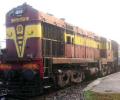
Mr Prabhu has set the railways on a course of investing big .

The Centre is likely to cut budgetary support to the railways by around Rs 5,000-10,000 crore for 2018-19, out of the total budgeted GBS of Rs 53,060 crore. Due to this cut in GBS, the railways is likely to depend more on borrowings, asset monetisation, and internal generation to meet the capex target of Rs 1.465 trillion for the current year.

The Railways is expected to mobilise a substantial chunk of funds through dynamic pricing.
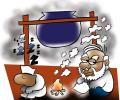
Modi government's story of five years with regard to equity allocation for PSUs shows that it may have allowed a large part of its resources to be wasted. This is also a worrying reflection of the government's inability to take hard decisions - whether they pertain to privatisation or forcing weak public-sector banks to wind down their operations, says A K Bhattacharya.
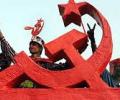
The first Railway Budget of this Bharatiya Janata Party-led National Democratic Alliance government is a cosmetic exercise, high on rhetoric and low in substance, the CPI-M said.
.jpg)
PSUs may not be financially sound enough to plug deficit or revive investment.
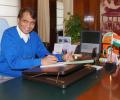
In the history of Indian railway budgets, Suresh Prabhu will perhaps be the first railway minister not to have announced either a single new train or a new railway line
 © 2026 Rediff.com - Investor Information - Advertise with us - Disclaimer - Privacy Policy - Sitemap - Feedback - About us - Terms of use - Grievances