
The US has said this is a precursor to discussions on the N-deal.
Ashok Mago, chairman of the Dallas-based US-India Forum and a community leader, has been nominated for the "Apostle of International Understanding" by the Unity International Foundation for his "exceptional role in bring India closer to the US".
Lantos was one of the critical law makers involved in the passage of the Henry Hyde Act of 2006 on the Indo-US nuclear deal. A strong supporter of India, he had made no bones of his displeasure on New Delhi's relations with Iran.
Hyde retired from Congress at the end of the last session and was major player and quite instrumental in steering the Henry J Hyde United States and India Nuclear Cooperation Promotion Act of 2006 through the second session of Congress in 2006.
In a resolution adopted at its Central Committee meeting late last month, the CPI(M) noted that it was the Hyde Act which would set the parameters for future American Presidents and the US Congress to act upon.
The tough terms and conditions for the civilian nuclear engagement with India as laid out in the Henry Hyde Act passed by US Congress in December 2006 and intent of the July 18, 2005 statement are at complete divergence with each other and so it is
A statement to this effect was adopted in Moscow on Wednesday at the joint session of the foreign affairs committees of the Russian State Duma and the US Congress.
Officials of the two sides met in New Delhi for talks on the 123 Agreement during which they will seek to iron out differences over various elements in the Henry Hyde Act.
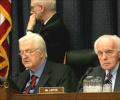
Though it is seen as a positive for India, the bill authored by Congressmen Henry Hyde and Tom Lantos has its negatives too.

'We had to convince our people that we were doing nothing that would erode our strategic programme. We were all the time arguing that we are not doing anything, which will remotely impact on our strategic programme.'
 © 2026 Rediff.com - Advertise with us - Disclaimer - Privacy Policy - Sitemap - Feedback - About us - Terms of use - Grievances