
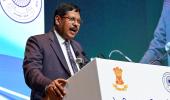
Justice Surya Kant, who has been part of several landmark verdicts, including the abrogation of Article 370 removing Jammu and Kashmir's special status and Bihar electoral rolls revision, took oath as the Chief Justice of India on Monday.
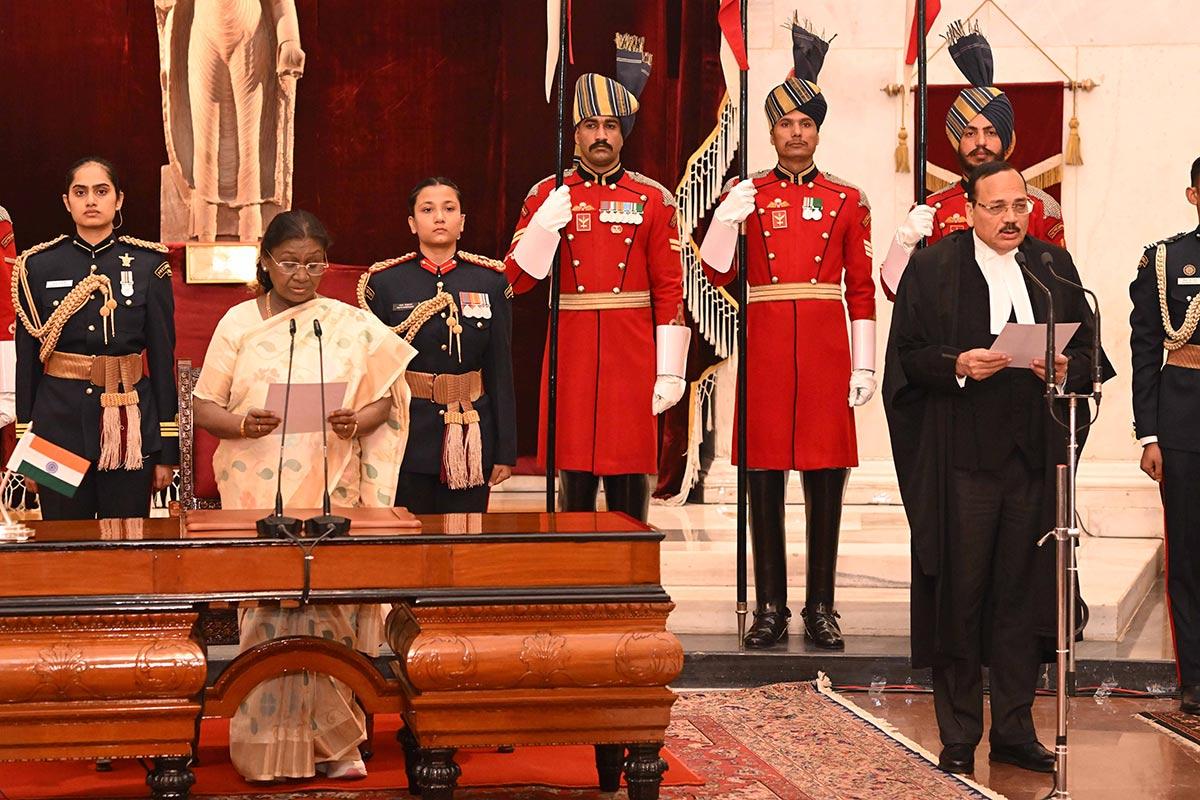
He will be India's 53rd CJI and succeeds Justice B R Gavai.
President Droupadi Murmu administered the oath to Justice Kant at a brief ceremony at Rashtrapati Bhavan.
He took the oath in Hindi in the name of God.
Justice Kant will remain in the post for nearly 15 months. He will demit office on February 9, 2027 on attaining the age of 65 years.
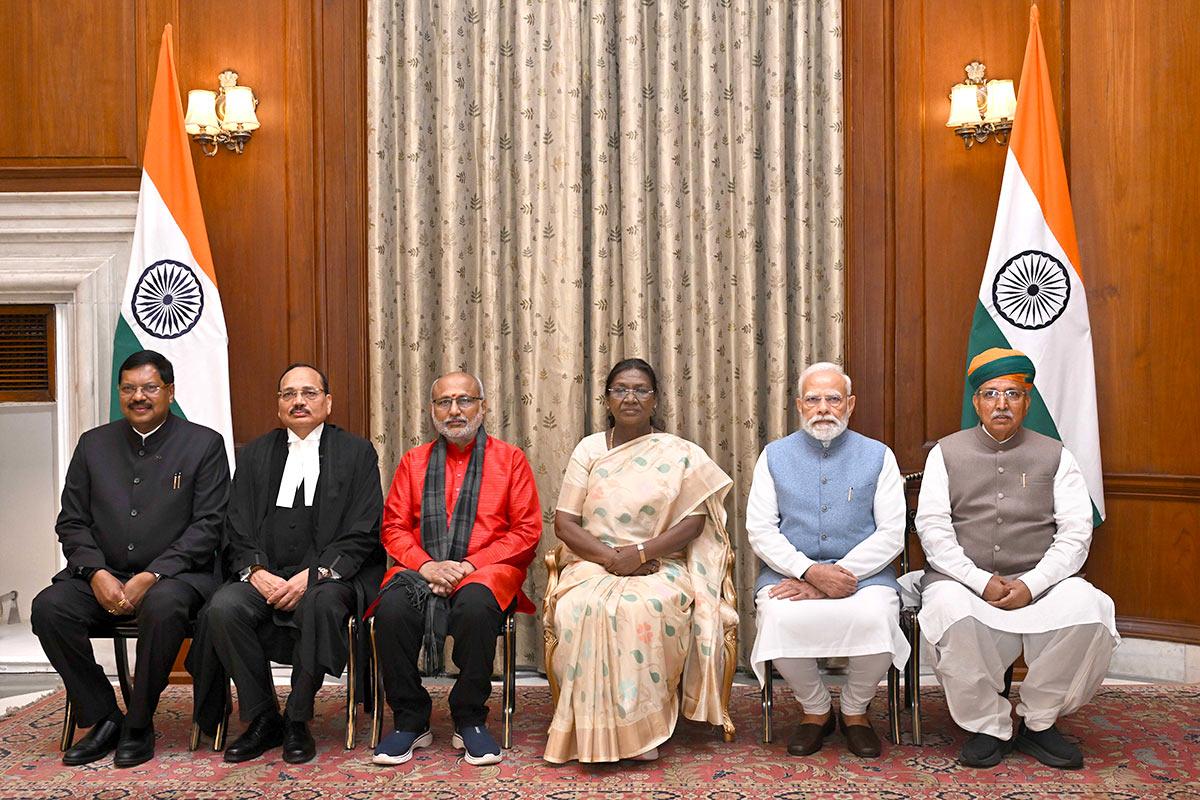
Vice President C P Radhakrishnan and Prime Minister Narendra Modi were among those who attended the ceremony. Soon after being sworn in, Justice Kant went up to Modi to greet him.
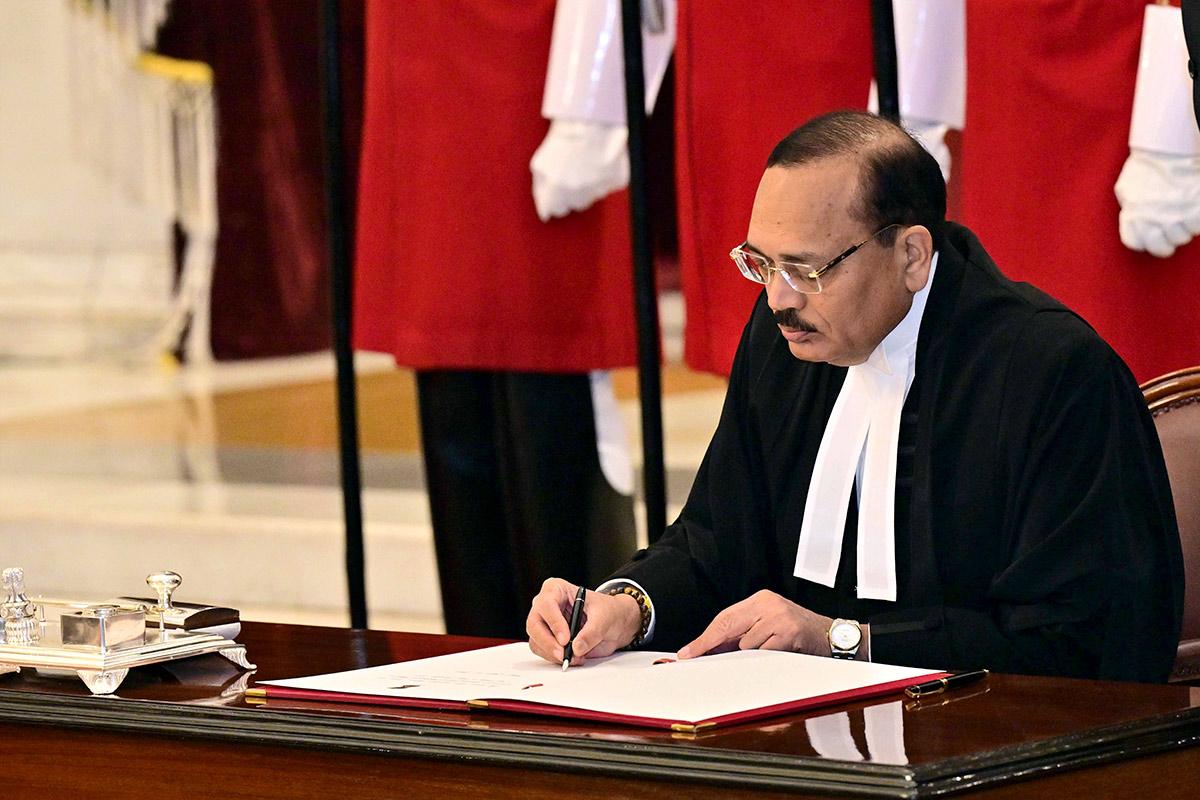
'Attended the oath taking ceremony of Justice Surya Kant as the Chief Justice of India. Best wishes to him for his tenure ahead,' the prime minister wrote.
Former vice president Jagdeep Dhankhar was also present and among those who greeted the new CJI on assuming office.
Justice Gavai, who demitted the CJI's office on Sunday, hugged his successor.
Born on February 10, 1962 in Hisar district in Haryana to a middle-class family, Justice Kant went from being a small-town lawyer to the country's highest judicial office, where he has been part of several verdicts and orders of national importance and Constitutional matters. He has the distinction of standing 'first class first' in his LLM exam at Kurukshetra University.
Justice Kant, who penned several notable judgments in the Punjab and Haryana high court, was appointed the chief justice of Himachal Pradesh hugh court on October 5, 2018.
His tenure as Supreme Court judge is marked by verdicts on the abrogation of Article 370, free speech and citizenship rights.
The judge was part of the recent presidential reference on the powers of the governor and President in dealing with bills passed by a state assembly.
He was part of the bench that kept the colonial-era sedition law in abeyance, directing that no new FIRs be registered under it until a government review.
Justice Kant also nudged the Election Commission to disclose the details of 65 lakh voters excluded from the draft electoral rolls in Bihar while hearing a batch of petitions challenging the EC's decision to undertake Special Intensive Revision of the voters list in the poll-bound state.
In an order that emphasised grassroots democracy and gender justice, he led a bench that reinstated a woman sarpanch unlawfully removed from office and called out the gender bias in the matter.
He is also credited with directing that one-third of seats in bar associations, including the Supreme Court Bar Association, be reserved for women.
Justice Kant was part of the bench that appointed a five-member committee headed by former top court judge Justice Indu Malhotra to probe the security breach during Modi's visit to Punjab in 2022, saying such matters required 'a judicially trained mind'.
He also upheld the One Rank-One Pension scheme for defence forces, calling it Constitutionally valid, and continues to hear petitions of women officers in the armed forces seeking parity in permanent commission.
Justice Kant was on the seven-judge bench that overruled the 1967 Aligarh Muslim University judgment, opening the way for reconsideration of the institution's minority status.
He was also part of the bench which heard the Pegasus spyware case and which appointed a panel of cyber experts to probe allegations of unlawful surveillance, famously stating that the State cannot get a 'free pass under the guise of national security'.






 © 2025