
In half a century, actors have aged or passed away, the shape of the city has altered, the film industry has changed beyond recognition, most single screens have made way for multiplexes, audiences tastes have changed, rural life is very different now, and inflation has devalued the rupee.
But a great film is forever.
Deepa Gahlot salutes Sholay, as it re-releases in theatres.
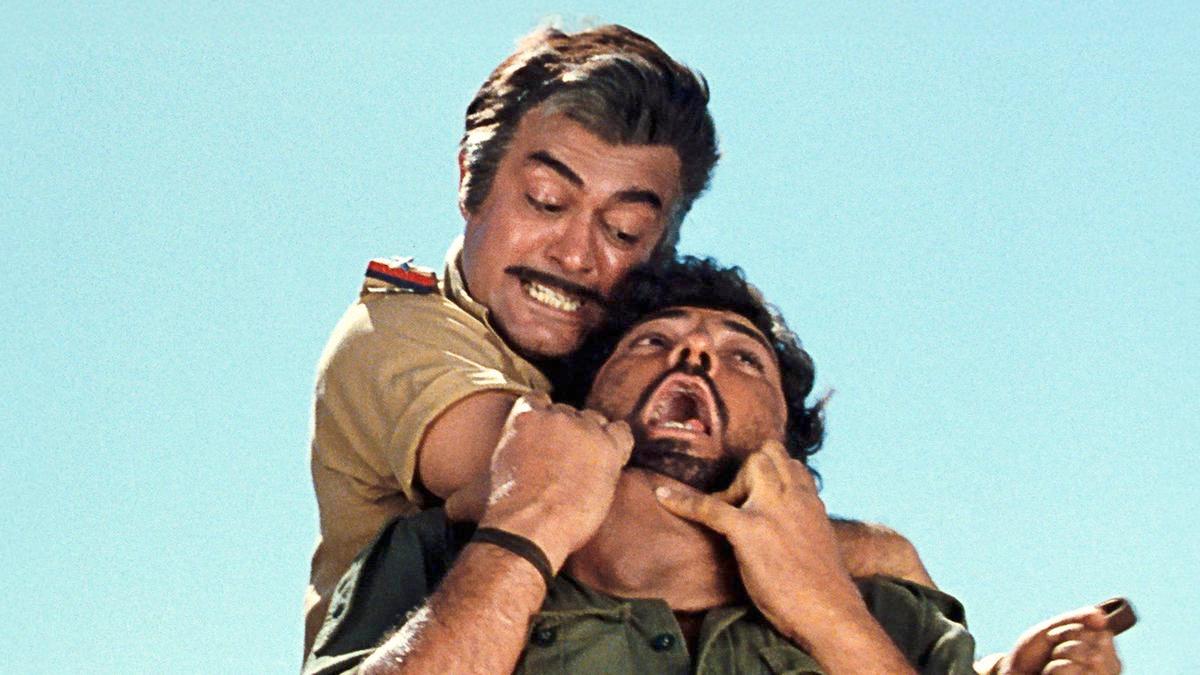
Self-aggrandising filmmakers, who boast of massive box office collections, will probably not pull full houses 50 years later, the way Sholay: The Final Cut is doing.
Many old classics have been restored, either by the Film Heritage Foundation or the National Film Archives, and some have been re-released.
But Ramesh Sippy's 1975 film Sholay is one such classic where people still remember the lines, which have passed into colloquial usage, 'Kitne aadmi the, Ab tera kya hoga, Kalia, Itna sannata kyon hai bhai, Jo dar gaya samjho mar gaya.'
The songs and even R D Burman's innovative background sound is also still remembered.
In half a century, actors have aged or passed away, the shape of the city has altered, the film industry has changed beyond recognition, most single screens have made way for multiplexes, audiences tastes have changed, rural life is very different now, and inflation has devalued the rupee.
But a great film is forever.
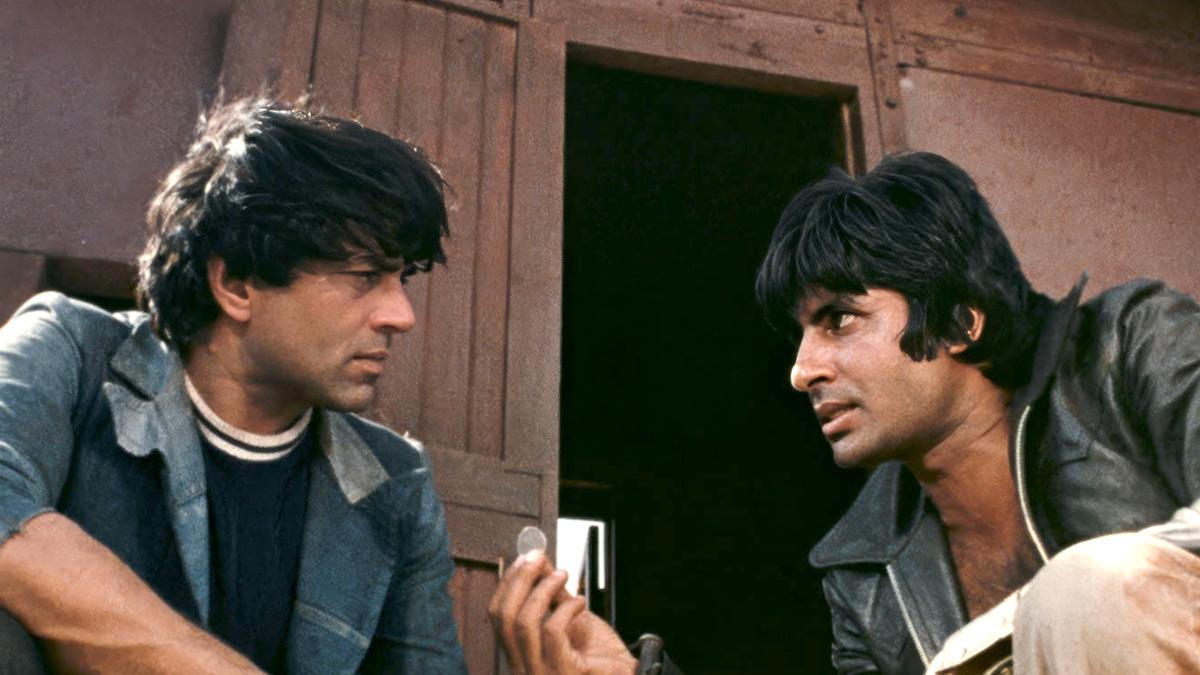
In 1975, a moviegoer had to queue up for tickets when the advance booking of a film opened.
If the film was by a major director or had big stars in it, tickets would be sold in 'black'.
Online booking has put the scalpers out of business.
Ticket prices and snack rates have gone through the roof.
People have so little respect for the film they are watching that they are chatting on their phones, while it is on, snack sellers walk in and out delivering trays.
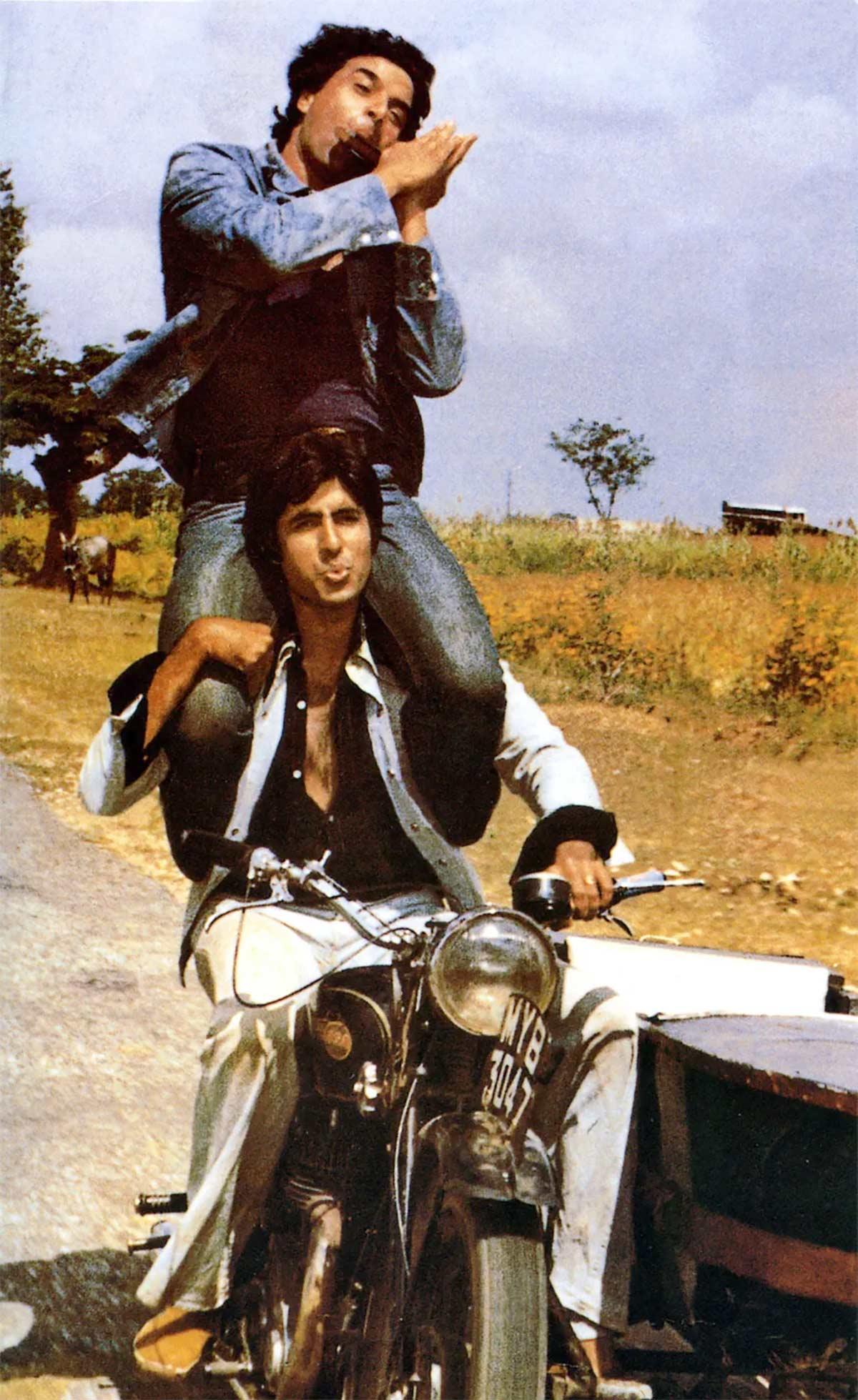
Still, a film like Sholay deserves to be seen on the big screen, with an audience that is either figuring out what made the film such a cult or by fans who sing along, and speak the lines before the character does, and whisper excitedly about what is about to happen.
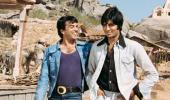
Back then, the absence of star egos meant that Amitabh Bachchan did not mind fourth billing, presumably did not object to Dharmendra clambering on to his shoulder during the Yeh Dosti song, sportingly did the death scene and let Dharmendra beat up Gabbar Singh by himself in the pre-climax scene.
When initial reports of the film were lukewarm, Ramesh Sippy was advised to change the scene and let Jai live -- he refused.
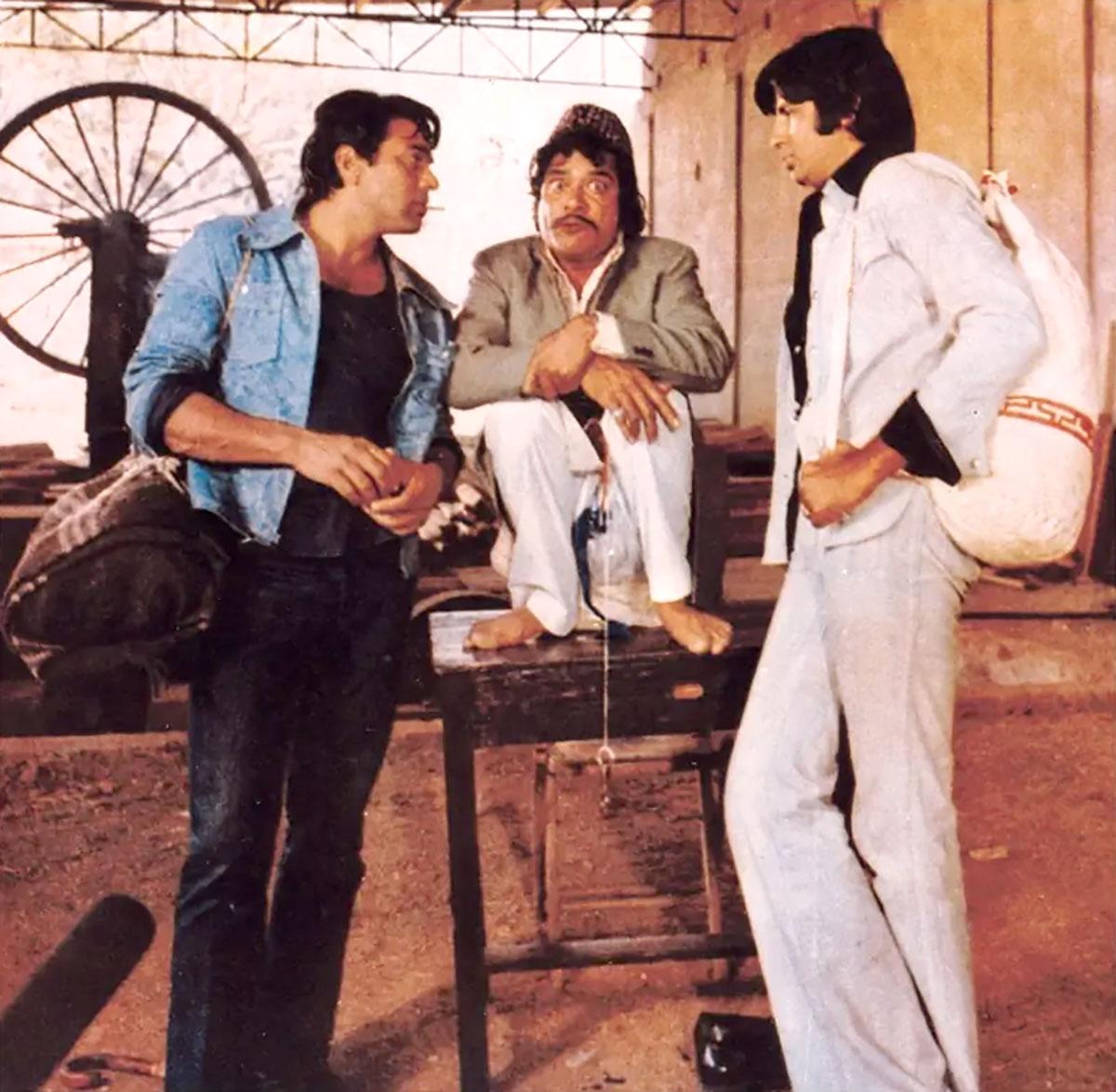
Amitabh and Dharmendra, who played rascally young thieves, were 33 and 39 respectively, but then social media did not sneer at dad bods.
Hema Malini was utterly charming as the garrulous and independent Basanti tangewali, and Jaya Bachchan was a picture of melancholy as Thakur's widowed daughter-in-law, as she escaped being shot dead by a vengeful Gabbar Singh, as she was out of the house.
In a heartening bit of progressivism, Thakur talks to her father to allow her to remarry.
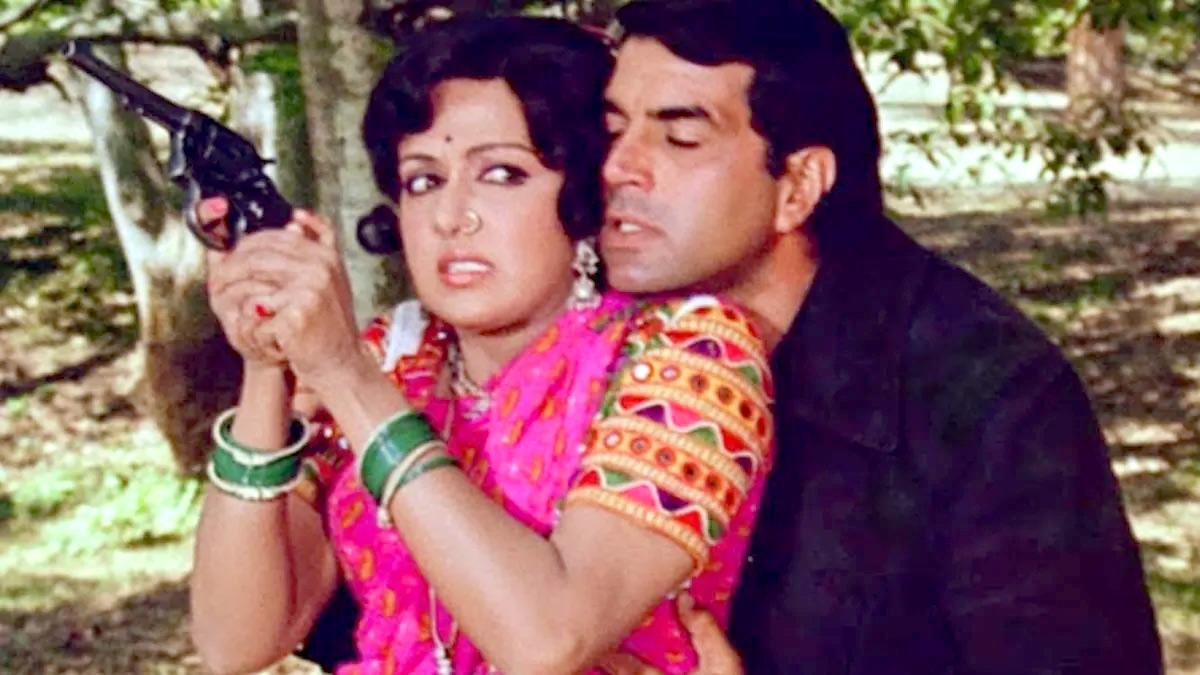
The genesis of one of the top Salim-Javed scripts was Japanese master Akira Kurosawa's Seven Samurai, which was adapted as a cowboy Western, The Magnificent Seven, by John Sturge, and the idea of 'outsiders' fighting a ruthless bandit to help villagers found echoes in Raj Khosla's Mera Gaon Mera Desh.
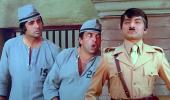
But Salim-Javed, at the peak of their powers, made the plot their own, added colourful characters like Soorma Bhopali (Jagdeep) and Angrezon ke zamane ka jailor (Asrani) into the film so well that nobody thought their scenes did not have to be in the film.
Veeru (Dharmendra) and Jai (Amitabh Bachchan) could have been traced by Thakur Baldev Singh (Sanjeev Kumar) through his police connections.
The scene gave the film a comic boost before Gabbar Singh (debutant Amjad Khan) unleashed his cruelty on the Ramgarh. He killed his own men for a failed raid on the village, after sadistically playing Russian Roulette with them.
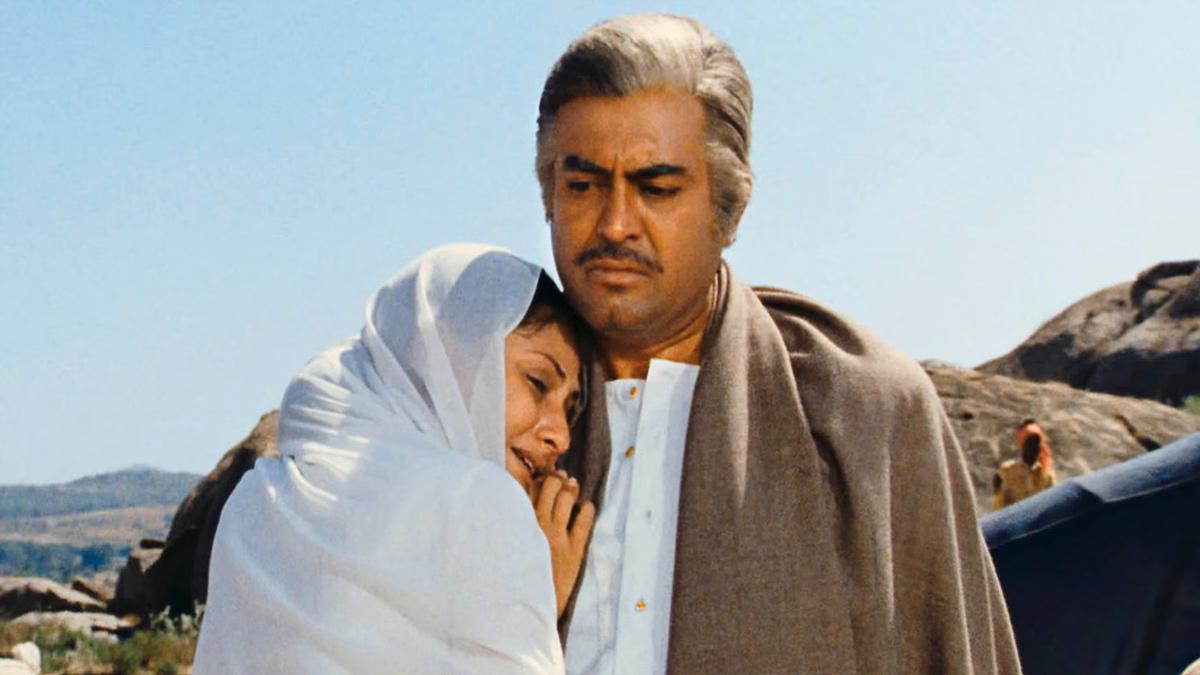
The film had violence, but not the gruesome blood-spurting kind.
Thakur's grandchild is killed by Gabbar, but the sound of the bullet cuts to the whistle of a train arriving at the station.
The scene of Gabbar chopping off Thakur's hands cuts to his shawl falling down, revealing empty kurta sleeves, which is when Veeru-Jai realise why they were hired to capture Gabbar.
1975 was the time of the Emergency and stringent censorship.
Sippy was forced to change the climax of Thakur killing Gabbar with spiked shoes ('Saanp ko haathon se nahin, pairon se maara jaata hai') and showed the cops arriving to arrest the dacoit instead.
The original ending is far more effective, and makes sense of Thakur's demand that Veeru and Jai capture Gabbar alive and hand him over.
In spite of the familiarity of the scenes, songs and dialogue, the audience happily watches what could now be counted as a period film -- before the telecom boom, when dacoits rode on horses and the guns looked like toys.
The action was real, and not computer enhanced. Body doubles might have been used, but real people took real tumbles from horses and hill tops without wire work.
Still, the audience, perhaps some new, watched with rapt attention, laughing and crying in the way hardly any new film can get them to do.
Through the nearly four-hour running time, a cell phone rang just once.
And when a snack packet crackled, a man said, 'Arre plastic ka awaaz mat kar, aaram se kha bhai.'
It's Sholay fandom at its best.
Photographs curated by Satish Bodas/Rediff





 © 2025