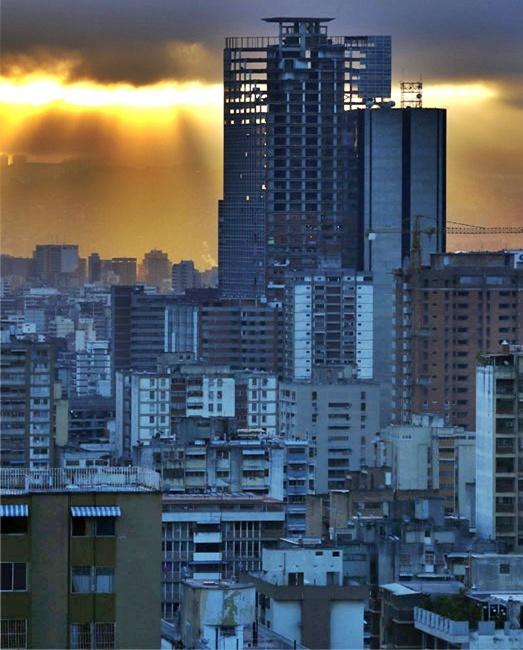
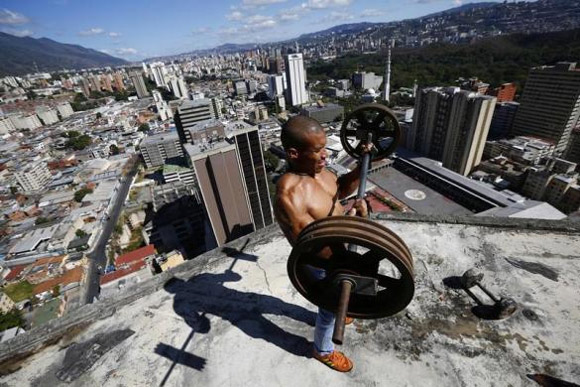
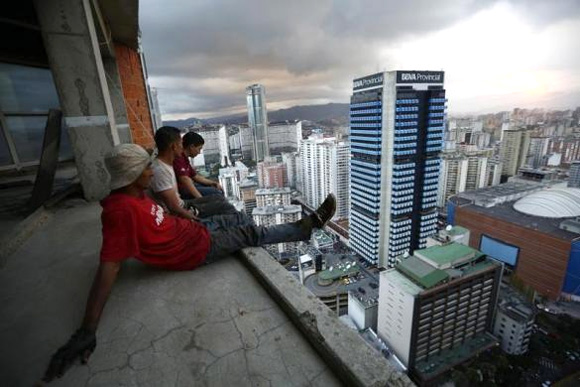
It boasts a helicopter landing pad, glorious views of the Avila mountain range, and large balconies for weekend barbecues.
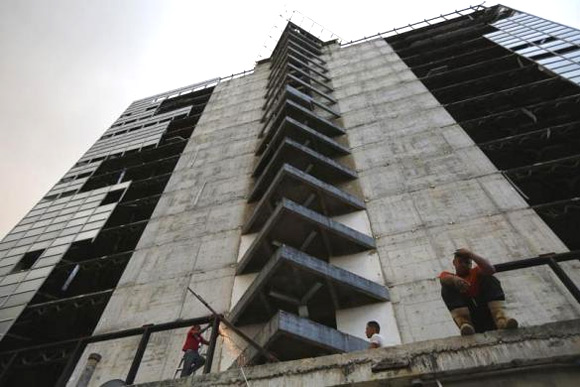
Yet this 45-storey skyscraper in the center of Venezuela's capital Caracas is no five-star hotel or swanky apartment block: it is a slum, probably the tallest in the world.
(Additional reporting by Brian Ellsworth)
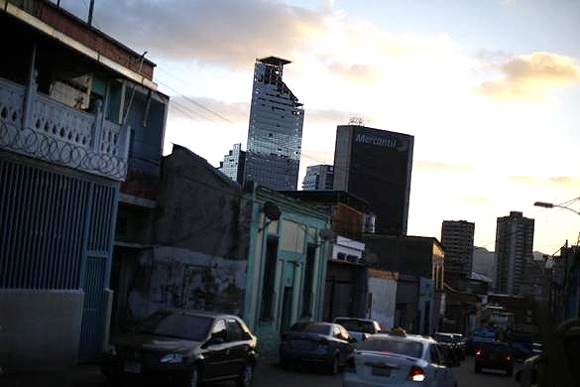
Dubbed the "Tower of David", it was intended to be a shining new financial center but was abandoned around 1994 after the death of its developer - financier and horse-breeder David Brillembourg - and a massive run on Venezuela's banking sector.
…
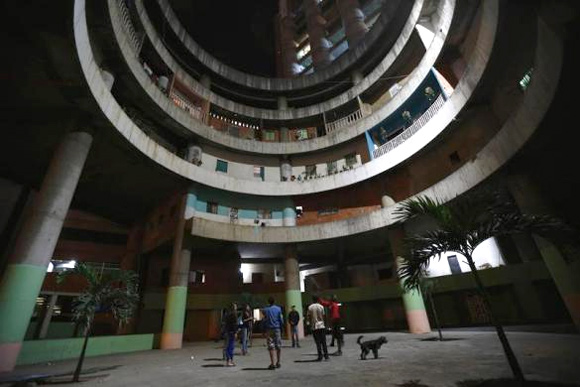
Squatters seized the huge concrete skeleton in 2007, then-President Hugo Chavez's socialist government turned a blind eye, and now about 3,000 people call the tower their home.
…
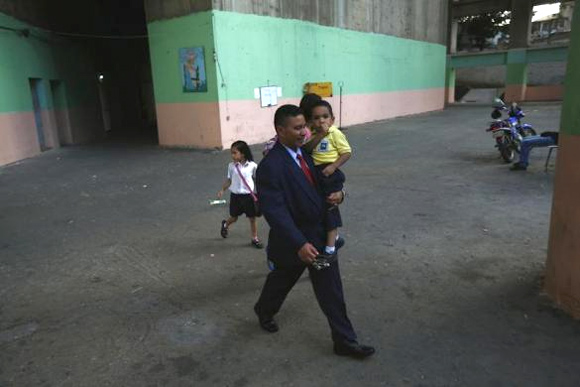
Though many Caracas residents view it as a den of thieves and a symbol of rampant disrespect for property, residents call the "Tower of David" a safe haven that rescued them from the capital's crime-ridden slums.
…
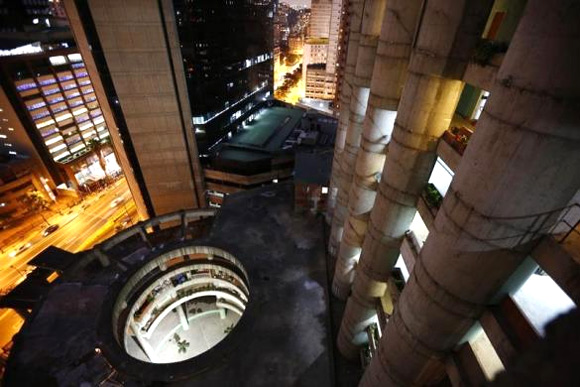
It appears - at least for now - to have escaped the violence and turf warfare that followed similar building takeovers in Caracas over the last decade, often launched under the banner of the late Chavez's self-styled revolution.
…
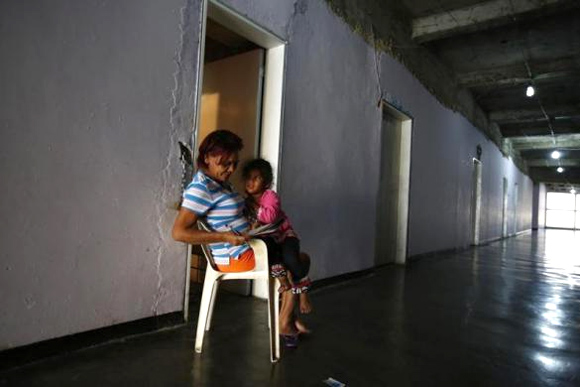
Communal corridors are freshly-polished, rules and rotas are posted everywhere, and non-compliance is punished with extra "social work" decided by a cooperative and floor delegates who make up a mini-government.
…
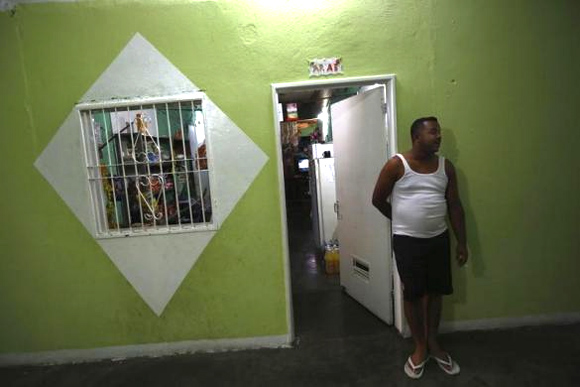
"Without ethics or principles, all is irrational," reads one typically didactic poster in a public area.
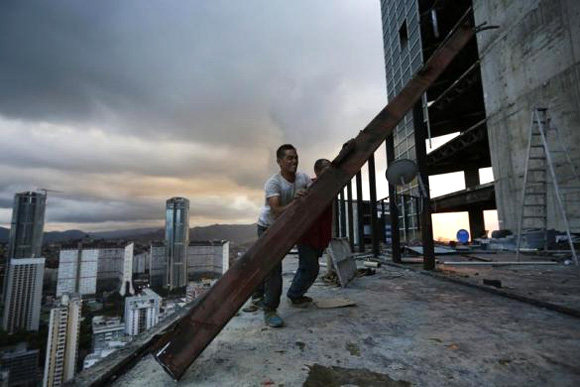
Work was sufficiently advanced by the time the tower was abandoned for the first 28 floors to be habitable, though the squatters have had to brick up dangerous open spaces, and put in their own basic plumbing, electrical and water systems.
Families pay a 200 bolivar ($32) monthly "condominium" fee, which helps fund 24-hour security patrols.
…
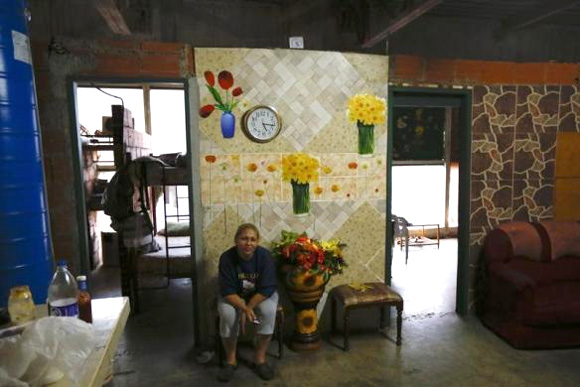
'SAFER INSIDE THAN OUT'
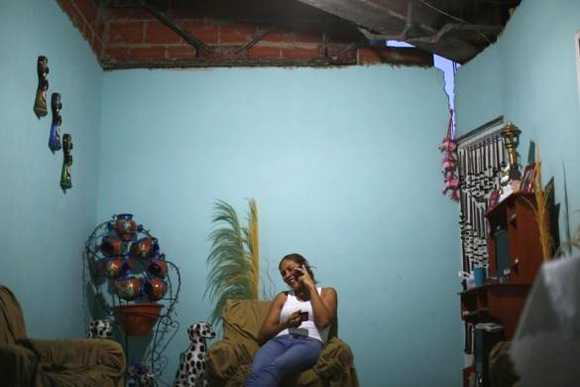
"There is far more order and far less crime in here than out there," says 27th-floor resident Thais Ruiz, 36, exuding contentment from an armchair as her kids play and her husband fulfils the family's once-a-week corridor sweeping duty.
…
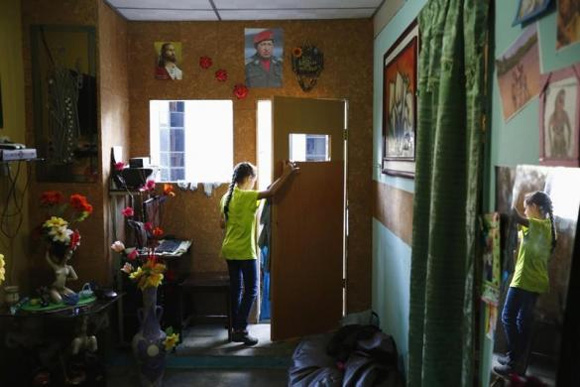
Like many inhabitants, Ruiz abandoned her shack in the violent Petare slum of east Caracas in 2010 to build a spacious four-bedroom apartment in the tower where she lives with her husband and five children.
…
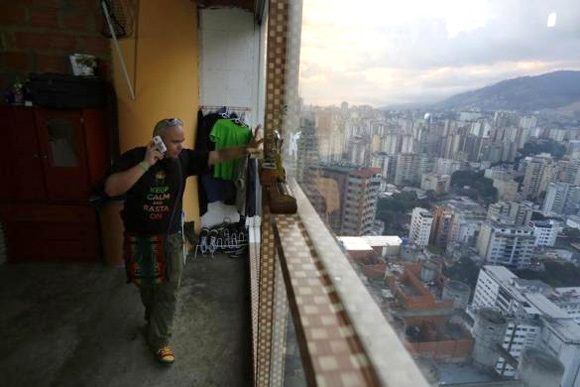
The family paid a small fee for a space that was supposed to have been a fancy corner office with an amazing vista, and at first lived in a tent.
But over the years, given the absence of elevators, they hauled bricks, furniture, water tanks - and even barbecue equipment - up 27 flights of stairs to build a home.
…
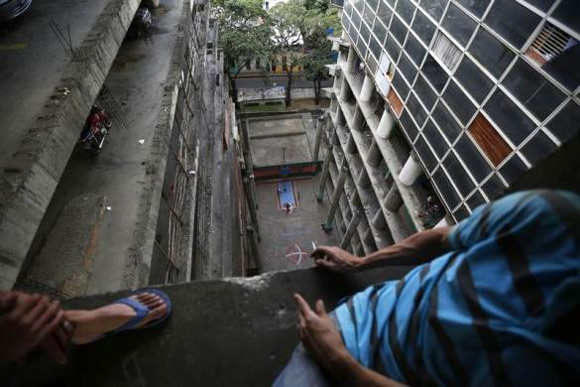
"I never lived in an apartment before. We're so comfortable now," she says. "We had to get out of Petare and the daily gang shootouts. Once we found a dead body on our doorstep. Now look, we can leave the door wide open."
Few deny the conditions can be precarious.
One young girl fell through a hole in the wall to her death a few years back, and a drunk motorcyclist rode off an edge and killed himself.
…
Police have raided the building a couple of times searching for kidnap victims, adding to its notoriety.
The building showed up as a Dantesque backdrop to an episode of U.S. TV drama Homeland, with on-the-run terrorist-suspect character Nicholas Brody held there. Though filmed mainly in Puerto Rico, the 2013 episode includes shots of the real tower and has a scene where a gang tosses a thief off the building.
…
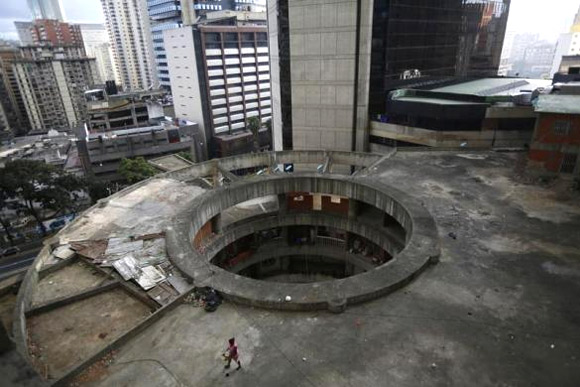
But it's the unique quality of "Tower of David", whose intended name was the "ConfinanzasFinancialCenter" before the group went under, that has won it attention beyond Venezuela.
Documentaries and analyses of it have showed up at trendy art festivals around the world: one exhibition about the tower won a prize at the 2012 Venice Architecture Biennale.
…
'INVASIONS'
The sometimes romantic view of the tower tends to overlook criminal activity associated with "invasions," which were common long before Chavez but proliferated early in his rule.
One woman dubbed "Commander Manuitt," a self-described pro-Chavez activist, helped lead a wave of invasions in Caracas in 2003. She was arrested in 2004 on charges of inciting violence, resisting authority, and illegally carrying firearms.
…
That year, a rival "invasion" leader who frequently clashed with Commander Manuitt was shot in a hit-man style murder.
Neighbors in the area surrounding the tower have complained of frequent robberies, ATM hold-ups, and drug trafficking taking place under the noses of authorities.
…
Residents acknowledge the tower had problems with crime but insist miscreants have been kicked out over the last 18 months, and that a new leadership is keeping the house in order.
"Everyone thinks we're a bunch of thieves and thugs in here. We are not 'invaders', we're occupants of an empty space," argues another resident, Luis Raul Pinto, 63.
…

The former government employee drives a taxi by day before clambering up to his roomy apartment every evening. When he first arrived four years ago, he slept in a hammock.
"Sometimes, I'm driving customers and they look up at the tower and tut 'Look at those criminals in there'. When I drop them off, I tell them 'Hey, I live in the Tower of David, I'm not a criminal, come and have a coffee with me some time.'"
…
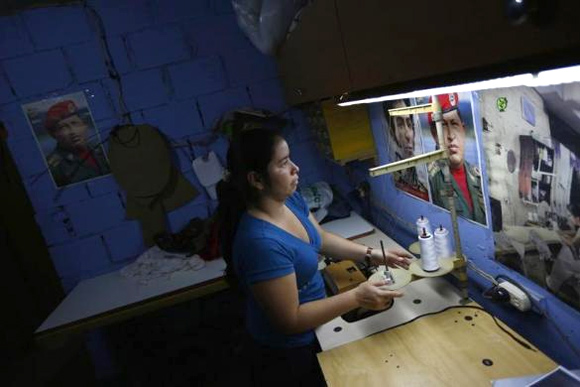
Though the tower could be viewed as an indictment of his housing policy, inhabitants appear fiercely "Chavista".
Posters of Chavez, under the phrase "Eternal Commander," adorn walls. Some have photos of him by their beds. The former president, who died last year of cancer, spoke affectionately of the tower's residents several times.
…
"Chavez's legacy is the values you see right here in this tower," said Nicolas Alvarez, a 38-year-old filmmaker who first entered the tower to give photography courses. He ended up moving in after getting married and struggling to find a home.
"What Chavez did was to rescue the sense that we all have the same right to live on this planet."
…
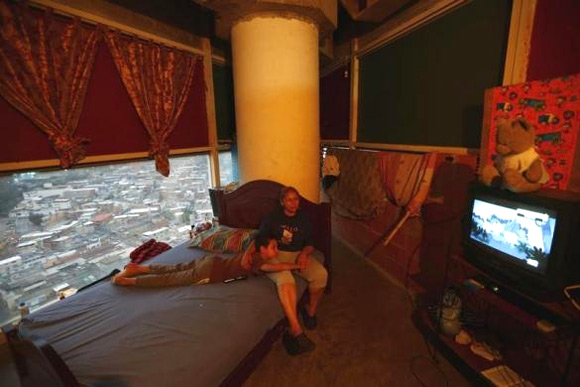
A hierarchy of sorts does exist, however.
Though requiring more leg-power to reach, the higher floors are cooler and fresher, without the whiff of sewage at the bottom. And only the top floors have large balconies where neighbors sit around, listen to salsa music, or sizzle meat.
…
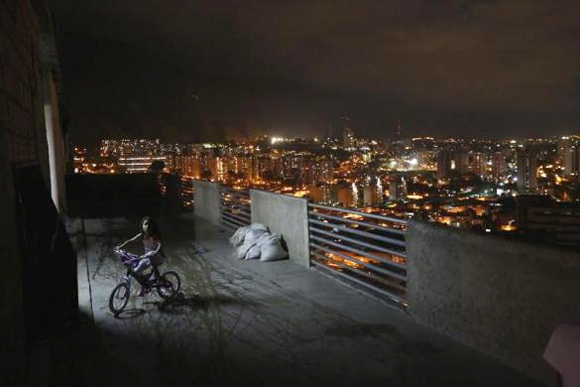
The tower also boasts shops, a dentist, and a beauty salon. On a 27th-floor terrace bathed in the setting sun, a group of men played dominoes on a recent evening.
"Who needs to go the Hilton?" quipped one.

 © 2025 Rediff.com - Investor Information - Advertise with us - Disclaimer - Privacy Policy - Feedback - About us - Terms of use - Grievances