Pagani Automobili is an Italian manufacturer of sports cars and carbon fibre. The company was founded in 1992 by Argentinian Horacio Pagani, and is based in San Cesario sul Panaro, near Modena, Italy.
...
Horacio Pagani, who formerly managed Lamborghini's composites, founded Pagani Composite Research in 1988.
...
This new company worked with Lamborghini on numerous projects, including the restyling of the 25th Anniversary Countach, the Lamborghini LM002, the P140 design concept and the Diablo.
...
In the late 1980s, Pagani began designing his own car, then referred to as the "C8 Project". Pagani planned to rename the C8 the "Fangio F1" to honour five-time Formula One champion Juan Manuel Fangio.
...
In 1991 Pagani established Modena Design to meet the increasing demand for his design, engineering and prototyping services.
...
In 1992, he began construction of a Fangio F1 prototype, and by 1993, the car was being tested at the Dallara wind tunnel with positive results. In 1994, Mercedes-Benz agreed to supply Pagani with V12 engines.
...
The final car was named the Zonda C12; the Fangio F1 name was dropped out of respect for Fangio, who died in 1995. It was first presented at the 1999 Geneva Motor Show.
...
In 2005, Pagani announced that it planned to triple its production output within the next three years, and to enter the US market in 2007.
...
On 26 July 2010, Pagani claimed a new record for production based cars using the Pagani Zonda R and completing the N rburgring in 6:47, beating the Ferrari 599XX.
...
While it is an independent company, Pagani has a working relationship with Daimler AG, most notably, with Mercedes' AMG arm.
...
This is partly due to the fact that Fangio had suggested that Pagani approach Mercedes. The Zonda has used increasingly advanced versions of the M120 V12; the initial version displaced 6.0L, but current Zondas use a 7.3L engine.
...
Pagani has also assisted in the development of the Chrysler ME Four-Twelve. The M158 engine for the Pagani Huayra is shared with the Mercedes-Benz SL65 AMG Black Series, but Pagani has commissioned Mercedes-Benz to reduce turbo lag and improve response, resulting in new exhaust headers, pistons, intake manifold and turbos.
...

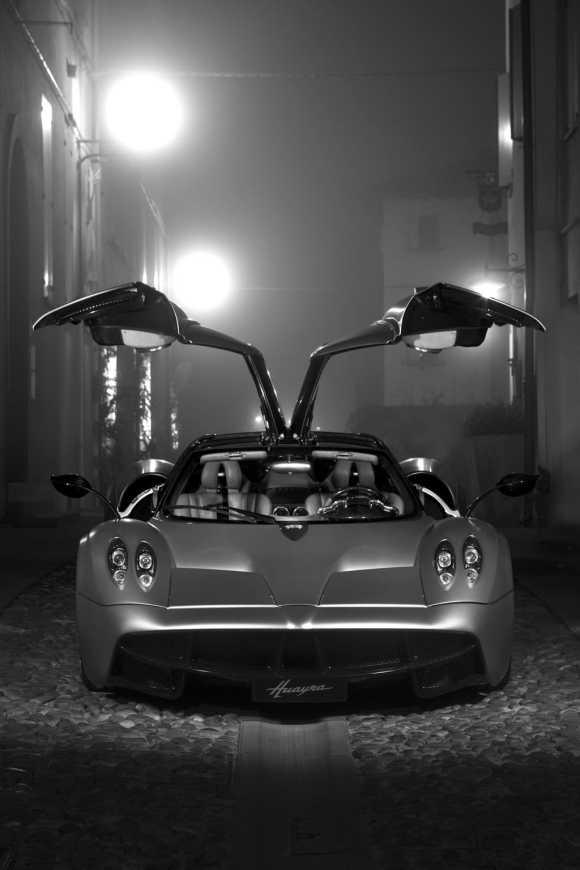
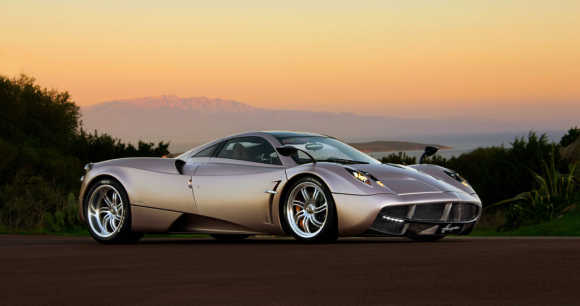
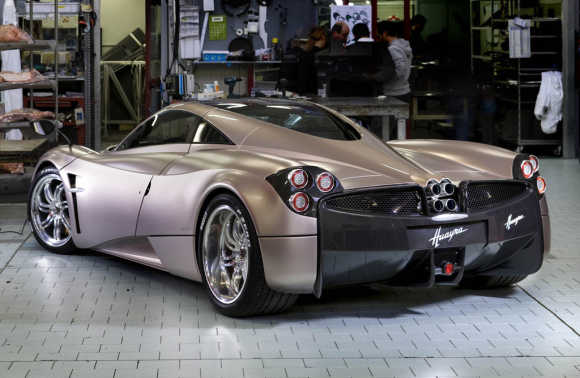
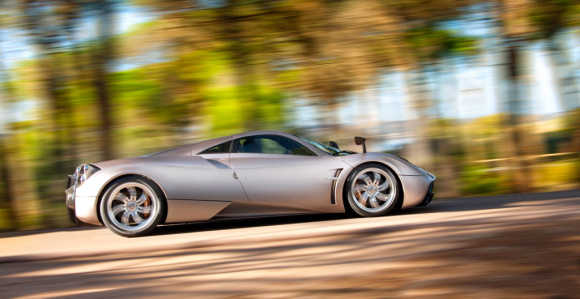
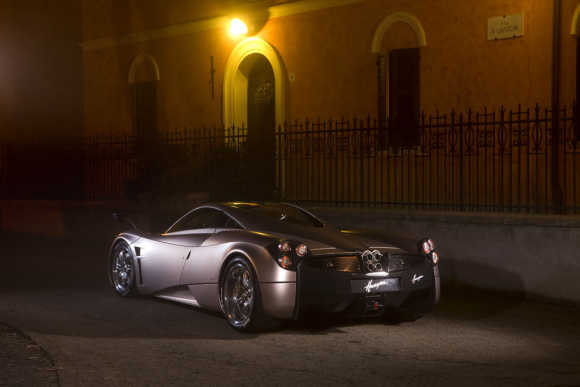
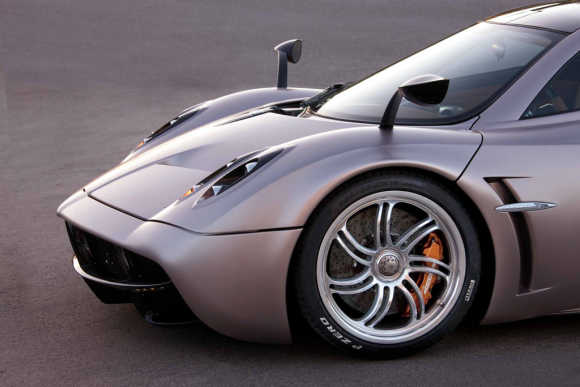
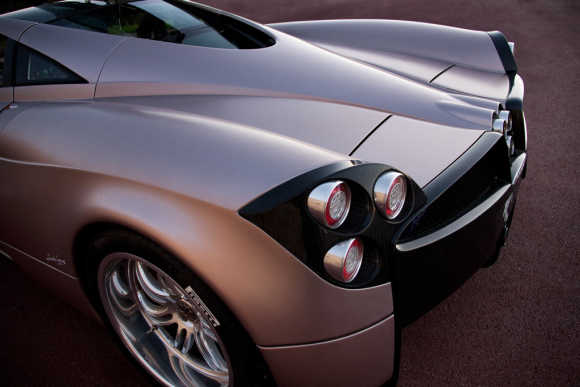
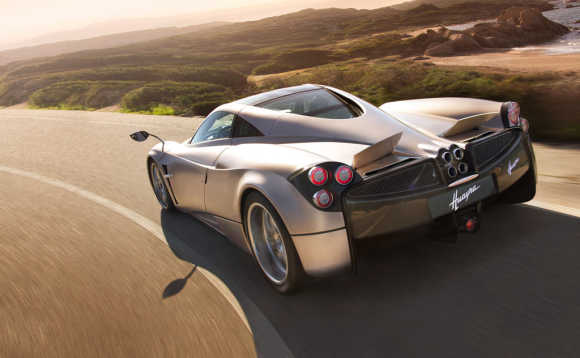
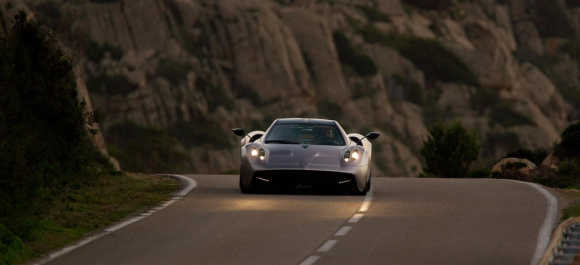
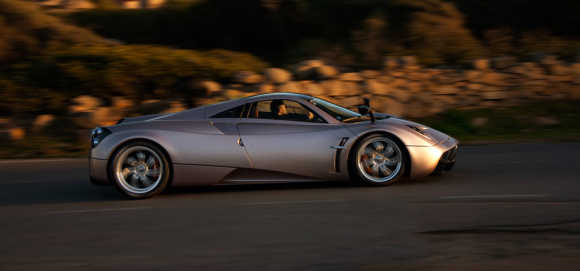
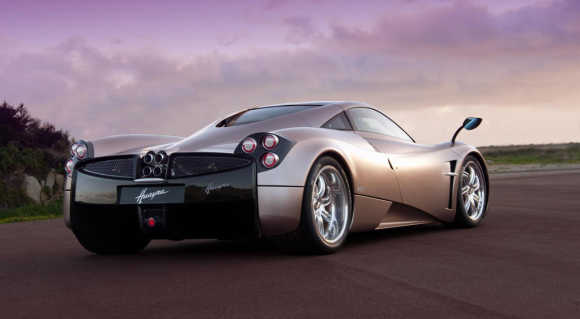
The Pagani Huayra is an Italian mid-engined sports car produced by Pagani.
...
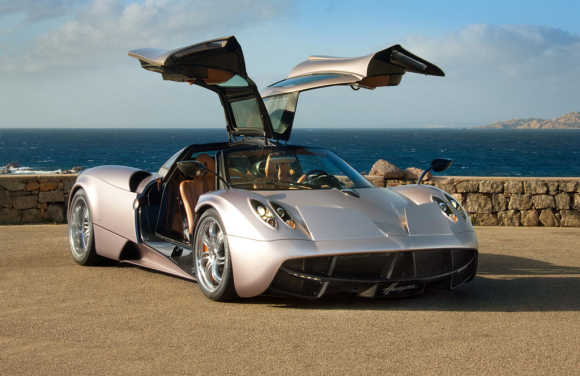
Succeeding the company's previous offering, the Zonda, it will cost $1,150,000 when it goes on sale in 2013.
...
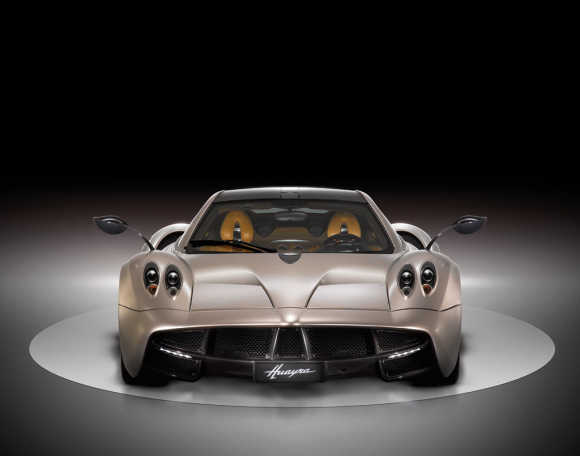
It is named after Huayra-tata, which means 'God of the winds' in Quechua, the official language of the Inca Empire.
...
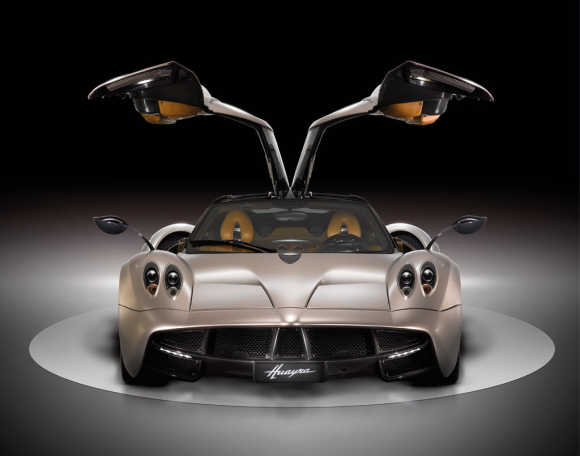
The Huayra uses a twin-turbo Mercedes-AMG 60 V-12 engine. The Huayra's 6.0-litre engine, the M158, produces 720 horsepower and 1,000 N m (740 lb ft) of torque.
...

Its top speed is in excess of 370km/h and it has a 0-60 miles per hour (0km/h) time of 3.3 seconds.
...
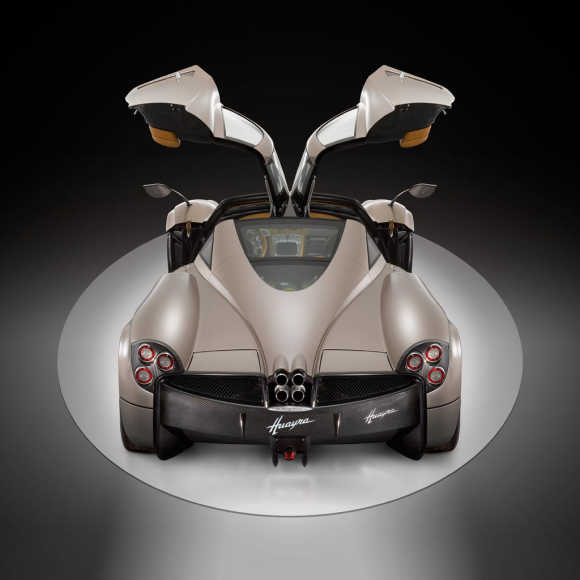
Using Pirelli tires, the Pagani Huayra is capable of withstanding 1.66g of lateral acceleration at speeds of up to 362km/h.
...
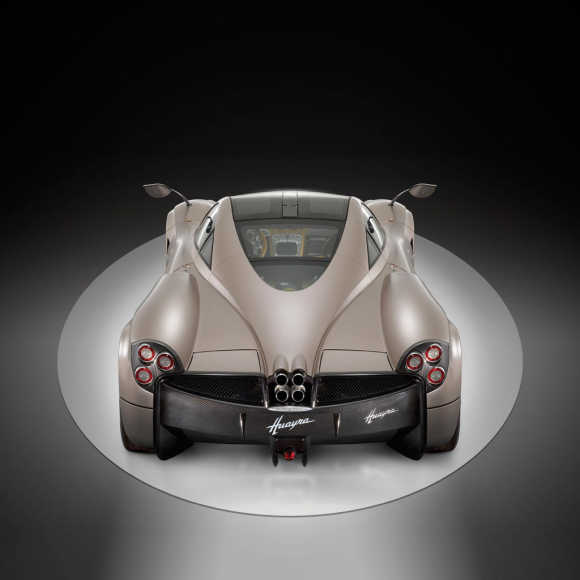
Unlike many modern sports cars, the Pagani Huayra does not use a dual-clutch gearbox; instead it uses a seven-speed sequential gearbox and a dual-disc clutch.
...

The choice not to use a dual-clutch in oil bath was because it would lead to an increase in weight of over 70kg, negating the advantage of the ability of such transmissions to change gears faster.
...

As a result, the entire transmission of the Pagani Huayra weighs 96kg.
...
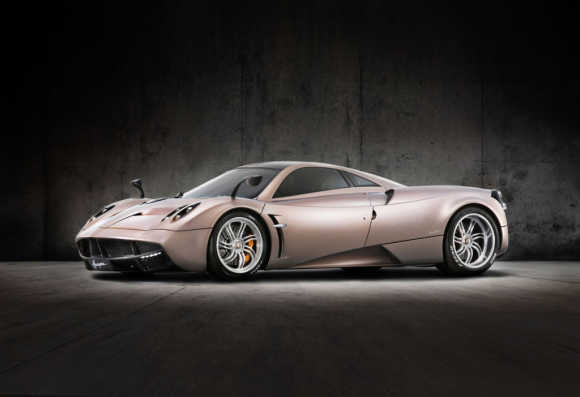
The car is equipped with brembo brake calipers. The exhaust assembly, assembled by hand, weighs 10kg and the exhaust muffler is made of a specific grade of titanium alloy sheet by the MHG Group.
...
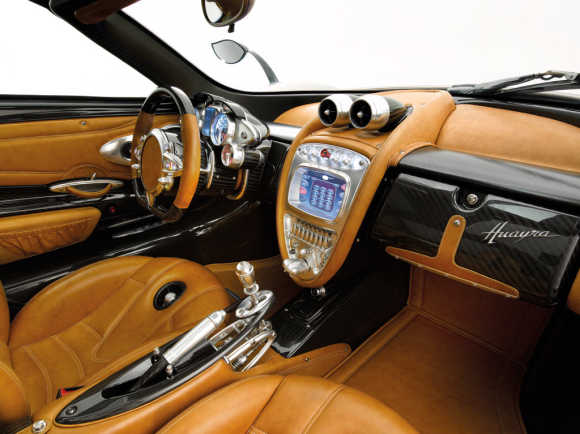
Mercedes-Benz's AMG division provides the engine of the Huayra. The 5,980 cc, twin-turbo, 60 AMG M158 V12 is shared with the Mercedes-Benz SL65 AMG Black Series, but has been modified at the request of Pagani to reduce turbo lag and improve response, realised with smaller turbos, a different intercooler configuration and re-programmed ECU settings.
...
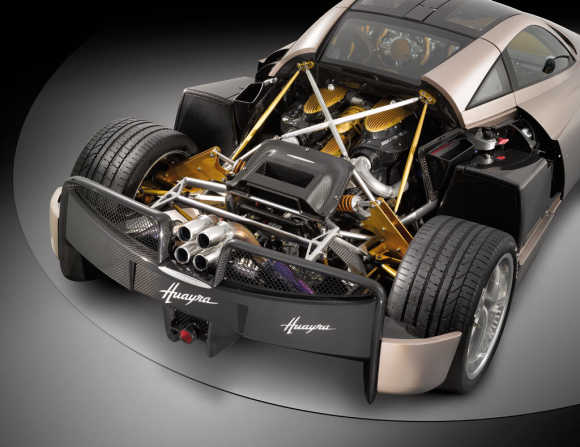
Like many high-performance cars, the Huayra uses dry sump lubrication. This has several key benefits including guaranteeing oil flow even when the car is subjected to extreme lateral acceleration, preventing 'oil surge', which allows the engine to operate more efficiently, while the lack of an oil pan allows the engine mounted lower, lowering the car's centre of gravity and improving handling.
...
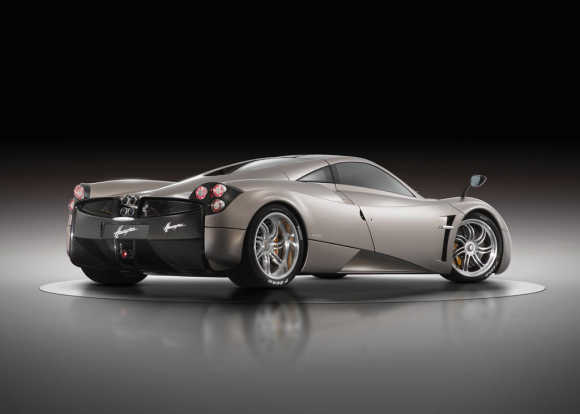
A water/oil heat exchanger reduces engine warm-up times on cold days and helps maintain a stable temperature for refrigerant and lubricant.
...
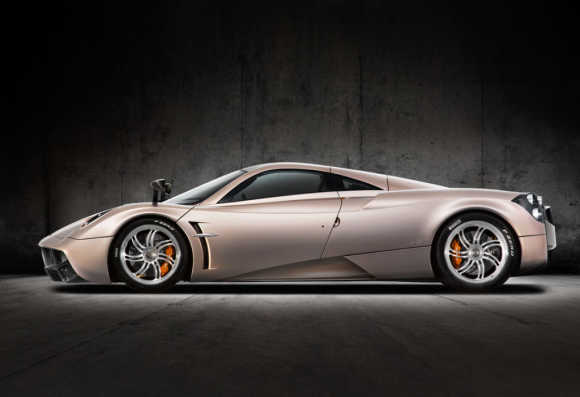
To minimise the use of pipes and fittings (and the overall weight of the vehicle), the expansion tank is mounted directly on the engine. Intercooler fins act as an expansion tank circuit at low temperatures.
...

The titanium exhaust system was designed and built by MHG-Fahrzeugtechnik. Hydroformed joints were developed to reduce back pressure and ensure a free flow exhaust.
...
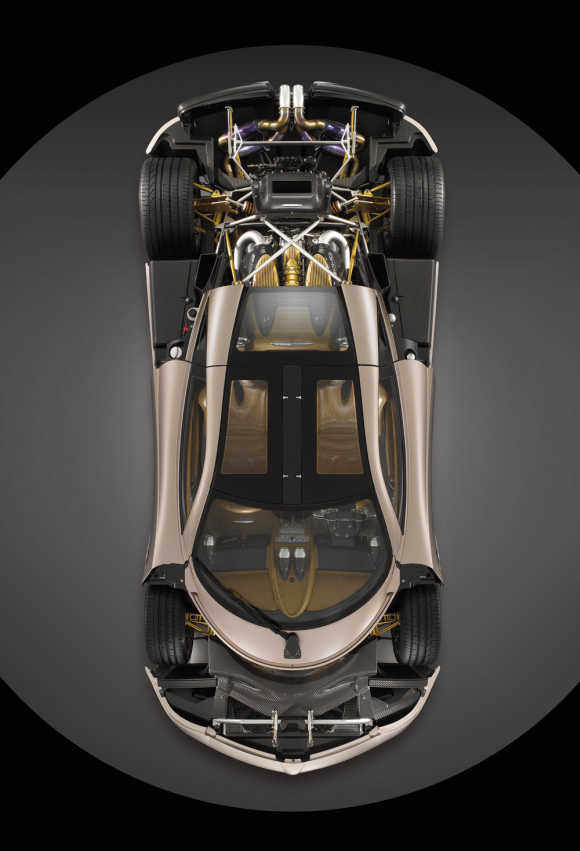
Titanium reduces the weight of the exhaust system while the Inconel silencers improve reliability in the most exposed parts of the exhaust at high temperatures. The entire system weighs less than 10kg.
...

The Pagani Huayra is different from its predecessor in that it incorporates active aerodynamics. It is capable of changing the height of the front from the ground and independently operating four flaps placed at the rear and front of the car.
...
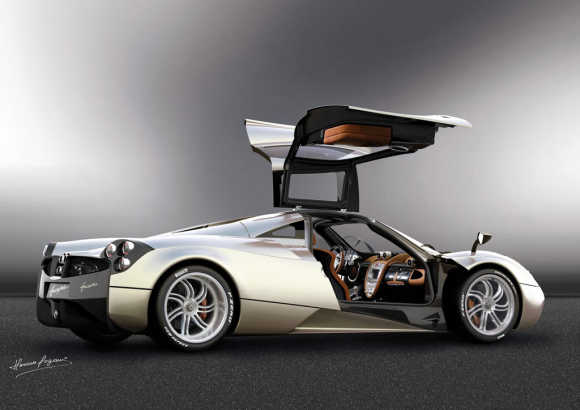
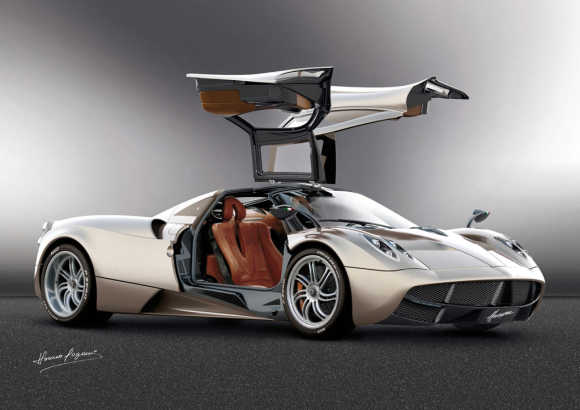
Advanced composite materials that are used on the Huayra were first used on the Zonda R. The car features gull-wing doors. The fuel tank is positioned behind the driver which is made of ballistic componets.
 © 2025 Rediff.com - Investor Information - Advertise with us - Disclaimer - Privacy Policy - Feedback - About us - Terms of use - Grievances