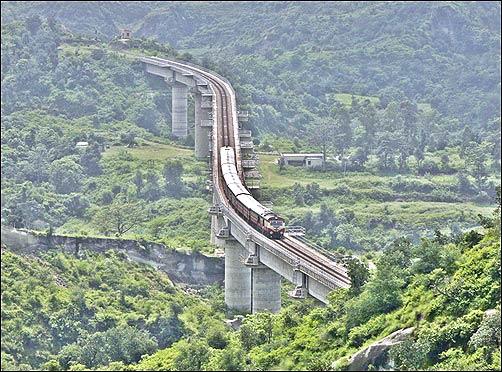
Hailed as the lifeline of the nation, the Indian Railways started its service 160 years ago on 16 April 1853.
...
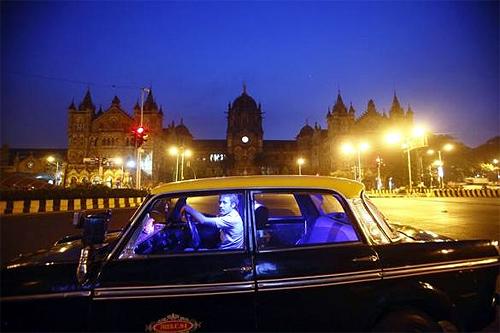
The Railways were first introduced in India in 1853 from Bombay to Thane. In 1951 the system was nationalised, making Indian Railways one of the largest networks in the world.
...
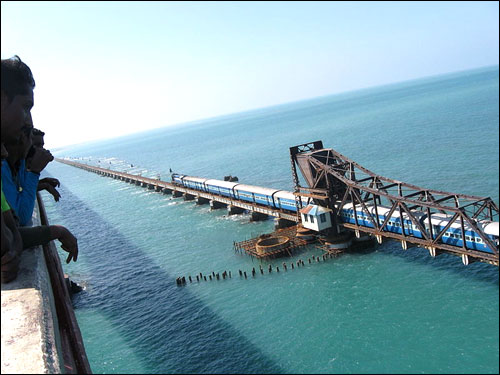
The first railway on Indian sub-continent operated over a stretch of 21 miles from Bombay to Thane.
...
The idea of a railway to connect Bombay with Thane, Kalyan and with the Thal and Bhore Ghats inclines first occurred to George Clark, the Chief Engineer of the Bombay government, during a visit to Bhandup in 1843.
...

In the south, the first line was opened on I July, 1856 by the Madras Railway Company. It ran between Vyasarpadi Jeeva Nilayam (Veyasarpandy) and Walajah Road (Arcot), a distance of 63 miles.
...
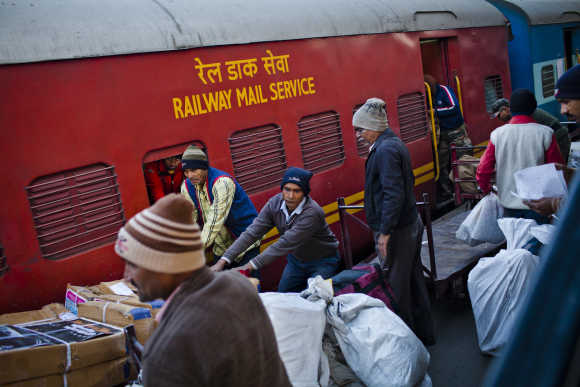
In the North, a length of 119 miles of line was laid from Allahabad to Kanpur on 3 March 1859. The first section from Hathras Road to Mathura Cantonment was opened to traffic on 19 October, 1875.
...

Today, Indian Railways is one of the world's largest railway networks comprising 115,000 km of track over a route of 65,000 km and 7,500 stations.
...
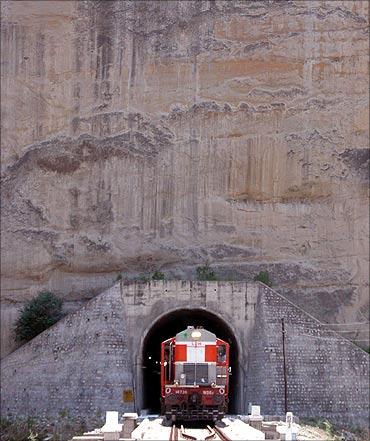
As of December 2012, it transported over 25 million passengers daily.
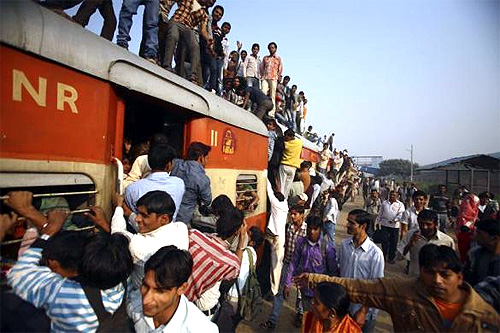
In 2011, the Indian Railway carried over 8,900 million passengers annually or more than 24 million passengers daily and 2.8 million tonnes of freight daily.
...
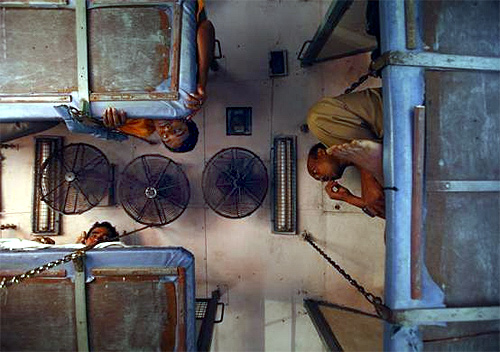
In 2011-2012, the Indian Railways had revenues of Rs 1,11,984.89 crore ($20 billion) -- Rs 69,675.97 crore ($13 billion) from freight and Rs 28,645.52 crore ($5.2 billion) from passengers tickets.
...
Indian Railways is the world's ninth largest commercial or utility employer, by number of employees, with over 1.4 million employees.
...
As for rolling stock, Indian Railway holds over 239,281 Freight Wagons, 59,713 Passenger Coaches and 9,549 locomotives (43 steam, 5,197 diesel and 4,309 electric locomotives).
...
The trains have a 5 digit numbering system as the Indian Railways runs about 10,000 trains daily.
...
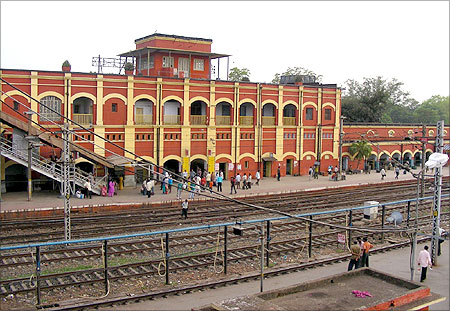
Indian Railways has the longest railway platform at Kharagpur (West Bengal). The platform stretches to a length of 2,733 feet.
...
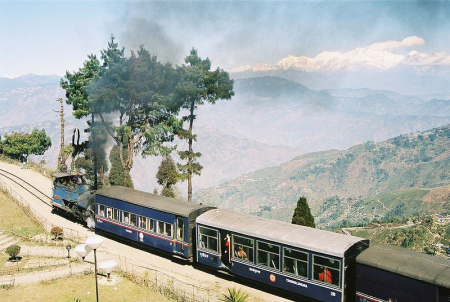
There are two UNESCO World Heritage Sites in the Indian Railways - the Chhatrapati Shivaji Terminus and the Mountain Railways of India.
...
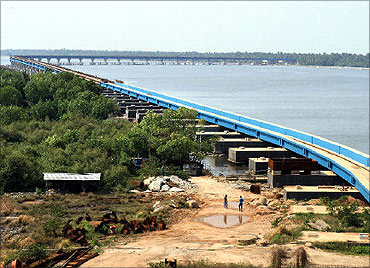
Vembanad Rail Bridge in Kerala is the longest rail bridge in India covering a stretch of 4.62 km.
...
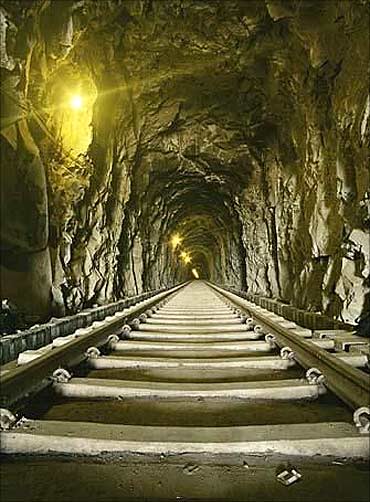
The longest tunnel is Karbude Tunnel of the Konkan Railway which stretches across a distance of 6.5 km.
...
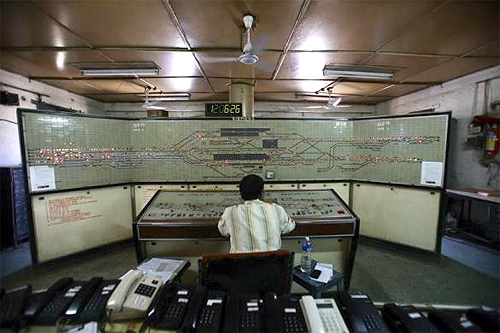
Vivek Express, which runs between Dibrugarh and Kanyakumari, has the longest run in terms of distance and time on Indian Railways network. It covers 4,286 km in about 82 hours and 30 minutes.
...
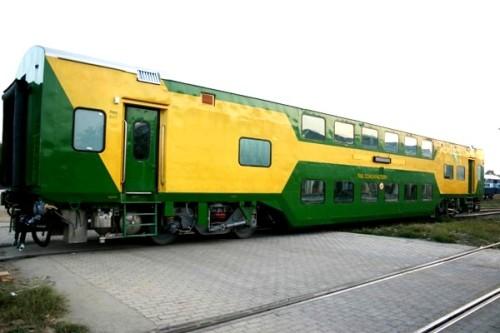
The first double decker train in India was Pune-Mumbai Sinhagad express plying between Pune and Mumbai.
...
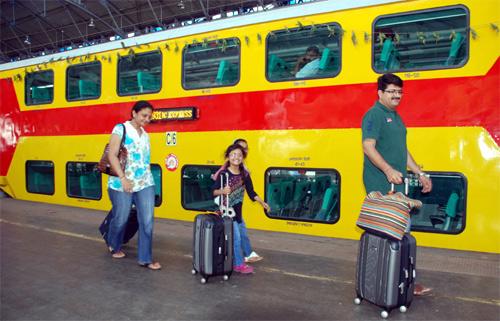
The first double-decker AC train in the Indian Railways was introduced in November 2010, running between the Dhanbad and Howrah stations.
 © 2025 Rediff.com - Investor Information - Advertise with us - Disclaimer - Privacy Policy - Feedback - About us - Terms of use - Grievances