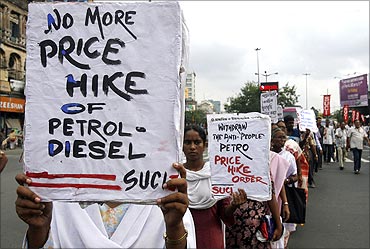
Indian households incurred an additional expenditure of whopping Rs 5.8 lakh crore (Rs 5.8 trillion) in the last three years, due to spiralling inflation and dearer food items, says a research report.
"The rise in inflation to 8 per cent per year during 2008-09 to 2010-11, from 5 per cent in the preceding three years eroded the purchasing power of money and inflated the consumption expenditure bill of Indian households by Rs 5.8 lakh crore," research firm Crisil said in a study, Inflation Hurts.
It said that inflation was not uniform and food items saw a much sharper price increase as compared to non-food items during the three-year period.
"Food inflation was at 11.6 per cent during 2008-09 to 2010-11 as compared to non-food inflation of 5.7 per cent," Crisil said.
Click NEXT to continue . . .
Headline inflation, which includes both food and non-food primary articles besides manufactured items, has been above the 8 per cent mark since January 2010. It stood at 9.06 per cent in May this year.
The Reserve Bank of India has hiked its key policy rates 10 times since March 2010 to curb demand and tame inflation.
In its annual monetary policy for 2011-12, the RBI said that inflationary pressure is likely to continue during the first half of the current fiscal on account of high global commodity prices, particularly crude.
The apex bank had exuded confidence that the pressure from high food prices would moderate in the days to come.
Click NEXT to continue . . .
However, after a brief period of moderation, food inflation has again started surging and stood at 9.13 per cent for the week ended June 11.
This happens even as manufactured inflation, which has over 65 per cent share in the Wholesale Price Index basket, has breached the 7 per cent mark.
"The surge in inflation was initially driven by supply shocks such as a rise in food and fuel prices, which then spread to manufacturing goods as well," Crisil said.
Headline inflation for the whole of 2010-11 averaged 9.6 per cent as compared to a mere 3.8 per cent during the previous fiscal.
Experts have said that with the recent hike in prices of diesel, kerosene and cooking gas, overall inflation is likely to touch double-digit in July.
Click NEXT to continue . . .

The study said that growth of private consumption expenditure in nominal terms increased to nearly 17 per cent per year during 2008-09 to 2010-11, as against 14 per cent in the preceding 3 years mainly due to rise in food inflation.
Crisil said the price trends of commodities in the WPI favour the middle and higher income classes, rather than poor and vulnerable Indian households who spend large part of their income on food.
"The middle and high income groups benefit more from falling prices of non-food manufactured items particularly durable goods, as they have higher disposable income to spend on other goods and services, including consumer durables and for savings," Crisil chief economist D K Joshi said.
"The poor, with limited discretionary income to spend on consumer durables, do not benefit much from their lower prices. In contrast, rising prices of food items strain their discretionary spending," he added.
Click NEXT to continue . . .
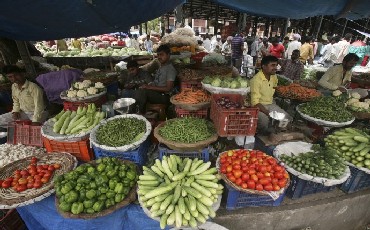
Crisil said that food inflation is likely to remain high in the near future due to structural and supply side issues.
"Higher food prices should be an incentive to enhance production of food items, but this has not happened so far. In addition to price signals, productivity improvement in food/agriculture categories would require better technology and improved investments in irrigation. In the absence of these measures, high food inflation is here to stay," it said.
The study said that inflation in certain food items, especially egg, meat, fish and milk, has surged to double- digit over the last two years after having moderately in the preceding period.
"Rise in prices of these items has a greater impact on consumers, as they are purchased frequently and also account for a large share of a household's daily expenditure.
Click NEXT to continue . . .
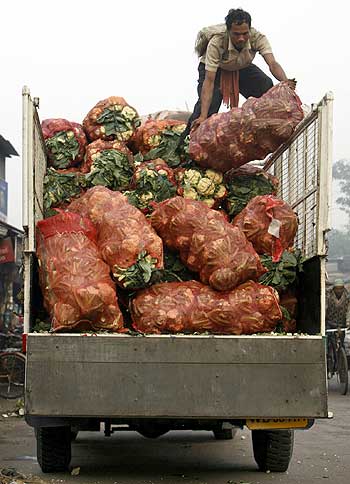
Purchases of manufactured goods, especially durables, are not as frequent. Therefore, a decline in prices of these goods often goes unnoticed," it said.
In 2010-11, prices of 146 out of 676 items in the WPI basket fell.
Of these, 117 items belonged to manufactured categories, including consumer goods as well as intermediate goods used as inputs for production of other goods.
However, the decline in these items was neutralised by additional spending on food products, Crisil said.
 © 2025 Rediff.com - Investor Information - Advertise with us - Disclaimer - Privacy Policy - Feedback - About us - Terms of use - Grievances