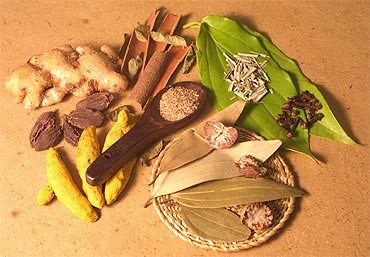
Thousands of kilometres away from their fractious border, India and China face a common threat.
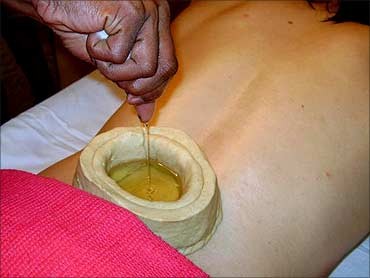
From May 1, a Brussels diktat known as the herbal directive, will effectively outlaw ayurvedic and traditional Chinese medicines (TCM) from the 27-member countries of the European Union.
The directive in question was adopted in 2004 but it granted a seven-year grace period to manufacturers of herbal medicines to register, a deadline that expires on April 30.
The spokesperson for the European Commission's department for health and consumer protection insisted that far from "banning" ayurveda or TCM from the EU, the directive in fact sought to make it easier for manufacturers of herbal products to register and market their wares in Europe.
...

"Given the particular characteristics of traditional herbal products, notably their long tradition of use, the directive has introduced a lighter, simpler and less costly registration procedure for them," the spokesperson said in a written statement.
On the ground
The reality on the ground appears different. Last month, representatives from India's ministry of health met their relevant counterparts in the EC to discuss the ayurveda issue.
A source in the Indian embassy in Brussels who was present at the meeting revealed the Indian side asked the Europeans a single, simple question: had even a single ayurvedic drug been registered under the new rules over the past seven years?
...

No answer was forthcoming. Alternative medicine advocacy groups like the UK-based Alliance for Natural Health (ANH) say not a single drug emanating from a non-European medicinal system has in fact been able to register under the directive, despite attempts to do so.
The EC's response to a direct query from this reporter was simply to state that registration was a "national procedure" and no information was as yet available on whether any ayurvedic or TCM products had been registered.
The EC stressed that under the new directive, traditional herbal products were exempt from the safety and efficacy tests that apply to allopathic medicines and instead had to merely prove that they had been continuously used for the past 30 years, including at least 15 years within the EU.
...
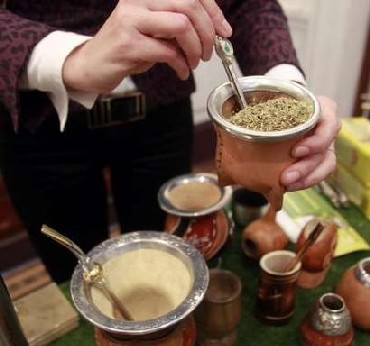
But Robert Verkerk, the founder of ANH, points out that prior to 2004, the vast majority of traditional herbal medicines available in Europe were categorised as food supplements rather than medicines and, therefore, not subject to stringent pharmaceutical testing.
The Indian embassy source adds that although the Indian government's AYUSH (ayurveda, yoga and naturopathy, unani, siddha and homoeopathy) department is assisting a few ayurveda companies to apply for registration, a major stumbling block has been providing the kind of documentation required by the EU to prove use within the region for 15 years.
The fact that most non-European traditions of herbal medication involve multi-herb preparations, including herbs that European agencies are unfamiliar with, rather than single herbs is a complicating factor.
Member-states moreover continue to require proof of "quality" for the herbal compounds in question.
...

But the standards they impose, such as "stability and genotoxicity testing" are not suitable for non-Western, poly-herbal products, according to the ANH.
Verkerk explains that "stability" is a particularly bad criterion by which to judge ayurveda and TCM products, since they comprise multiple herbs that continuously interact with each other.
"In a sense, these are more like food stuffs and vary depending on how old they are, when the herbs in question were picked, where they were grown and so on."
...
Access rights
Even if manufacturers of ayurveda are somehow able to cobble all the required data, the cost of registration remains prohibitive.
The ANA estimates it to be upwards of 250,000 per product. A figure that is unaffordable for the majority of ayurveda manufacturers, which are small and medium enterprises operating on a model involving the sale of a wide range of products in relatively small volumes.
The fact is that before the 2004 directive, many of the traditional medicinal products on the market were sold either illegally or, as ANH points out, as food supplements.
The new herbal directive seeks to transform this situation, in addition to harmonising what were previously a host of contradictory regulations amongst the EU's 27 countries.
...
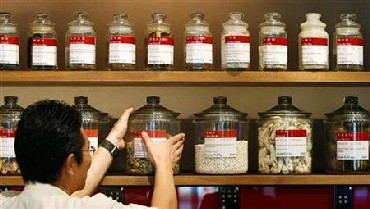
But promoters and consumers of herbal medications say that access to these products should be framed as a human right, rather than as a legal or trade issue.
The ANH asserts there is scant proof of any harm to human heath from the use of ayurvedic or TCM products in Europe prior to 2004, so that making safety the reason for the directive is disingenuous.
Regardless of where one stands on this debate, the fact of the matter is that come May, ayurveda and TCM exports to Europe, which represent a significant business interest, will be seriously affected.
The Indian government is attempting to deflect this negative impact by negotiating a clause in the ongoing India-EU free trade agreement that would grant ayurveda a special exemption from the directive.

 © 2025 Rediff.com - Investor Information - Advertise with us - Disclaimer - Privacy Policy - Feedback - About us - Terms of use - Grievances