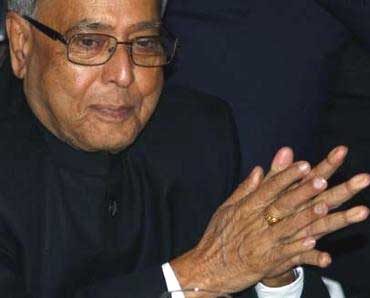
Finance Minister Pranab Mukherjee presented the Union Budget 2010-11 in parliament on Monday.
Has he lived up to the expectations of the taxpayers?
Is it a populist Budget? Will it also help India to grow? To find out read on..
Highlights. . .
Direct Taxes
- Exemption limit for the general category of individual taxpayers enhanced from
- Rs 1,60,000 to Rs 1,80,000 giving uniform tax relief of Rs 2,000.
- Exemption limit enhanced and qualifying age reduced for senior citizens.
- Exemption limit for Very Senior Citizens, who are 80 years raised to Rs 500,000.
- Current surcharge of 7.5 per cent on domestic companies proposed to be reduced
- to 5 per cent.
- Rate of Minimum Alternative Tax proposed to be increased from 18 per cent to
- 18.5 per cent of book profits.
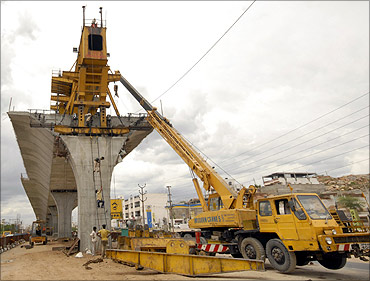
- Tax incentives extended to attract foreign funds for financing of infrastructure.
- Additional deduction of Rs 20,000 for investment in long-term infrastructure bonds
- proposed to be extended for one more year.
- Lower rate of 15 per cent tax on dividends received by an Indian company from
- its foreign subsidiary.
- Benefit of investment linked deduction extended to businesses engaged in the
- production of fertilisers.
- Investment linked deduction to businesses developing affordable housing.
- Weighted deduction on payments made to National Laboratories, Universities
- and Institutes of Technology to be enhanced to 200 per cent.
- System of collection of information from foreign tax jurisdictions to be
- strengthened.
- A net revenue loss of Rs 11,500 crore (Rs 115 billion) estimated as a result of proposals.
- Indirect Taxes
- To stay on course for transition to GST.
- Central Excise Duty to be maintained at standard rate of 10 per cent.
- Reduction in number of exemptions in Central Excise rate structure.
- Nominal Central Excise Duty of 1 per cent imposed on 130 items entering in the
- tax net.
- Lower rate of Central Excise Duty enhanced from 4 per cent to 5 per cent.
- Optional levy on branded garments or made up proposed to be converted into a
- mandatory levy at unified rate of 10 per cent.
- Peak rate of Custom Duty held at its current level.13
. . .

Agriculture and Related Sectors
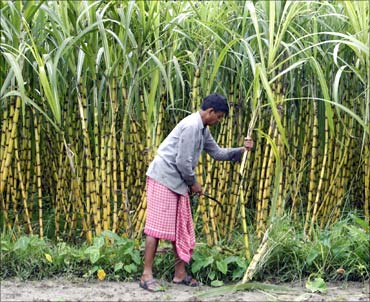
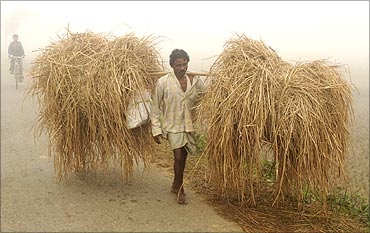
- Scope of exemptions from Excise Duty enlarged to include equipments needed for storage and warehouse facilities on agricultural produce.
- Basic Custom Duty reduced for specified agricultural machinery from 5 per cent to 2.5 per cent.
- Basic Custom Duty reduced on micro-irrigation equipment from 7.5 per cent to 5 per cent.
- De-oiled rice bran cake to be fully exempted from basic Custom Duty.
- Export Duty of 10 per cent to be levied on its export.
Black Money
-
Five fold strategy to be put into operation to deal with the problem of generation and circulation of black money.
-
Membership of various international fora engaged in anti money laundering, financial integrity and economic development, Exchange of information for tax purposes and transparency, secured.
-
Various Tax Information Exchange Agreements and Double Taxation Avoidance Agreements concluded. Foreign Tax Division of CBDT has been strengthened to effectively handle increase in tax information exchange and transfer pricing issues.
-
Enforcement Directorate strengthened three fold to handle increased number of cases registered under amended Money Laundering Legislation.
-
Finance Ministry has commissioned study on unaccounted income and wealth held within and outside the country.
-
Comprehensive national policy to be announced in near future to strengthen controls over prevention of trafficking on narcotic drugs.
. . .
Tax Reforms
-
Direct Taxes Code to be finalised for enactment during 2011-12.
DTC proposed to be effective from April 1, 2012.
-
Areas of divergence with States on proposed Goods and Services Tax have been narrowed.
-
As a step towards roll out of GST, Constitution Amendment Bill proposed to be introduced in this session of Parliament.
-
Significant progress in establishing GST Network, which will serve as
-
IT infrastructure for introduction of GST.
Expenditure Reforms
Subsidies
-
Nutrient Based Subsidy has improved the availability of fertiliser; government actively considering extension of the NBS regime to cover urea.
-
Government to move towards direct transfer of cash subsidy to people living below poverty line in a phased manner for better delivery of kerosene, LPG and fertilisers.
Task force set up to work out the modalities for the proposed system.
People's ownership of PSUs
-
Overwhelming response to public issues of Central Public Sector Undertakings during current year.
-
Higher than anticipated non-tax revenue has led to reschedulement of some disinvestment issues planned for current year.
-
Rs 40,000 crore (Rs 400 billion) to be raised through disinvestment in 2011-12.
-
Government committed to retain at least 51 per cent ownership and management control of the Central Public Sector Undertakings.
. . .
Investment Environment
Foreign Institutional Investors
-
Securities and Exchange Board of India registered mutual funds permitted to accept subscription from foreign investors who meet KYC requirements for equity schemes.
-
To enhance flow of funds to infrastructure sector, the FII limit for investment in corporate bonds issued in infrastructure sector being raised.
Financial Sector Legislative Initiatives
-
To take the process of financial sector reforms further, various legislations proposed in 2011-12.
-
Amendments proposed to the Banking Regulation Act in the context of additional banking licences to private sector players.
Public Sector Bank Capitalisation
Recapitalisation of Regional Rural Banks
. . .



 © 2025 Rediff.com - Investor Information - Advertise with us - Disclaimer - Privacy Policy - Feedback - About us - Terms of use - Grievances