
According to the data released by the Telecom Regulatory Authority of India, wireless subscriber base (GSM, CDMA and fixed wireless phones) rose to 635.51 million by the end of June from 617.53 million in May, registering a growth of 2.91 per cent.

Demanding a level playing field for the old operators, Bharti group chief Sunil Mittal told PTI: 'our view is that the spectrum given to us and other operators from time to time is under a policy and there is no question of any additional payment for this.'

Mobile telephone subscribers would have to wait a little longer to change their service provider without changing their numbers.

While the Telecom Regulatory Authority of India has approved the access of TV on mobiles, service providers still cannot stream live TV channels on to the handset due to spectrum allocation from the Ministry of Information and Broadcast. However, since the regulations do not allow a direct transmission of TV channels, service providers as well as content providers have started using a technology called Unicast which provides content to end-user on a one-on-one basis.

According to data released by the telecom regulator, the wireless subscriber base increased from 601.22 million in April to 617.53 million by the end of May 2010, registering a growth of 2.71 per cent.

The decision had been communicated to the department of telecommunications, a senior official of the department told Business Standard.

Telecom minister A Raja had said that mobile tariffs should come down to 10 paise for local calls and for 25 paise STD calls per minute.
The Central Bureau of Investigation on Monday sent notices to former telecom minister A Raja and corporate lobbyist Niira Radia asking them to appear before the agency for questioning while grilling former Telecom Regulatory Authority of India chief Pradip Baijal in connection with the 2G spectrum scam.
In its recommendations to the government, Trai said the provision of calling cards would allow consumer to exercise choice of long distance operator for the national and international calls. The authority has, therefore, recommended amendment of NLD/ILD operators licence conditions to allow them to access customers directly for national and international long distance calls, respectively.
The telecom regulator in the second ultimatum to GSM operators, including Bharti, Vodafone and BSNL, has given August 21 as the deadline to give interconnections to the RCom GSM network. Trai has cited it as a licencing condition to provide interconnection among the service provider implying if a mobile operator does not give interconnection to another based on mutual commercial agreement, it is a violation of license condition attracting penalty.
As per the Trai recommendations, the STD service providers would be connected to ISPs through public internet for the purpose and the two service providers would have mutual agreement for the same. The move will permit calls from personal computers to fixed line and mobile phones. Currently, a voice call can travel between two computers but not from a mobile or a fixed phone.
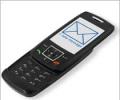
SMS messages can be easily wiretapped from outside the network operator's environment using equipment available in the black market.
Is it time to consider the Internet as mass media? Maybe.
The books of these companies had come under a cloud after it was alleged that many of them had not been paying the goverment's share of revenue by showing the revenue earned under other categories. Under a suggestion of the Telecom Regulatory Authority of India, a special audit of all the integrated telecom companies will be undertaken once in 3-5 years.
Leading mobile phone operators came down hard on the telecom regulator on a day when most saw their stocks on a crash course.

Operators Bharat Sanchar Nigam Ltd, Bharti Airtel, Vodafone-Essar, Aircel, Mahanagar Telephone Nigam Ltd and Idea Cellular might have to fork out over Rs 11,200 crore for having spectrum beyond 6.2 MHz, if the government accepts the Telecom Regulatory Authority of India (Trai) recommendations.
Trai has fixed a minimum 'contention ratio number' of users who can share the same bandwidth. Earlier, there was no such restriction on operators and they were offering the service at a contention ratio of 1:80 to 1:100 (which means the same bandwidth would be used by 80 to 100 customers). Under the new guidelines, the contention ratio for broadband at home has been fixed at 1:50 and for business at 1:30.

Telecom regulator TRAI on Thursday said that operators will have to provide an optional tariff of per second call along with other packages or plans.
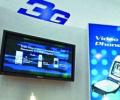
A decision on this issue is important because new operators would shy away from bidding for a standalone 3G licence if they are made to wait for years to get the UAS licence even though they have won bids for 3G. That would make the 3G project unviable from the very beginning.

Indian telecom operators may soon be asked to compulsorily give their customers the option of paying tariff based on usage per second instead of the current per minute pulse, sector regulator TRAI said.

With the addition of 20 million new users in March, the highest ever this year, the mobile subscriber base in the country has jumped to 584.32 million customers, Telecom Regulatory Authority of India said on Tuesday.
In reply to a Rajya Sabha question, minister of state for information and broadcasting Anand Sharma stated that the Telecom Regulatory Authority of India had informed that a comparison of entry level package prices of a few DTH operators with CAS offerings reveals that DTH pricing in the country are not exorbitant.

The department of telecommunication has decided that the existing variable licence fee structure for telecom operators should be replaced with a uniform one. An departmental note suggests a uniform licence fee of 8.5 per cent for all types of services.

Earlier this month, the department of telecommunication had said that MNP that will allow users to switch providers without changing their phone number was likely to be launched by June 30, 2010.
Move to ensure deals do not hit govt licence fees, revenue share.
The TDSAT scrapping the Trai's judgement on channel pricing is a major victory for broadcasters, but could also see consumer prices moving up.

Trai has asked the department of telecommunication to 'keep in abeyance' the grant of new 2G (mobile) licences till the watchdog finalises its recommendations.

Vodafone had contended in its plea that DoT instead of signing and executing the ULs had at the last moment informed them that their request for deletion of 'restrictive' clauses in licence pertaining to roaming cannot be accepted.

The per second billing introduced by telecom companies has come as a boon to millions of mobile users in the country but it is proving to be a bane for cellular service providers as it is affecting their revenues, feel industry experts.

In its tariff order for 2010, Telecom Regulatory Authority of India also included provisions to protect the consumers from rise in rates, like no increase in subscription charges in the first six months of enrolling.
Mobile television allows the consumers to watch live as well as pre-recorded television content on a mobile handset using a specialised mobile television broadcasting technology. Currently, only video clips can be downloaded on mobile handsets.
Telecom Regulatory Authority of India said on Friday that cable landing station facilities, which are owned by few operators, should be opened up for other international long distance operators, a move which will boost competition.
TRAI has decided to fine defaulting tele-marketing firms upto Rs 20000 for non-complaince of directives.
Trai member A K Sawhney had been acting as chairman since Nripendra Mishra retired on March 22 this year. Before joining Trai, Sarma was member of the Telecom Disputes Settlement and Appellate Tribunal and is a well-known expert in the field, the regulator said.
The decks have been cleared for the appointment of TDSAT member JS Sarma as the new chairman of the Telecom Regulatory Authority of India (Trai). Sarma will succeed former Trai chairman Nripendra Mishra who retired on March 22, 2009.
Decisions are also being pushed on free allotment of additional spectrum to telecom firms, on extending the licence period for 'dual technology' firms like Reliance Communications/Tata Teleservices etc, and on revising merger and acquisition norms. Given how each of these cases is so controversial, even apart from the issue of propriety, it is unacceptable that a government on its last legs should be taking such decisions.
Trai wants to prevent accidental activation of such services.
The Telecom Regulatory Authority of India (Trai) today directed the mobile operators to seek written consent from the users who have subscribed to their value-added services (VAS), such as call ring-back tone and hello tunes, in order to prevent accidental activation of such services.

A call drop is a voice call, which after being successfully established, is interrupted.
These numbers have been submitted to the regulator, the Telecom Regulatory Authority of India, by various stakeholders in the cable industry, including broadcasters and multi-system operators. These are based on the information collected from the tax departments of various state governments.
