
The two sides are also expected to finalise a roadmap for restoration of peace and tranquility in the high-altitude region that witnessed an eight-week bitter standoff between the troops of the two countries.

The meeting will take place in Chushul sector on the Indian side of Line of Actual Control.

Out of 18, four personnel were critically injured but they are responding to treatment and are stable now, people familiar with the matter said.

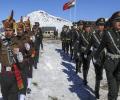
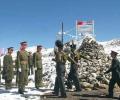
Amidst reports of tension on the Sino-India border in north Sikkim, the army border personnel of the two countries held a meeting at the famous Bum La pass in Arunachal Pradesh to maintain tranquility on the frontier. Senior officers from both the armies met "in an atmosphere of cordiality" to discuss "functional issues", a defence ministry spokesman said in Delhi on Monday.
Foreign ministry spokesman Zhao Lijian, during a media briefing in Beijing, said that China's position on the border related issues is clear and consistent. "We have been following the important consensus reached by the two leaders and strictly observing the agreements between the two countries," he said, apparently referring to the directions of Chinese President Xi Jinping and Prime Minister Narendra Modi after their two informal summits, asking the militaries of the two countries to take more confidence building measures to maintain peace and tranquillity along the borders.
While confirming this, Army Chief Gen Deepak Kapoor on Tuesday sought to downplay the survey, saying there was nothing unusual about it as 'we are carrying out such exercises in other places'. The report comes days after the government has asked the Survey of India to carry out a fresh survey of the northern plateau in Sikkim using latest methods to validate India's position.
Experts have said the economic cost of China's misadventure in the last couple of months in eastern Ladakh and South China will be "massive" as it has "exposed" Beijing's "real face" when the entire world is fighting coronavirus.
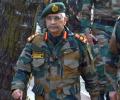
Gen Naravane reviewed the overall security situation in the region with Northern Army Commander Lt Gen Yogesh Kumar Joshi, commander of the 14 Corps Lt Gen Harinder Singh and other senior Army officials.

The visit comes a week after 20 Indian Army personnel were killed in a brutal assault by the Chinese military in Galwan Valley which escalated the border tension.
The two armies had mutually decided not to resort to use firearms during face-offs in sync with provisions of two agreements on border management.
The last time the Chinese military had taken Indian soldiers captive was in July 1962 after a clash in Galwan Valley.
Indian military sources said no firearms were used in the clashes and that most of the injuries were sustained following stone-pelting and use of rods by the Chinese side.

The last conversation between the two leaders was on April 4 on the issue of hydroxychloroquine.
China's state-run media said that the leadership of the two countries successfully solved the Doklam standoff in 2017 with 'concerted efforts and wisdom'.
The meeting primarily focused on implementation of certain decisions taken at the fifth round of talks between Corps Commanders of the two armies last week on the disengagement process as well as to bring down prevailing tension in the region, sources said.
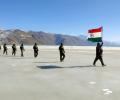
'India's challenge is status quo ante. China's challenge is a face-saving exit'

Giving an account of India's overall military modernisation, Lt Gen Pande also said that an in-principle approval has been given to new combat formations called the Integrated Battle Groups (IBGs) which can mobilise fast with a more effective approach.

The next phase of the de-escalation process will kick off only after the fourth round of talks between corps commanders of the two sides.
The two militaries are set to hold extensive talks on finalising modalities for restoring normalcy and bringing back peace and tranquillity in the region after the verification of the disengagement exercise is completed.

The visit is also aimed at boosting morale of the army personnel engaged in the seven-week bitter border faceoff with the Chinese troops in the region, sources added.
Sources said the process of disengagement along the Line of Actual Control is "complex", and in such a context, speculative and unsubstantiated reports need to be avoided.
This is the third round of Corps Commander-level talks being held. The first two rounds had taken place in Moldo on the Chinese side of the LAC.
The two sides held diplomatic talks through video conference on the border standoff in midst of fresh details emerging that China has strengthened its position in several areas in eastern Ladakh including Galwan Valley where a violent clash on June 15 left 20 Indian soldiers dead.
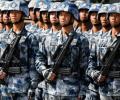
Chinese military has also deployed a sizeable number of its troops in Galwan Valley, the site of the violent clashes on June 15 that left 20 Indian soldiers dead.

The Chief of the Army Staff interacted with almost all the injured soldiers and complimented them for their bravery.

India has already mobilised fighter jets and sent thousands of additional army troops to forward locations along the border with China after 20 Indian Army personnel were killed in a brutal attack by Chinese troops in eastern Ladakh's Galwan Valley on June 15.
China and India have agreed to work to maintain peace along the Line of Actual Control and resolve the border standoff through talks while implementing the consensus reached between the two countries' leadership that 'differences' do not escalate into 'disputes', a top Chinese official said.
The Indian side is expected to present specific proposals at the talks to deescalate tension in Pangong Tso, Galwan Valley and Demchok -- the three areas in eastern Ladakh where the two sides have been on a bitter standoff for last one month, the sources said.
Singh said a meeting between senior Indian and Chinese military leaders has been scheduled for June 6 even as he asserted that India is not going to back off from its position. Asked about the current situation in sensitive areas in eastern Ladakh, he said Chinese have come up to what they claim is their territory while Indians believed it is theirs.

Defence Minister Rajnath Singh on Saturday asserted that the government will not allow India's pride to be hurt under any circumstances even as he said bilateral talks were on at military and diplomatic levels to resolve the row.
The MEA spokesperson did not reply to questions like whether the US had approached India with the offer, whether New Delhi has communicated its response over it to Washington, DC or whether the Trump administration has been briefed about the current standoff between Chinese and Indian soldiers in eastern Ladakh.

The Indian Army will continue to maintain its aggressive posturing in all disputed areas in eastern Ladakh and will not back off till status quo is maintained, sources said.

The US president previously offered to mediate between India and Pakistan, a proposal rejected by New Delhi which maintains that there is no role for any third party in bilateral issues.

The Army has also further bolstered overall surveillance mechanisms in all areas along the Line of Actual Control (LAC) in eastern Ladakh after foiling China's fresh attempt to occupy an area on the southern bank of Pangong lake, they said.

The Chinese military has already completed moving back its troops from the face-off sites in Galwan Valley, Gogra and Hot Springs in line with the first phase of the disengagement process from the friction points on the LAC in eastern Ladakh, sources said. The main focus now shifts to Pangong Tso. India has been insisting that China must withdraw its forces from areas between Finger Four and Eight.
In the next few days, Indian Army will carry out a detailed verification to check actual implementation of the disengagement process, he said. It is learnt that the mutual disengagement in Gogra (patrolling point 17A) is expected to be completed by Thursday.
The sources said the mutual disengagement of troops at the two friction points is likely to be completed within two days, and that there has been 'substantial' withdrawal of forces by Chinese military from the areas.
The focus of the deliberations was on finalising modalities for disengagement of troops in eastern Ladakh.
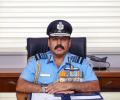
Air Chief Marshal Bhadauria was at the Leh IAF base on Wednesday where he reviewed operational preparedness of the force in effectively guarding the sensitive border areas in eastern Ladakh where Indian and Chinese armies have been on a nearly six-week standoff.
Sources said the Indian delegation was warmly greeted by senior officials of the Chinese Army before the talks began.
